

The Treaty Holding the Nuclear Order Together Is Fraying at the Seams
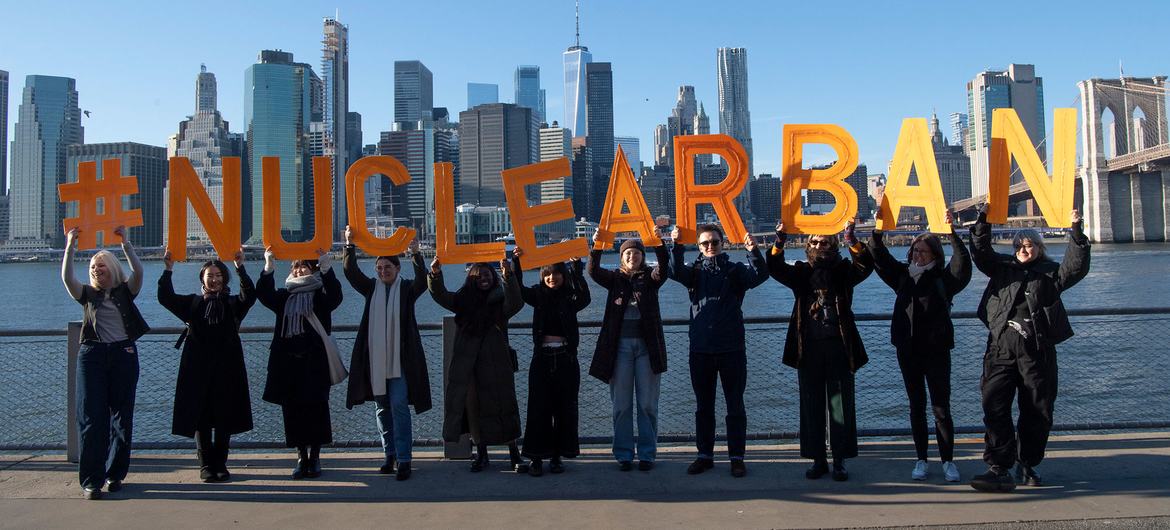
© ICAN/Darren Ornitz Campaigners in New York call for a ban on nuclear weapons (file)
The Treaty on the Non-Proliferation of nuclear weapons (NPT), in force since 1970 and ratified by 191 member states, is widely regarded as the cornerstone of international nuclear security. In the 54 years since nuclear weapons were last used in conflict, at Hiroshima and Nagasaki in 1945, the treaty has helped prevent their reappearance on the battlefield. But the architecture supporting it is collapsing.
The New START accord between the United States and Russia, which capped deployments of strategic nuclear warheads, expired in February 2026 without a successor. No legally binding constraints now govern the arsenals of the two countries that together hold the vast majority of the world’s nuclear weapons. The NPT’s last two review conferences, in 2015 and 2022, both ended without agreement on a substantive final document, reflecting deep divisions over disarmament obligations and priorities.
The 2026 review conference, running from April 27th to May 22nd at UN Headquarters, will assess implementation and seek progress on disarmament and cooperation. Izumi Nakamitsu, the UN’s High Representative for Disarmament Affairs, warned on April 25th that the threat of nuclear weapons use is becoming more frequent, and that there is a real danger of such threats becoming normalised. Open sessions will be broadcast live on UN WebTV.
The timing could scarcely be worse. The expiry of New START without a replacement is not merely a bureaucratic lapse but a structural rupture in the arms-control order that the great powers spent decades constructing. For the first time since the early 1970s, Washington and Moscow are operating without any agreed ceiling on their strategic forces. Both retain thousands of warheads. Neither, at present, shows much appetite for negotiation. Russia suspended its participation in New START in February 2023, citing American support for Ukraine, and the political conditions for a fresh bilateral deal have not improved since.
Beyond the bilateral impasse lies a more diffuse problem. The NPT was built on a bargain: the five recognised nuclear states agreed to pursue disarmament in good faith, while non-nuclear signatories agreed not to acquire weapons of their own. That bargain has always been imperfect, but it is now visibly fraying. Non-nuclear states, many of them supporters of the Treaty on the Prohibition of Nuclear Weapons adopted in 2017, have grown increasingly impatient with what they regard as the nuclear powers’ bad faith. The nuclear states, in turn, have declined to engage seriously with the prohibition treaty, dismissing it as naive. The result is a conference that convenes in an atmosphere of mutual suspicion rather than shared purpose.
There are other strains. North Korea, which withdrew from the NPT in 2003, has continued to expand its arsenal and missile capabilities. Iran’s nuclear programme remains a source of acute anxiety, with the diplomatic framework that once constrained it in tatters. The credibility of American extended deterrence guarantees, which have historically discouraged allies such as South Korea and Japan from pursuing independent nuclear capabilities, is being quietly questioned in a number of capitals as confidence in Washington’s reliability wavers.
None of this means the NPT is finished. It remains the broadest arms-control agreement in history, and the vast majority of its members have no intention of abandoning it. But a treaty that commands formal allegiance while failing to produce disarmament, that cannot agree a final communiqué at successive review conferences, and that exists without the bilateral scaffolding that once gave it credibility, is a treaty under strain. The delegates gathering in New York this week inherit a structure that their predecessors built with considerable effort. The question before them is whether they possess the political will to repair it before it comes apart entirely.
Sources: UN Office for Disarmament Affairs; NPT Secretariat
Sudan’s War and the Weapon of Rape
In Darfur, there are reasonable grounds to believe that some acts of sexual violence, committed in the context of a widespread and systematic attack on the civilian population, may amount to...

Ebola’s Fastest Spread on Record
The outbreak is centred on areas were people cross borders daily, making cross-border surveillance essential. Ugochi Daniels, Deputy Director General for Operations at the International...
- Most Viewed
- Most Popular





Our Network
Our Channels

© 2026 Al Jazeera Media Network. All rights reserved.