
RightsCon!
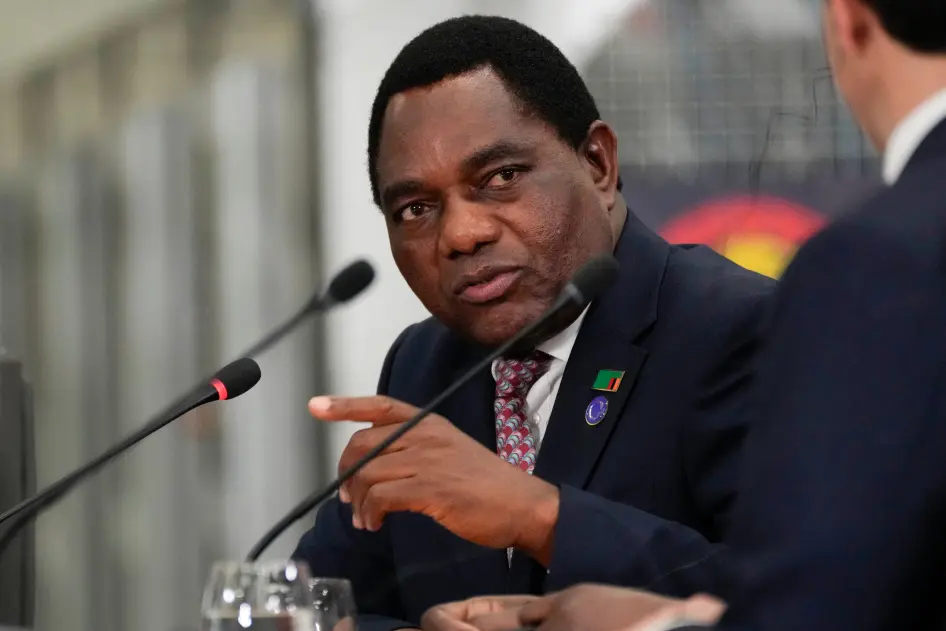
Zambia’s President Hakainde Hichilema speaks at a high-level meeting in Angola, December 4, 2024. © 2024 Ben Curtis/AP Photo
The Mulungushi International Conference Centre in Lusaka was not built for irony, but this week it hosts plenty. Diplomats, journalists, regulators, technologists, and civil society leaders gathered there under UNESCO’s banner to discuss how a free press can help secure peace, human rights, and democratic governance. The conference theme is “Shaping a Future at Peace: Promoting Press Freedom for Human Rights, Development, and Security.” The venue, and the occasion, are consequential. World Press Freedom Day, first proclaimed by the United Nations General Assembly in 1993, traces its origins to the Windhoek Declaration, adopted by African journalists in 1991, calling for a free, independent, and pluralistic press. Bringing its centrepiece global conference to sub-Saharan Africa carried real symbolic weight. The choice of Lusaka, however, has generated a controversy that no amount of diplomatic goodwill can easily dissolve.
Days before the conference opened, the Zambian government effectively cancelled RightsCon, the world’s largest digital rights summit, which was scheduled to run in Lusaka from May 5th to 8th alongside the press freedom events. Access Now, the digital rights advocacy group that convenes RightsCon, confirmed on April 29th that the conference would not proceed, in Zambia or online, after the government withdrew its support just days before the opening session, with many participants already airborne or on the ground in Lusaka. Zambian government officials announced they wished to postpone the conference in order to ensure “full alignment with Zambia’s national values, policy priorities, and broader public interest considerations.”
The justification was vague to the point of self-incrimination. The technology and science minister had said the postponement was to allow for “pending administrative and security clearances” of some speakers. No specific speakers or sessions were identified. What authorities described as a “postponement” is increasingly being framed by critics as a de facto cancellation, one that has exposed tensions between state control and fundamental freedoms in a country once viewed as relatively open within the region.
The backdrop is not reassuring. In April 2025, the Zambian Parliament enacted the Cyber Security Act and the Cyber Crimes Act. Zambian civil society organisations contended that some provisions of the laws did not adhere to international human rights standards and were a threat to the principles of democracy, transparency, accountability, and rights. The two laws have been used to curtail freedom of expression online and to arrest political opponents. The Law Association of Zambia petitioned the High Court to declare provisions of the Cyber Crimes Act unconstitutional. The matter is pending in court.
A leading Zambian academic, Sishuwa Sishuwa, told Human Rights Watch that Zambian authorities may have been worried that delegates to the summit, mostly human rights activists, “would have put the country under scrutiny” for its human rights record. He said that “Zambia has seen severe restrictions on the rights to peaceful assembly, free speech, and freedom of association, the arrests of government critics and political opponents on a variety of charges such as criminal libel, sedition, unlawful assembly, and the broadly expanded laws on hate speech.”
RightsCon was intended to centre African perspectives on digital rights, a milestone, as it would have been the first edition held in sub-Saharan Africa. The irony is acute: Zambia had served as co-chair of the intergovernmental process that produced the Global Digital Compact, adopted at the United Nations in 2024, a framework that explicitly promotes multistakeholder governance and digital rights.
Human Rights Watch was blunt in its assessment: “The human rights environment in Zambia has become increasingly hostile to perceived dissent, criticism, and political opposition to the government ahead of the 2026 elections.” General elections are scheduled for August 13th. President Hakainde Hichilema is seeking reelection amid complaints around the expansion of the country’s parliament as part of a constitutional amendment package that critics call election engineering.
The UNESCO conference itself proceeded, though not without its own complications. ARTICLE 19 expressed concern that the World Press Freedom Day global conference required security vetting of all participants, with a requirement that vetting be completed within 48 hours, a timeline that raised its own questions about selective access. Gina Romero, the UN Special Rapporteur on the Rights to Freedom of Peaceful Assembly and of Association, went further, describing the government’s demand for disclosure of topics for “alignment with national values” as a clear violation of the rights to freedom of assembly, association, and expression, and a deliberate attack on civic space.
Zambia’s difficulties are not occurring in isolation. They reflect a global deterioration that gives the Lusaka gathering its urgency, even as the host country undermines the proceedings. For the first time in the history of the Reporters Without Borders World Press Freedom Index, over half of the world’s countries now fall into the “difficult” or “very serious” categories for press freedom. In 25 years, the average score of all 180 countries and territories surveyed in the Index has never been so low. The Index’s legal indicator has declined the most over the past year, a clear sign that journalism is increasingly criminalised worldwide.
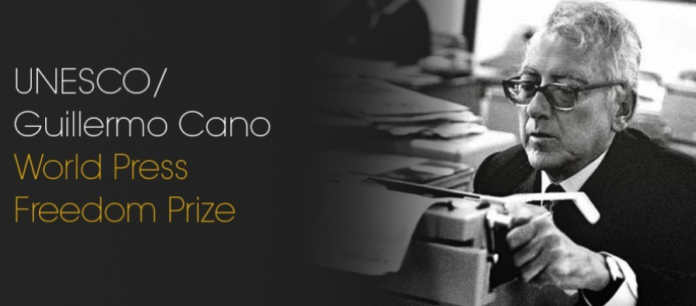
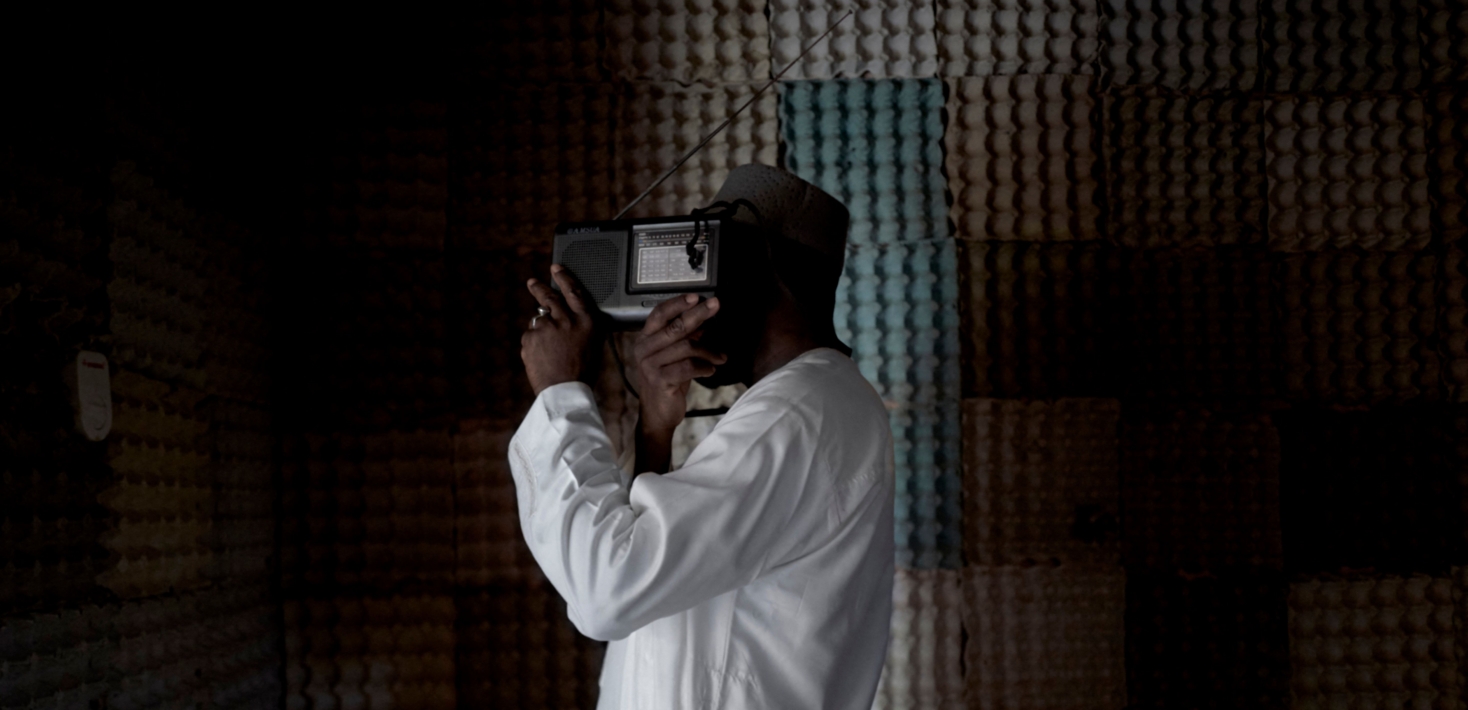
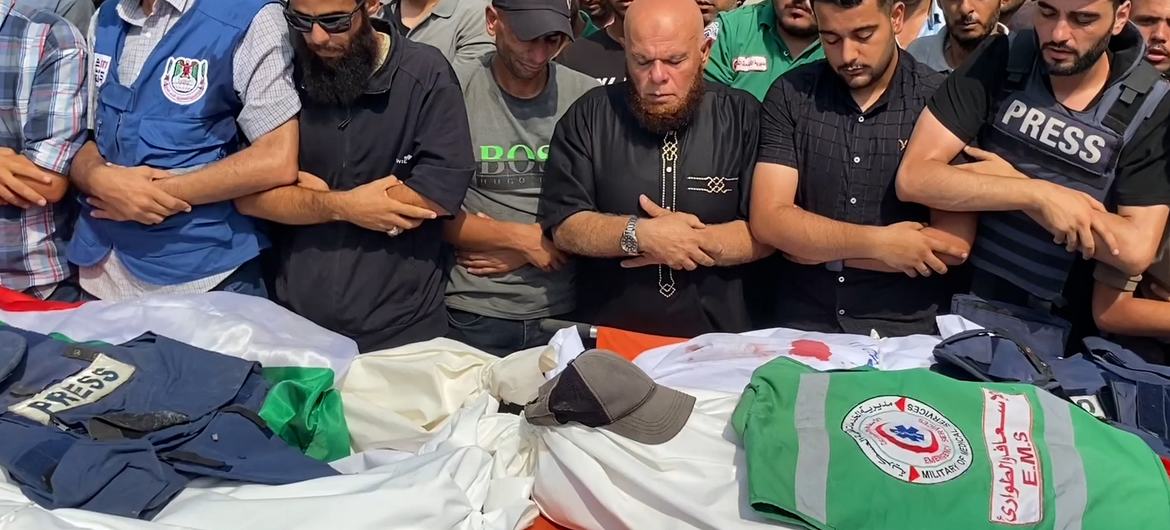
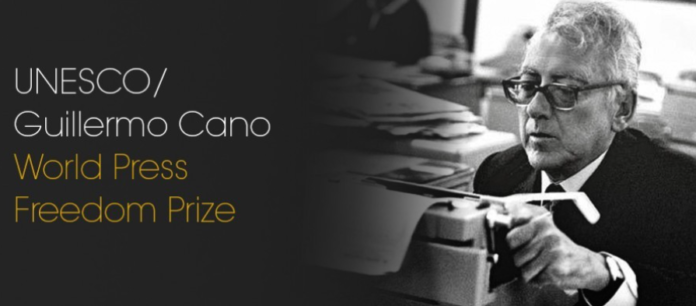
This year’s UNESCO prize shone an uncomfortable light on what unchecked deterioration looks like. UNESCO announced the Sudanese Journalists Syndicate as the laureate of the UNESCO/Guillermo Cano World Press Freedom Prize, in recognition of the role the collective has played in condemning the deliberate targeting of journalists in the ongoing conflict in Sudan. Since fighting broke out in 2023, the Syndicate has documented 32 journalists’ deaths, 556 violations against media workers, and the cessation of numerous newspapers and radio stations. 90% of the country’s media infrastructure has been destroyed; journalists have been trapped in their homes or workplaces due to street violence and have experienced internet and telecommunications blackouts. These conditions effectively render Sudan a “zone of silence” in which large parts of the population exist in an information vacuum.
The Lusaka conference also brought together the digital rights community and journalists in an explicit collaboration with RightsCon, which had been positioned to run immediately afterwards. The partnership was designed to open the door for deeper connections between the digital rights community and those working on press freedom, journalism, and freedom of expression, as technology continues to shape how information is produced, shared, and controlled. The collapse of RightsCon has not extinguished that agenda, but it has made it harder to ignore who sets the terms of access.
All of this amounts to a test of what World Press Freedom Day is actually for. If the answer is primarily symbolic, the optics of Lusaka are difficult but manageable: the ceremony takes place, speeches are given, communiqués are issued. If the answer is substantive, then the cancellation of RightsCon, the vetting of delegates, the unresolved status of Zambia’s cyber laws, and the looming election season are not incidental noise but the story itself.
UNESCO’s most recent report on global trends in freedom of expression reveals a 10% decline in freedom of expression worldwide since 2012, a setback comparable only to three other periods: World War I, the prelude to World War II, and the late 1970s Cold War period. That context lends the Lusaka moment a weight beyond the diplomatic calendar. A free press is, as the organisers correctly note, simultaneously a human rights issue, a development issue, and a peace and security issue. What it must not become, in Zambia or anywhere else, is an occasion for governments to demonstrate their control over the very freedom being celebrated.
Sources:
UNESCO, “World Press Freedom Day 2026 Global Conference: Shaping a Future at Peace,” UNESCO.org, 4 May 2026.
UNESCO, “UNESCO/Guillermo Cano World Press Freedom Prize 2026 awarded to the Sudanese Journalists Syndicate,” UNESCO.org, 2 May 2026.
UNESCO, “Programme of the World Press Freedom Day Conference, Lusaka, Zambia,” UNESCO.org, 4 May 2026.
Inter Press Service, “World Press Freedom Day 2026,” IPSnews.net, 1 May 2026.
Reporters Without Borders (RSF), “2026 RSF Index: Press Freedom at a 25-Year Low,” RSF.org, 30 April 2026.
RSF, “2026 RSF Index by Region: Press Freedom in Decline in 100 out of 180 Countries,” RSF.org, 30 April 2026.
Human Rights Watch, “Zambia: Summit on Human Rights, Technology Effectively Canceled,” HRW.org, 1 May 2026.
Access Now / RightsCon, “RightsCon 2026 Cancellation Statement,” RightsCon.org, 29 April 2026.
ARTICLE 19, “Zambia: RightsCon Cancellation is a Blow to Freedom of Expression,” Article19.org, 30 April 2026.
TechPolicy.Press, “RightsCon Canceled After Zambia Requires ‘Full Alignment’ With ‘National Values’,” TechPolicy.press, 30 April 2026.
MISA Zambia, quoted in Lusaka Times, “MISA Praises Global Press Conference,” LusakaTimes.com, 2 May 2026.
Africa Brief / Substack (Winston Mwale and Kennedy Phiri), “Zambia Halts RightsCon, Sparking Backlash Over Shrinking Civic Space,” AfricaBrief.substack.com, 30 April 2026.
UN News, “Sudanese Journalists Awarded UNESCO Press Freedom Prize,” news.un.org, 2 May 2026.
Russia’s Safronov: A Journalistic Casualty of Kremlin
Amnesty International’s designation of him as a prisoner of conscience highlights unfair, secretive trials and reprisals against legal defenders.

Al Jazeera Media Network in Lusaka
The delegation’s most consequential engagement of the day took place away from the main conference floor. Al Haj, Van Meek and Bayes secured a private meeting with Mariya Gabriel,...
- Most Viewed
- Most Popular

Our Network
Our Channels

© 2026 Al Jazeera Media Network. All rights reserved.