

A Reckoning Deferred: The Massacre at Hoyyar Siri and the Abandonment of Myanmar’s Rohingya

© 2026 John Holmes for Human Rights Watch
Two years have passed since fighters of the Arakan Army descended on the village of Hoyyar Siri in Buthidaung township, in Myanmar’s westernmost Rakhine State, and carried out what survivors describe as a systematic and deliberate slaughter of unarmed Muslim civilians. The world has, for the most part, looked away. The perpetrators have faced no accountability. The survivors remain trapped, stateless, and silenced. And the broader international machinery of justice, already strained by a conflict that has claimed tens of thousands of lives across Myanmar since the military coup of February 2021, has yet to bring meaningful pressure to bear on those responsible. What happened at Hoyyar Siri on May 2nd, 2024, is not merely a war crime. It is a test of whether the norms that supposedly govern the conduct of armed groups in the twenty-first century retain any force at all.
The facts, as documented in a meticulous 56-page report published by Human Rights Watch, are as follows. On that morning, Arakan Army fighters launched an offensive against two Myanmar military bases in the vicinity of Hoyyar Siri. As the fighting began, villagers attempted to flee. Rather than being allowed to do so, they were fired upon. Some were waving white flags. One man described watching his son, his wife and his two daughters shot in succession as they tried to escape. A woman recalled being gathered with other villagers in a paddy field beside a mosque, after which fighters opened fire without warning. The killing was not a moment of battlefield confusion. It bore the hallmarks of deliberate targeting of a civilian population.
Human Rights Watch compiled a list of more than 170 villagers who were killed or remain missing. Of those, approximately 90 were children. Investigators believe the actual toll is considerably higher since many families have been unable to report their losses and the village itself no longer exists in any meaningful sense. Satellite imagery confirms that Arakan Army fighters subsequently burned Hoyyar Siri to the ground. Survivor testimony additionally describes robbery, torture, beatings with electric shocks, and the abduction of women and girls. One survivor who returned to the site months after the massacre found human remains at three separate locations, including skulls bearing gunshot injuries, with civilian clothing still visible among the bones.
To understand why this atrocity has received so little attention, it is necessary to understand the extraordinarily complicated politics of Rakhine State and of Myanmar’s broader civil war. The Arakan Army is the armed wing of the United League of Arakan, an ethnic Rakhine Buddhist organisation that has been waging an insurgency against the Myanmar military, known as the Tatmadaw or, since the coup, simply as the junta, for more than a decade. In that conflict, the Arakan Army has in recent years achieved remarkable military success. It now controls large swathes of Rakhine State, including the coastal areas and several towns that were previously junta strongholds. In the eyes of many Rakhine Buddhists, and of some international observers who place great weight on resistance to the junta, the Arakan Army is a force for liberation.
But liberation for whom is the critical question. The Rohingya, a predominantly Muslim minority who have lived in Rakhine State for generations, have never been recognised as citizens of Myanmar under the country’s exclusionary 1982 citizenship law. They were the primary victims of the genocidal campaign carried out by the Tatmadaw in 2017, which drove more than 700,000 people across the border into Bangladesh in a matter of weeks, in what the United Nations has described as a textbook example of ethnic cleansing. Those who remained in Rakhine State, roughly 600,000 people, have continued to live under conditions of severe persecution, confined to villages and camps, denied freedom of movement, education, and healthcare. Their situation did not improve when the Arakan Army began extending its authority over the areas in which they live. If anything, it has worsened.
The Arakan Army has repeatedly denied committing war crimes and insists that its fighters only targeted military personnel or members of Rohingya armed groups, specifically the Arakan Rohingya Salvation Army, a jihadist organisation whose attacks on police posts in 2017 provided the Tatmadaw with its stated pretext for the genocidal operations of that year. The findings of Human Rights Watch directly and comprehensively contradict those claims. The people killed at Hoyyar Siri were not combatants. They were farmers and their families, women carrying infants, elderly men and children, people who had no means of resistance and no affiliation with any armed group. The white flags they waved as they fled were the universal symbol of surrender and non-combatant status. They were shot anyway.
The Arakan Army’s denials follow a pattern familiar from the conduct of armed groups that have committed atrocities the world over. First, deny that the events occurred as described. Second, attribute any violence that did occur to the enemy or to affiliated armed groups. Third, control access to the affected area so that independent verification becomes impossible. Fourth, when scrutiny intensifies, arrange a carefully managed media visit in which survivors are coerced into providing false testimony. This is precisely what the Arakan Army reportedly did in August 2024, when it organised a controlled visit to a camp where survivors had been relocated, and presented journalists with accounts that contradicted the overwhelming weight of testimony gathered by Human Rights Watch. It is a script that has been followed, with minor variations, from Srebrenica to Darfur to the Shan hills of Myanmar itself.
The displacement and captivity of survivors adds a further layer of horror to the initial massacre. In February 2025, Rohingya survivors from Hoyyar Siri were ordered to relocate to a makeshift camp. Those who subsequently managed to escape to Bangladesh reported being denied freedom of movement, subjected to forced labour and facing severe shortages of food and medical care. They had survived a massacre only to find themselves effectively imprisoned by the same armed group that had carried out that massacre. The camp, in other words, functions less as a shelter than as a mechanism of control, a way of ensuring that those who witnessed what happened at Hoyyar Siri remain unable to speak freely to journalists, investigators or anyone else who might hold the Arakan Army to account.
The Myanmar junta, for its part, has done nothing to address the plight of the Rohingya civilians affected by the Hoyyar Siri massacre or by the broader pattern of violence that has accompanied the Arakan Army’s expansion through Rakhine State. This is hardly surprising. The junta has its own extensive record of atrocities against the Rohingya, including the 2017 genocide itself, as well as ongoing airstrikes and ground operations that have killed civilians across the country. The junta has no interest in accountability for anyone, including for a rival armed group whose crimes it might otherwise seek to publicise. What is more revealing is the silence of those actors who might have been expected to respond with greater urgency.
The international response to the events in Rakhine State has been conspicuously inadequate. The United Nations has documented atrocities committed by the junta in great detail, and the Independent Investigative Mechanism for Myanmar, established in 2018 with a mandate to collect and preserve evidence for future prosecutions, continues its work. But the mechanism has been denied access to Rakhine State by both the junta and now, by the Arakan Army. China, which has significant economic and strategic interests in Rakhine State, including the planned China-Myanmar Economic Corridor and a deep-water port at Kyaukphyu, has consistently blocked or diluted international pressure at the United Nations Security Council. Western governments, consumed by crises elsewhere and uncertain how to engage with a conflict of such complexity, have largely confined themselves to periodic statements of concern that carry little weight with either the junta or the ethnic armed groups.
The broader geopolitical context is not favourable to accountability. The global human rights infrastructure, already under strain from the wars in Ukraine, Gaza and Sudan, from the erosion of multilateral institutions and from the rise of governments that openly contest the universal application of human rights norms, is ill-placed to mount a sustained campaign of pressure on a relatively obscure armed group in a remote corner of Southeast Asia. The Rohingya have no powerful patron, no diaspora with significant political leverage in major capitals, no oil, no strategic minerals, and no geography that makes their fate compelling to the great powers. They have, in the phrase that recurs with grim regularity in the literature on mass atrocity, no lobby.
And yet the importance of what happened at Hoyyar Siri extends beyond the fate of its victims, terrible as that fate has been. The massacre matters because of what it reveals about the nature of the conflict in Rakhine State and about the trajectory of the Arakan Army as a governing authority. Armed groups that commit atrocities against civilians in the course of taking power do not typically become rights-respecting administrations once that power is consolidated. The Arakan Army’s treatment of the Rohingya, including the massacre, the burning of the village, the coercion of survivors and the denial of freedom of movement, suggests an organisation that views the Muslim minority population of Rakhine State not as citizens to be protected but as a threat to be managed or eliminated. That is a pattern with dark historical precedents.
It matters, too, because of the question it poses about the relationship between the international community and non-state armed groups that control territory. The Arakan Army is not a state actor. It cannot be brought before the International Court of Justice in proceedings initiated under the Genocide Convention, as Myanmar was in 2019. Its members are not obviously subject to the jurisdiction of the International Criminal Court, which has so far issued arrest warrants in relation to Myanmar only in connection with the 2017 deportation of Rohingya to Bangladesh, on the grounds that cross-border deportation gives the court jurisdiction. The prosecution of non-state actors for war crimes and crimes against humanity remains one of the most persistent gaps in the architecture of international justice, and it is a gap that groups like the Arakan Army are well positioned to exploit.
None of this means that accountability is impossible. It means that it requires concerted effort from multiple directions at once. The Independent Investigative Mechanism for Myanmar should be given access to Rakhine State, and both the junta and the Arakan Army should be pressed by every available diplomatic means to grant that access. Countries with influence over the Arakan Army, including China and Thailand, should make clear that continued impunity for atrocities will have consequences for the group’s international standing and for its aspirations to be recognised as a legitimate governing authority. Those Rohingya survivors who have reached Bangladesh or other countries should be given every assistance in providing testimony to investigators, and their accounts should be preserved in a form that will be available to future courts. The United Nations Special Adviser on the Prevention of Genocide should formally examine whether the pattern of violence in Rakhine State meets the legal threshold for genocide, not only in relation to the junta’s actions but in relation to those of the Arakan Army as well.
The survivors of Hoyyar Siri did not choose to become witnesses to history. They were farmers and fishermen, mothers and children, people whose ambitions extended no further than the next harvest and the welfare of their families. They found themselves in the path of an armed group that regarded their lives as expendable, in a conflict that the world has been unable or unwilling to stop, in a country whose government has long treated their very existence as a problem to be solved rather than a population to be served. They deserve better than silence.
The Rohingya have now endured more than seven decades of systematic persecution in the country of their birth. They have survived pogromme after pogromme, each one worse than the last, each one followed by international expressions of concern and very little else. The massacre at Hoyyar Siri is the latest chapter in that history, but it need not be read as its inevitable conclusion. Accountability, however long delayed, remains possible. The evidence exists. The witnesses, those who survived, have spoken. What is missing is the will to act on what they have said. That, in the end, is not a question about Myanmar. It is a question about the rest of us.
Sources and Dates
Human Rights Watch, report on the massacre at Hoyyar Siri, Buthidaung township, Rakhine State, Myanmar (56 pages), documenting events from May 2024 through May 2026. Satellite imagery analysis confirming the destruction of Hoyyar Siri village, conducted in the period following May 2nd, 2024. Survivor testimony gathered by Human Rights Watch from Rohingya villagers who escaped to Bangladesh and other locations, covering events from May 2nd, 2024, to February 2025 and beyond. United Nations documentation of the 2017 Rohingya genocide and subsequent persecution, including proceedings before the International Court of Justice initiated in 2019. Reports and statements of the Independent Investigative Mechanism for Myanmar, established 2018, covering the period to the date of publication. Public statements by the Arakan Army denying responsibility for war crimes, various dates, 2024 to 2026. Myanmar junta statements and public record, 2024 to 2026.
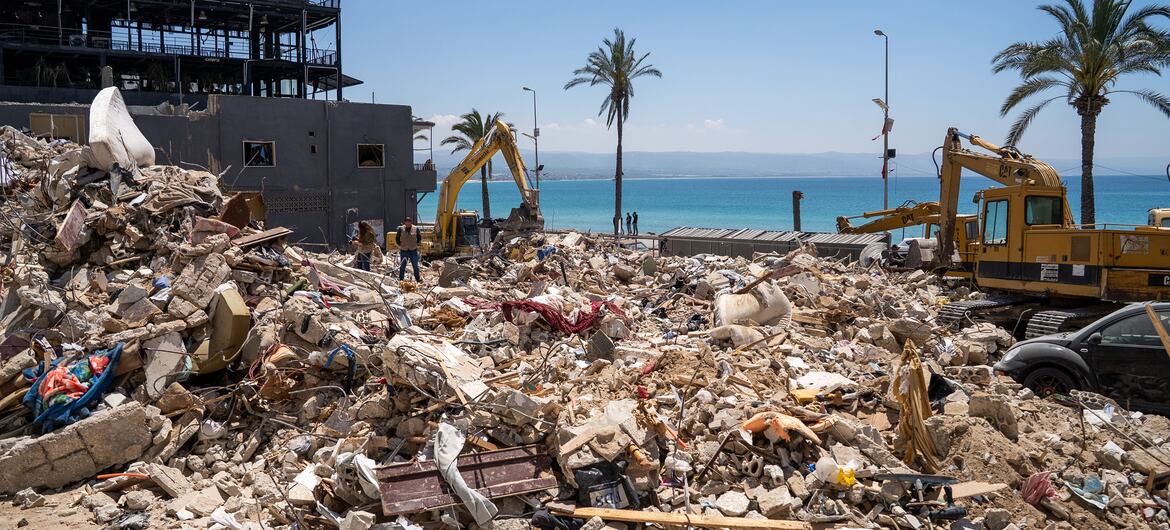
Lebanon: Twelve Children Killed or Maimed Every Day
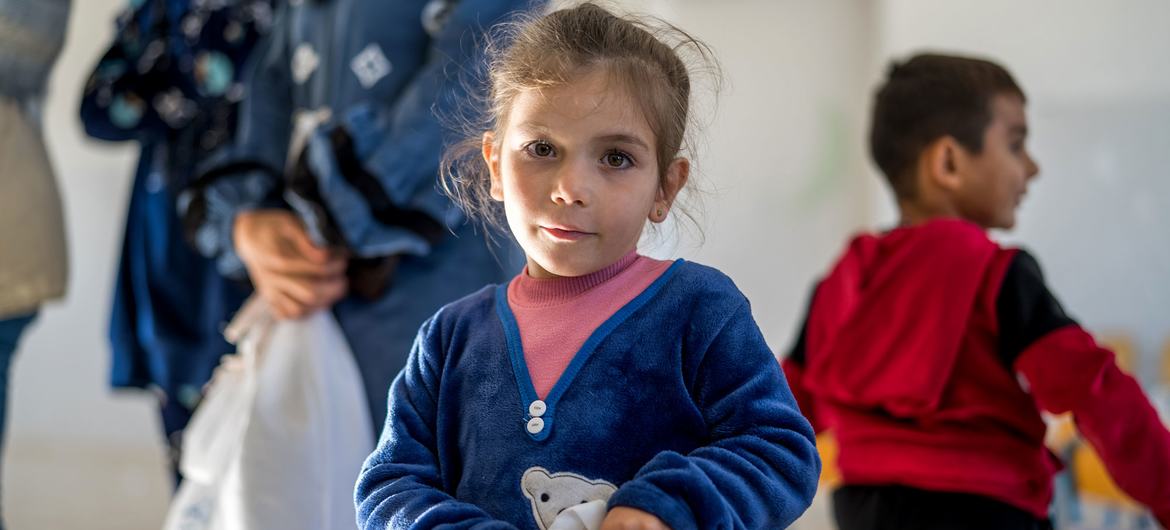
More than 770,000 children are experiencing heightened distress from repeated exposure to violence, loss and displacement. Beyond those killed and maimed, Corsi warned, an entire generation has...
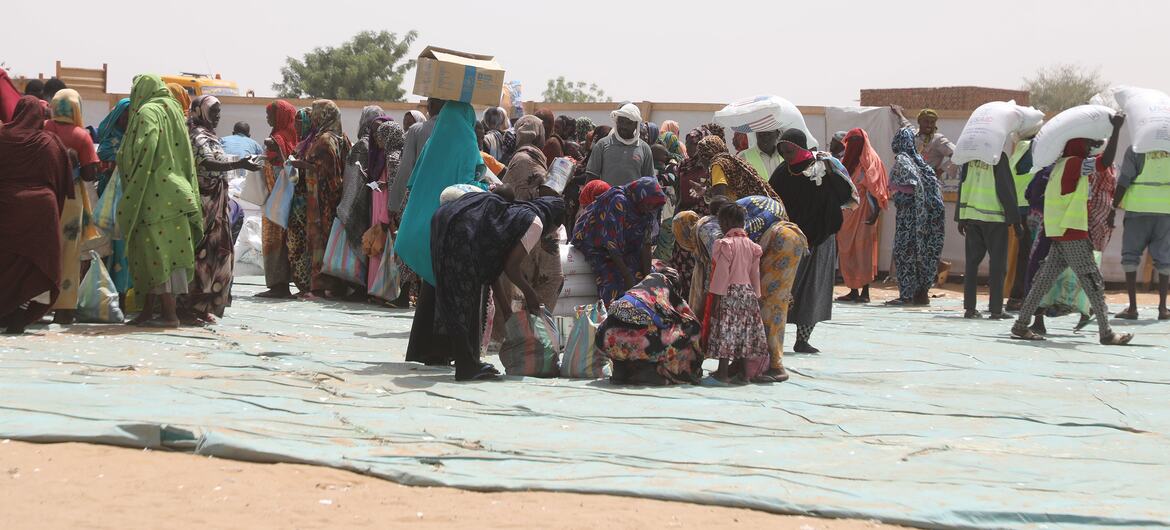
Hunger Hotspots: Famine Risk Deepens Across Thirteen Countries
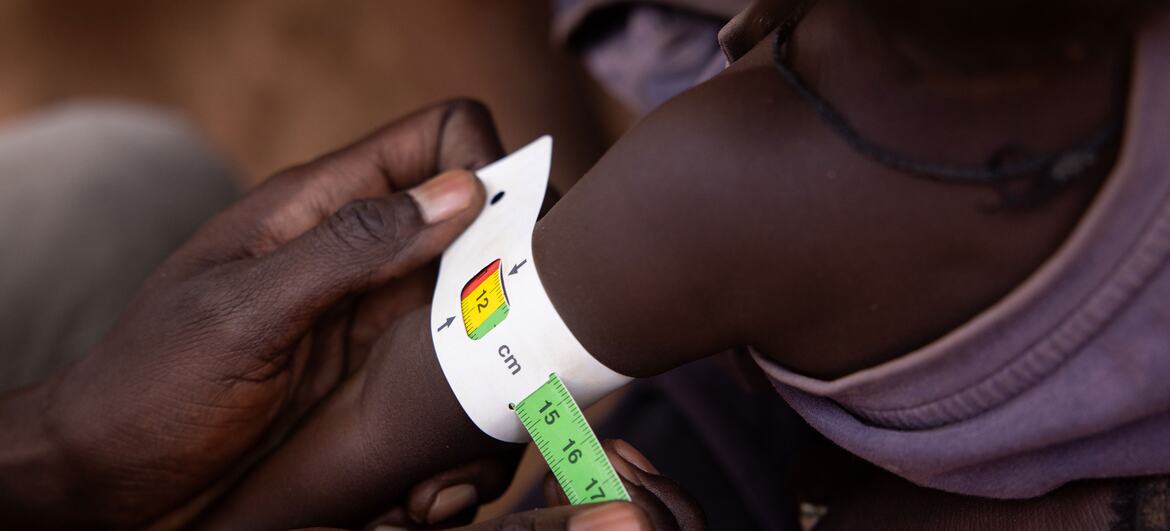
The warning arrives as humanitarian funding continues to contract sharply. Support for food assistance, emergency farming programmes and nutrition responses in crisis settings fell by an...
- Most Viewed
- Most Popular



Our Network
Our Channels

© 2026 Al Jazeera Media Network. All rights reserved.