
A City Born of Crisis: How Dadaab, One of the Largest and Oldest Refugee Settlements on Earth, Faces an Uncertain Future Amid Funding Collapse, Political Ambition, and Fragile Hope
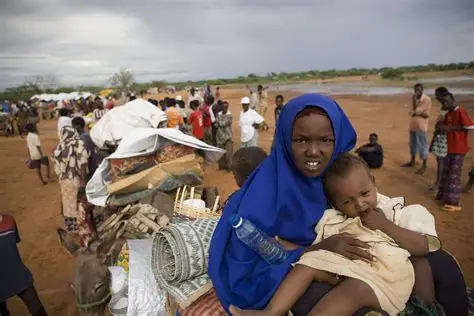
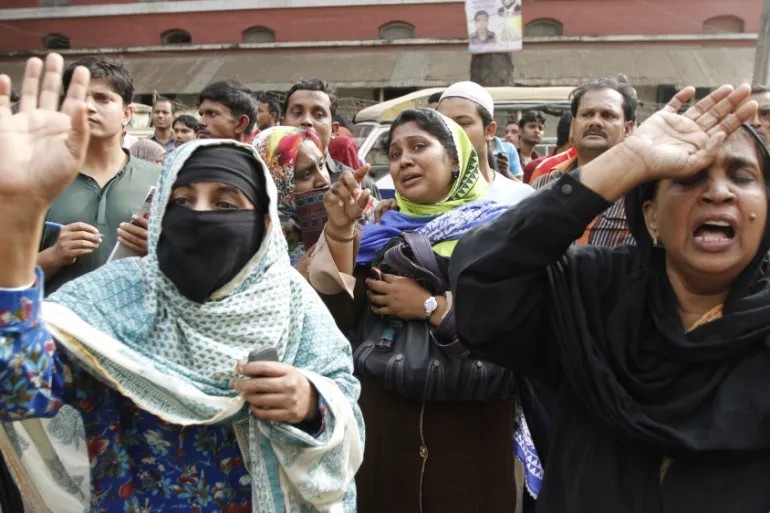
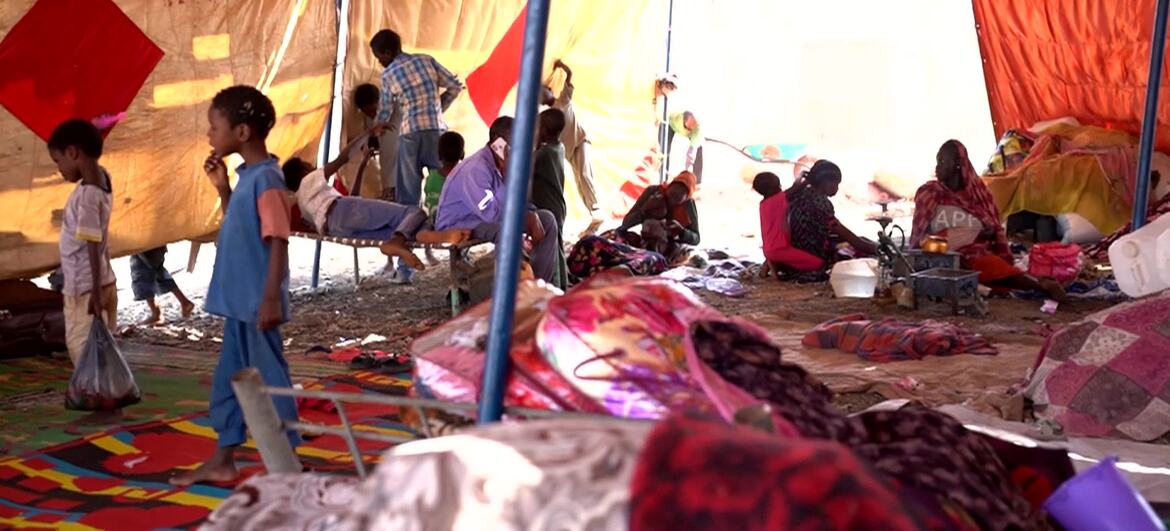
Somalis make up more than 96 percent of Dadaab's population, most of them descended from families who fled the civil war that engulfed their country in 1991.
The world’s most enduring refugee complex faces a convergence of funding collapse, political ambition, and fragile hope. In the semi-arid scrubland of northeastern Kenya, roughly a hundred kilometres from the Somali border, there exists a place that defies easy categorisation. Dadaab is technically a refugee camp. In practice it is a city. It has markets, schools, hospitals, mosques, and a political economy of its own. It has second and third generations of residents who have never known another home. It has survived closure orders, terrorism scares, droughts, floods, and a seemingly endless sequence of humanitarian funding crises. And yet, after more than three decades of existence, its future has rarely looked more precarious.
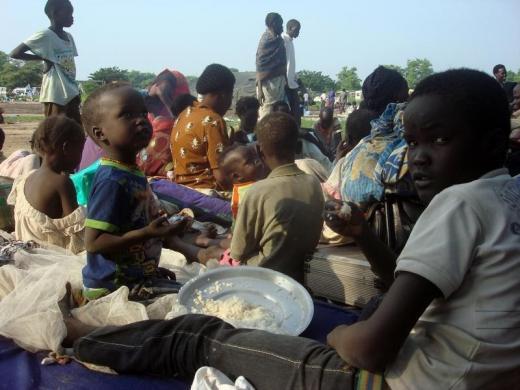
With over 409,000 registered residents, Dadaab is one of the largest and oldest refugee settlements on earth. Somalis make up more than 96 percent of its population, most of them descended from families who fled the civil war that engulfed their country in 1991. The camps that form the complex, principally Dagahaley, Ifo, and Hagadera, were built as temporary shelters. They have become permanent fixtures. That paradox, the temporary made eternal by the intractability of the crises that produce it, is the defining condition of life in Dadaab and, increasingly, of the humanitarian system that sustains it.
The Architecture of Displacement
The Dadaab refugee complex was established in 1991, when refugees fleeing the civil war in Somalia began crossing the border into Kenya. A second large influx occurred in 2011, when some 130,000 refugees arrived fleeing drought and famine in southern Somalia. At its peak that year, the complex held more than 500,000 people, making it briefly the largest refugee settlement in the world. Periodic repatriations and resettlements have brought the numbers down, but fresh arrivals driven by the cyclical violence and climate shocks afflicting the Horn of Africa have consistently replenished what departures diminish.
Life inside the complex is structured by a web of restrictions. Kenya’s encampment policy limits refugee rights. Refugees must obtain special permits to leave the camps, and work opportunities are scarce. These rules, ostensibly justified on security grounds, have the practical effect of consigning residents to dependency on aid organisations. The World Food Programme distributes food rations; the International Rescue Committee runs health facilities in Hagadera; the Kenya Red Cross Society provides care in Ifo; Medecins Sans Frontieres operates in Dagahaley. Water, sanitation, education, and livelihoods programming are similarly divided among a roster of international organisations.
An informal economy has nonetheless always existed alongside the official humanitarian one. Dadaab has become a de facto city, with businesses, markets, and trades developed by people who, despite being unable to settle outside the camps, have demonstrated an extraordinary entrepreneurial resilience. That resilience, though admirable, has also served as a convenient argument for those who would rather see the aid bill reduced than the underlying rights problem addressed.
A Policy Turning Point, Unevenly Applied
Kenya has in recent years signalled a genuine shift in its approach to refugee management. The Refugees Act of 2021 represented a meaningful legislative advance, promising greater rights to work, to move, and to access services. The Shirika Plan, launched formally in March 2025 as an eleven-year initiative, goes further still. Its stated ambition is to transform Dadaab and the Kakuma camp into integrated municipalities, administered by Garissa and Turkana county governments respectively, with service delivery gradually transitioning from UN agencies and NGOs to local government. The word “shirika” means “coming together” in Swahili, a name chosen with deliberate optimism.
The plan envisages three phases: a transition establishing governance frameworks, a stabilisation phase building infrastructure and services, and a resilience phase achieving sustainable development. With an estimated budget of 943 million dollars, it is overseen by a National Steering Committee working with county governments, UN agencies, donors, and the private sector.
The vision is coherent and, in several respects, genuinely progressive. It draws on lessons from the Kalobeyei Integrated Settlement near Kakuma, established in 2016 and designed to integrate refugees with the local Turkana host community through shared services, market systems, and agricultural initiatives. Residents receive cash-based assistance rather than food rations, promoting self-reliance and local economic activity.
Yet the gap between policy ambition and operational reality in Dadaab remains wide. Professor Francis Owakah of the University of Nairobi’s Centre for Human Rights and Peace has warned that Dadaab remains marked by strained resources, weak coordination, and mistrust between refugees and host communities. Without sustained investment in skills, systems, and trust-building, the transition risks falling short of its promise. Bureaucratic inertia, inadequate infrastructure, and a chronic shortage of funding have all conspired to slow implementation. For many residents, the Shirika Plan remains a distant aspiration rather than a tangible change in daily life.
The Collapse of the Funding Ecosystem
Into this already strained environment has come a shock of extraordinary severity. The decision by the Trump administration to dismantle USAID and terminate the bulk of American foreign assistance has reverberated through every humanitarian corridor in the world, and Dadaab has been hit hard. The United States had for decades spent around one percent of the federal budget on foreign development assistance, with USAID holding a budget of 63 billion dollars in 2023. The reduced American commitment represents a sharp contrast to the assistance of up to 17 billion dollars the United States provided annually as the UN’s leading funder in recent years.
The consequences in Dadaab have been immediate and severe. Even before the American cuts took effect, refugees in Dadaab were already receiving only 40 percent of the recommended minimum calorie intake needed to stay healthy. The supplementary electronic voucher programme enabling refugees to buy fresh produce, known as Bamba Chakula, saw its value fall from around six dollars per person in March 2025 to just four dollars by May. By mid-2025, WFP was being forced to cut food aid to Kenya’s refugees to just 28 percent of a full ration, the lowest level ever recorded in Kenya, and to end all cash assistance due to critical funding shortfalls.
The effects on nutrition have been alarming. In Dadaab, one in four children under five is at risk of acute malnutrition, and thousands are already moderately or severely malnourished. The Global Acute Malnutrition rate among refugee children and pregnant or breastfeeding women in Kenya exceeded 13 percent, a threshold the UN classifies as a nutrition emergency. In the Hagadera camp hospital, women giving birth described finding themselves in a facility stripped of basic supplies following the loss of USAID-funded support. Dadaab’s Refugee-Led Organisations Network warned of “one of the worst humanitarian crises in recent history” and cautioned that without immediate intervention, the risk of malnutrition, illness, and death would increase daily.
The security situation compounded the crisis. A roadside shoot-out between Kenyan police and Al-Shabaab insurgents close to Dadaab prompted the temporary withdrawal of aid workers, bringing food distribution to a halt. Protests over decisions by the cash-strapped WFP and UNHCR to lay off local Kenyan staff resulted in one death and several injuries. The combination of hunger, insecurity, and institutional disruption produced a moment of acute fragility.
The Human Rights Deficit
Against this backdrop, a quieter but significant project was coming to an end. Over the previous eighteen months, a collaborative initiative led by UN Human Rights had worked to embed peacebuilding and social cohesion into the management of Dadaab’s camps. The project brought together the Kenya National Commission on Human Rights, the University of Nairobi, the United Nations Development Programme, UNHCR, and the World Food Programme. More than 1,260 government officials, humanitarian workers, and human rights defenders received training. Human rights forums were created to allow refugees to raise grievances directly with authorities.
The most tangible beneficiary was Halgan, a refugee-led organisation founded by Anab, who grew up in Dadaab herself. The project helped Halgan support vulnerable youth, including those at risk of suicide, and enabled more than 600 women to start small businesses by creating pathways toward economic independence.
For Anab, the experience was transformative. She is not naive about what remains to be done. Being a refugee, she has said, is her life, but it was never her choice. That phrase captures something essential about the moral character of the situation in Dadaab. The camp’s residents did not choose displacement. They did not choose to spend their lives in a settlement designed as a temporary measure. They did not choose to have their food rations cut to less than a third of the recommended minimum by the withdrawal of a wealthy government’s political will to contribute to the global commons.
Gender-based violence remains the most prevalent human rights abuse in the camps, and the OHCHR project was making measurable progress in addressing it. That progress is now at risk. The project has ended because its funding ran out.
The Structural Problem
Dadaab’s predicament illuminates a structural flaw in the global humanitarian architecture. The system is designed to respond to acute crises but is poorly suited to managing protracted displacement. Camps that were always meant to be temporary have become permanent settlements housing multigenerational communities with no viable path to citizenship, repatriation, or resettlement in sufficient numbers. The funding model is built on annual donor pledges that are perpetually insufficient and increasingly unreliable.
Other Western countries, including Germany, have also slashed funding. The fallout across the Middle East, South Asia, and Africa has been swift. By mid-2025, UNHCR had received just 23 percent of its annual budget and expected an overall operating budget of only 3.5 billion dollars to meet the needs of 122 million people. WFP officials in Kenya described being forced to make very difficult decisions about who gets to eat and who does not.
The Shirika Plan’s ambition to transform Dadaab into a municipality is, in this context, both inspiring and somewhat ironic. A settlement that cannot reliably feed its residents is being asked to evolve into a self-governing administrative unit. The logic of the transition is sound; the sequencing is not. Integration requires investment before it can reduce dependency. A population that is acutely malnourished and deprived of legal economic opportunities cannot bootstrap its way to self-reliance. The international community cannot withdraw support and simultaneously demand that refugees become self-sufficient.
What Comes Next
The question facing Kenya, its international partners, and the humanitarian system more broadly is whether the progressive architecture of the Refugees Act and the Shirika Plan can be given sufficient substance to survive the current funding shock. Kenya has maintained its commitment to hosting refugees even as neighbouring countries have expelled them. The government’s formal endorsement of integration as a policy goal represents a meaningful departure from decades of encampment logic. The OHCHR project demonstrated that institutional capacity and trust can be built, even in conditions of severe resource constraint, if the commitment is there.
But the risks are serious. The institutional gains made over eighteen months are fragile without continued support. Gender-based violence will not diminish simply because a training programme has concluded. The capacity for refugee-led organisations like Halgan to sustain their work depends on continued access to resources, networks, and legal space for advocacy. Without those, the women who started small businesses may be unable to keep them running, and the forums in which refugees raised their voices may fall silent.
The broader humanitarian funding crisis raises a more fundamental question about who bears responsibility for one of the most persistent failures of the modern era. Dadaab’s residents are there because of a conflict that has drawn in regional and global actors for more than three decades. The instability of Somalia is not a natural disaster; it is a political one, with an extensive international dimension. The climate shocks that drive repeated waves of displacement are the product of emissions generated overwhelmingly by wealthier countries. To withdraw financial support from the people who have paid the heaviest price for decisions made elsewhere is a form of compounded injustice.
The arc of Dadaab’s history is one of repeated abandonment followed by reluctant re-engagement. What does not change is the underlying situation of the people who live there: born into displacement, educated by aid, governed by restriction, and sustained by a global system of humanitarian solidarity that is fraying at precisely the moment it is most needed. For Anab and the women of Halgan, for the children growing up in Hagadera and Dagahaley and Ifo, and for the hundreds of thousands whose daily existence depends on decisions made in Washington, Brussels, Geneva, and Nairobi, the stakes could not be higher. A city born of crisis has survived for more than three decades. Whether it can survive the current moment of geopolitical indifference is a test not only of Kenya’s resolve, but of the world’s.
Sources
- UN Human Rights (OHCHR). “UN Human Rights Project Transforms Refugee Camps into Communities.” 15 May 2026. https://www.ohchr.org/en/stories/2026/05/un-human-rights-project-transforms-refugee-camps-communities
- UNHCR Kenya. “Dadaab Refugee Complex.” https://www.unhcr.org/ke/about-us/where-we-work/dadaab-refugee-complex
- HIAS. “Refugees in Kenya: What You Need to Know.” May 2025. https://hias.org/news/refugees-kenya-what-you-need-know/
- Huduma Global Blog. “Kenya and Refugees: Dadaab, Kakuma, and the Complex Reality.” February 2026. https://hudumaglobal.com/blog/kenya-refugees-dadaab-kakuma-hosting-largest-refugee-populations-africa
- The New Humanitarian. “Dadaab Voices: What Aid Cuts Mean for Kenya’s Refugees.” May 2025. https://www.thenewhumanitarian.org/news-feature/2025/05/23/dadaab-voices-what-aid-cuts-mean-kenyas-refugees
- Al Jazeera. “Refugees in Kenya Impacted by Food Aid Cuts.” August 2025. https://www.aljazeera.com/news/2025/8/11/refugees-in-kenya-impacted-by-food-aid-cuts-wfp-rolls-out-new-system
- Al Jazeera. “US Slashes UN Humanitarian Aid to $2bn.” December 2025. https://www.aljazeera.com/news/2025/12/29/us-slashes-un-humanitarian-aid-to-2bn-huge-cut-as-trump-demands-reforms
- International Rescue Committee. “Life in Kenya’s Refugee Camps: A Young Mother’s Fight Against Malnutrition.” January 2026. https://www.rescue.org/eu/article/life-kenyas-refugee-camps-young-mothers-fight-against-malnutrition
- UNDRR. “Integrating Disaster Risk Reduction in Kenya’s Dadaab Refugee Complex.” March 2025. https://www.undrr.org/news/integrating-disaster-risk-reduction-kenyas-dadaab-refugee-complex
- Africa Scorecard. “Massive Aid Cuts Force WFP to Slash Refugee Rations.” August 2025. https://www.theafricascorecard.com/2025/08/12/massive-aid-cuts-force-world-food-programme-to-slash-refugee-rations-in-kenyas-kakuma-and-dadaab-camps-sparking-hunger-fears/
- Women’s Refugee Commission. “A Year of Harms: The Impact of US Foreign Aid Cuts.” January 2026. https://www.womensrefugeecommission.org/wp-content/uploads/2026/01/YearofHarms_Report.pdf
- Oxfam America. “What USAID Did, and the Effects of Trump’s Cuts on Lifesaving Aid.” https://www.oxfamamerica.org/explore/issues/making-foreign-aid-work/what-do-trumps-proposed-foreign-aid-cuts-mean/
- World Food Programme. “Funding Cuts: Six Critical WFP Operations at Risk.” https://www.wfp.org/stories/funding-cuts-six-critical-wfp-operations-risk
- Kenya Department of Refugee Services. Statistics as of 31 December 2025. https://refugee.go.ke/
- Justice for Immigrants. “Reflections on Kenya and the Dadaab Refugee Camp.” August 2023. https://justiceforimmigrants.org/refugee/reflections-on-kenya-and-the-dadaab-refugee-camp/
- Wikipedia. “Dadaab.” https://en.wikipedia.org/wiki/Dadaab
The Execution Surge
Nearly half of all recorded executions globally were for drug-related offences, a category that does not meet the threshold of the most serious crimes under international law. Some progress was...

In Southern Lebanon, a Ceasefire That Kills
Israeli forces have maintained a security zone several kilometres inside Lebanese territory and have been destroying civilian infrastructure and homes within it. More than one million people...
- Most Viewed
- Most Popular

Our Network
Our Channels

© 2026 Al Jazeera Media Network. All rights reserved.