

Development’s Dwindling Dividend
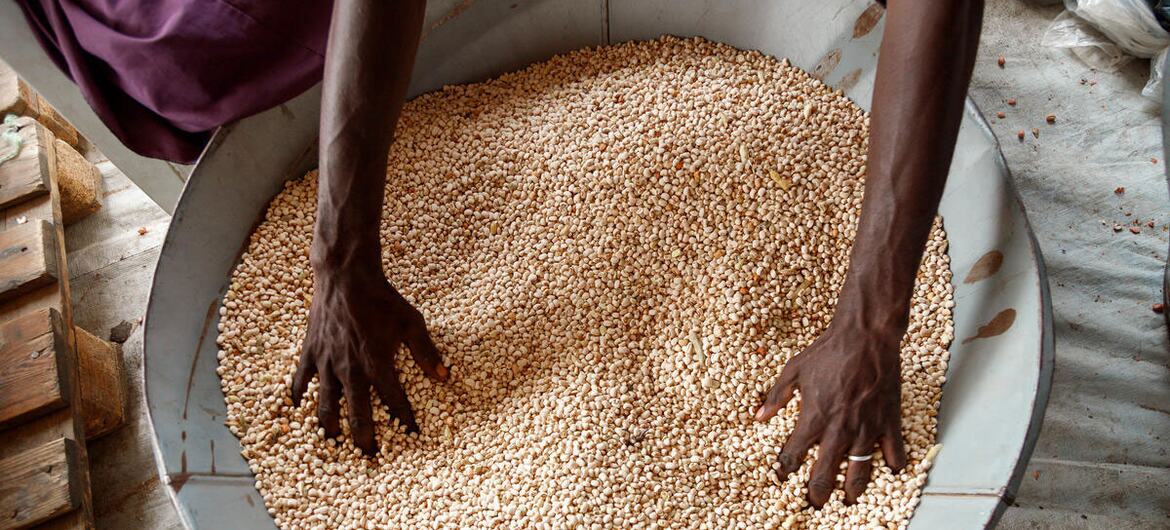
© WFP The conflict in the Middle East is impacting the cost of food in many parts of the world.
With four years remaining until the 2030 deadline for the Sustainable Development Goals, progress has stalled and, in some cases, reversed, according to the Financing for Sustainable Development Report 2026, launched at UN Headquarters on April 20th, 2026. The report, produced by the UN Inter-Agency Task Force on Financing for Development and drawing on the consensus views of more than 60 UN bodies and international institutions, paints a sobering picture of a world where the financing architecture for development is fraying precisely when it is most needed.
One quarter of developing countries still have lower per capita income than before the Covid-19 pandemic. Some 3.4 billion people live in countries that spend more on interest payments than on health or education. Official development assistance has fallen sharply, foreign investment continues to decline, and global trade tensions and rising tariffs are adding further pressure, particularly for the least developed countries.
There are, however, pockets of resilience. Global economic growth exceeded expectations in 2025. South-South trade has expanded rapidly over two decades. Investment in renewable energy reached a record $2.2 trillion in 2024, double the amount invested in fossil fuels. The report’s authors identify a financing gap of up to $4 trillion annually for developing countries and call for accelerated implementation of the Sevilla Commitment, a 2025 global agreement to scale up development financing, as the most credible path back on track. Secretary-General António Guterres, speaking at the launch, identified the Middle East conflict as an additional drag on development, citing its real-time impact on the cost of fuel, fertiliser and food, as well as trade, transportation and tourism.
Source: Financing for Sustainable Development Report 2026, UN Inter-Agency Task Force, April 20th, 2026

Japan Should Not Ignore India’s Authoritarian Turn
Japan should not repeat the mistakes of its China policy. After the Tiananmen massacre of 1989, Japan led the way in re engaging a shunned Chinese government. The West, too, bet on engagement...
From AI To ‘Killer Robots’: UN Chief Issues Urgent Governance Call
Guterres proposed an AI Child Safety Pledge under which developers would have to prove their systems are safe for children, subject to independent oversight; commit to zero tolerance for the...







Our Network
Our Channels

© 2026 Al Jazeera Media Network. All rights reserved.