

Fields of Despair: How a Distant War Is Starving Myanmar’s Farmers

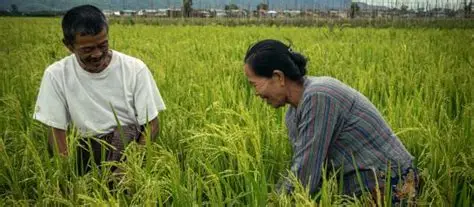
Archive/UNDP
The Strait of Hormuz crisis is turning a food emergency into a catastrophe
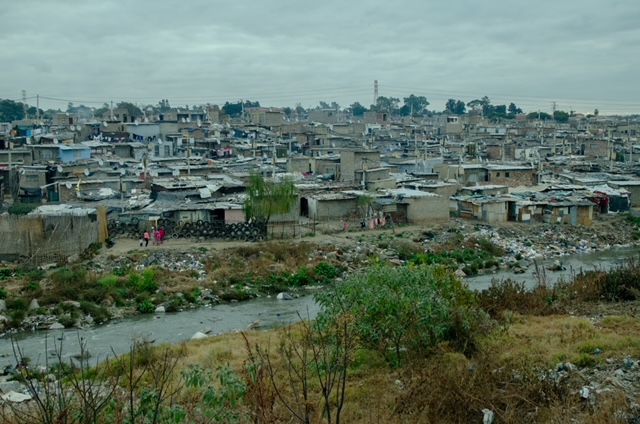
More than 4,000 kilometres from the smouldering waters of the Strait of Hormuz, a rice farmer in Myanmar’s Irrawaddy delta was rationing fertiliser to one-sixth of what his crop needed. He could not afford more. A 50-kilogram bag had come to cost up to 200,000 kyat, roughly five times what it did before the war between America and Iran closed the world’s most consequential shipping lane. “I have no willingness to continue if this situation doesn’t end,” he said.
That sentiment, bleak as the monsoon clouds gathering over his paddy, captured the predicament of millions of farmers across the developing world. The crisis in the strait was being billed, with good reason, as an energy shock. But its reach extended far beyond fuel. The Arabian Gulf accounted for at least 20% of all seaborne fertiliser exports, and its dominance was even more pronounced for urea, the world’s most widely used nitrogen fertiliser, with 46% of global trade originating from the region. When that artery closed, the effects cascaded through supply chains with brutal efficiency, landing hardest on those least able to absorb them.
Not merely an energy shock
Few countries illustrated this vulnerability more starkly than Myanmar. The country imported 90% of its fuel oil and up to 95% of its chemical fertilisers, leaving its agriculture sector almost entirely hostage to the whims of global commodity markets. That dependence was manageable when prices were stable. It became catastrophic when they were not. Fertiliser prices rose sharply from the moment the conflict began, with Middle East granular urea increasing by 19% in the first week of March alone, while Egyptian urea prices surged by 28%.
Myanmar was once the world’s rice bowl. Before the second world war it exported more of the staple than any other nation on earth. Decades of post-independence instability corroded that legacy, and a military coup in 2021 accelerated the decline. The resulting civil war killed more than 90,000 people and displaced over 3.7 million, according to the United Nations and the conflict monitoring group ACLED. The country entered the current crisis already on its knees. A quarter of its population was already lacking sufficient food, and its economy ranked among the most fragile in Asia.
Into this already dire situation, the Hormuz disruption arrived like a second blow to a man already down. The Myanmar Rice Federation warned that higher prices for fuel, fertiliser and transport were putting additional pressure on farmers, millers, traders and exporters across the entire supply chain. Farmers who customarily bought inputs on credit and repaid after harvest faced sums that simply would not balance. Some applied a fraction of the fertiliser their fields required. Others contemplated abandoning farming altogether. The World Food Programme warned that a 50% drop in fertiliser use could result in farming output dipping by up to 15% in Myanmar, where food insecurity was already widespread.
A waterway and its consequences
The global dimensions of the crisis were no less alarming. Tanker traffic through the Strait of Hormuz collapsed by more than 90% within days of the conflict’s escalation, and the disruption proved stubbornly persistent. As one Emirati official noted in April, access through the strait was being restricted, conditioned and controlled, and there was little reason to expect swift normalisation. Shipping experts warned that a corridor through the strait could remain commercially impaired even if partially reopened, since a single attacked vessel could cause confidence to collapse all over again.
The consequences rippled outward in ways that compounded one another. Southeast Asian granular urea prices jumped over 40% since the conflict began, squeezing farmers across a region that fed a large share of humanity. Global fuel prices rose to more than double the 2025 average, according to UN estimates. Insurance costs compounded the strain on shipping: war-risk premiums rose from 0.25% to as high as 10% of vessel value, with coverage resetting every seven days.
Compounding the fertiliser crunch was a pattern of policy responses that risked making things worse. China, Russia, Egypt and Indonesia together accounted for roughly 35% of global fertiliser exports and had all implemented some form of export quotas or restrictions, further tightening supply precisely when it was most needed. The parallels with the grain crisis that followed Russia’s invasion of Ukraine in 2022 were uncomfortable. In 2022, the world had at least the benefit of functioning shipping lanes. In the spring of 2025, it did not.
An existential question
For Myanmar, the question was not merely economic but existential. There were already 12.5 million hungry people in the country, many of them living in remote areas or displaced by the civil war. The WFP warned that 45 million more people around the world would fall into acute food insecurity if the conflict did not end by mid-year. In Rakhine state, devastated by fighting between the military junta and the Arakan Army, fuel and fertiliser had become just the latest necessities to slip beyond reach.
The shock arrived at a time when many developing economies were already struggling to service debt, with tightening fiscal space and a limited capacity to absorb new price pressures. Governments that might once have cushioned the blow through subsidies found their treasuries constrained. International donors, distracted by the geopolitical crisis itself, were slow to redirect attention toward its agricultural consequences. The gap between the urgency of the problem and the pace of the response was wide and widening.
For wealthy nations, the Hormuz crisis meant higher petrol prices and uncomfortable headlines. For Myanmar’s rice farmers, standing knee-deep in their paddies as the monsoon rains began, it meant choosing between planting at a loss or not planting at all. A waterway most of them had never heard of was shaping whether they ate. The distance between the strait and the delta was 4,000 kilometres. The distance between cause and consequence was far shorter than that.
UN estimates on global fuel prices and food insecurity projections, April 2026. World Food Programme, warnings on fertiliser use and food insecurity in Myanmar, March 2026. Myanmar Rice Federation, statements on supply chain pressures, March 2026. ACLED and United Nations, casualty, and displacement figures for Myanmar civil war, 2026. Emirati official statements on Strait of Hormuz access restrictions, April 2026. Commodity market data on Middle East and Egyptian urea price movements, March 2026. Commodity market data on Southeast Asian granular urea price movements, 2026. Shipping industry reports on war-risk insurance premiums and tanker traffic, March 2026. UN and monitoring group data on Myanmar food insecurity and population displacement, 2026.
Sources
AFP / Gulf Times, “Growing fears: Myanmar farmers face fertiliser, fuel dearth,” May 29, 2026
AFP / Free Malaysia Today, “Myanmar’s farmers face fertiliser, fuel dearth,” May 29, 2026
AFP / Mizzima, “Growing Fears: Myanmar Farmers Face Fertiliser, Fuel Dearth,” May 30, 2026
CNN / KESQ, “This is far worse: When conflict 2,000 miles away compounds civil war at home,” May 15, 2026
South China Morning Post, “Myanmar’s food security in crisis as fuel, fertiliser shortages threaten fragile economy,” April 8, 2026
FAO, “FAO Chief Economist warns of severe global food security risks from disruption to Strait of Hormuz trade corridor,” March 26, 2026
CSIS, “Chokepoint: How the War with Iran Threatens Global Food Security,” May 2026
World Economic Forum, “Beyond oil: 9 commodities impacted by the Strait of Hormuz crisis,” April 1, 2026
UNCTAD, “Strait of Hormuz disruptions: Implications for global trade and development,” March 10, 2026
War on the Rocks, “A Closed Strait of Hormuz Risks a Global Food Security Crisis,” April 13, 2026
IFPRI, “How fertilizer policies could exacerbate Hormuz price shocks,” May 2026
Time, “Lawmaker Warns of ‘Global Food Crisis,’ Urges Immediate Reopening for Strait of Hormuz,” May 19, 2026

Japan Should Not Ignore India’s Authoritarian Turn
Japan should not repeat the mistakes of its China policy. After the Tiananmen massacre of 1989, Japan led the way in re engaging a shunned Chinese government. The West, too, bet on engagement...
From AI To ‘Killer Robots’: UN Chief Issues Urgent Governance Call
Guterres proposed an AI Child Safety Pledge under which developers would have to prove their systems are safe for children, subject to independent oversight; commit to zero tolerance for the...









Our Network
Our Channels

© 2026 Al Jazeera Media Network. All rights reserved.