

Honduras: A Community Loses Ground to the Sea
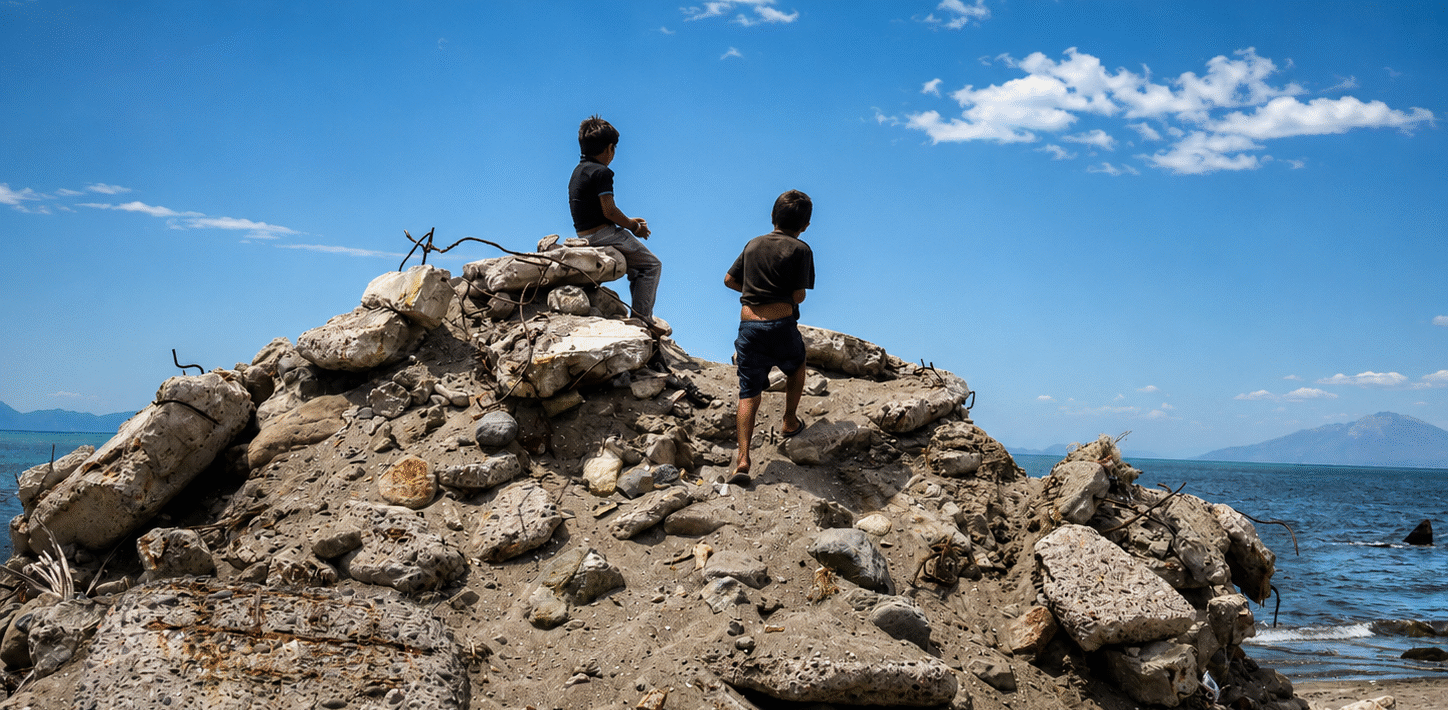
Erick Curvelo / Amnesty International
The people of Cedeño face climate displacement as the state fails to act
The coastline of Cedeño, a small fishing community on Honduras’s Pacific shore, is disappearing. Between 2004 and 2026, the sea has swallowed roughly 135 metres of land, advancing at more than six metres a year. Storm surges, coastal erosion and rising sea levels have combined to threaten the livelihoods, homes and basic rights of thousands of people. Tropical Storm Cristina struck the area just days ago, adding fresh devastation to years of accumulated loss.
In a report published on June 17th, Amnesty International documents what it calls a human rights crisis rooted in climate inaction. Honduras contributes almost nothing to global greenhouse gas emissions, yet it ranks among the countries most exposed to climate change. The people of Cedeño are paying the price.
Rights under water
Access to clean water in Cedeño is severely limited. Storm surges have damaged the local distribution network and most families rely on self-dug wells, whose water has been rendered undrinkable by contamination and salt intrusion. Food security is equally precarious. Artisanal fishing is the main source of income, but catches have dwindled as mangroves are stripped away and rough seas keep boats ashore. There are few alternative livelihoods.
Homes and businesses have been rebuilt and destroyed multiple times over. “We lived happily before I lost my house and my business to the storm surge,” said one resident, whose two daughters left for the United States without papers after the family’s circumstances collapsed. Their remittances now keep her alive.
The state’s response has been meagre. Families have largely borne the costs of rebuilding themselves, often taking on debt. The Permanent Contingency Commission provides sporadic emergency relief, but Honduras has no legal framework for managing climate displacement. The country’s displacement law covers only those fleeing violence.
Relocation without a plan
Since May 2025, residents organised through a local climate justice roundtable have pressed the mayor of Marcovia and several ministries to create an inter-institutional body to plan a dignified and comprehensive relocation. Around 990 people are estimated to need resettlement urgently. On June 3rd, the government announced the creation of such a body, coordinated by the contingency commission. Amnesty International welcomes the announcement but warns that it must translate into a concrete plan backed by adequate resources and genuine community participation.
The organisation is also calling on Congress to legislate for people displaced by climate change and disasters, bringing national law in line with an advisory opinion issued by the Inter-American Court of Human Rights in 2025.
The migration trap
Those who cannot wait for relocation are leaving. Young adults in particular have joined the flow of irregular migrants heading north. Many are now in the United States without legal status and fear deportation. Both the United States and Mexico have tightened their migration policies, reducing access to international protection precisely as climate pressures mount.
International law obliges states not to return people to places where they face serious human rights risks, including those arising from the climate emergency. In practice, those obligations are honoured inconsistently at best. Amnesty International is calling on receiving countries to refrain from deporting Hondurans with genuine protection needs and urging the international community to create migration pathways tailored to those displaced by climate and disaster.
The broader failure, the organisation argues, is one of climate finance. Honduras has a legal framework for climate adaptation but insufficient resources and institutional capacity to implement it. Meanwhile, wealthy emitters have provided inadequate support. Grants, rather than loans, are what countries like Honduras need to adapt, mitigate and repair loss and damage without deepening their debt.
Source: Amnesty International, “Cedeño: Losing everything, home and children,” 17 June 2026

Japan Should Not Ignore India’s Authoritarian Turn
Japan should not repeat the mistakes of its China policy. After the Tiananmen massacre of 1989, Japan led the way in re engaging a shunned Chinese government. The West, too, bet on engagement...

From AI To ‘Killer Robots’: UN Chief Issues Urgent Governance Call
Guterres proposed an AI Child Safety Pledge under which developers would have to prove their systems are safe for children, subject to independent oversight; commit to zero tolerance for the...







Our Network
Our Channels

© 2026 Al Jazeera Media Network. All rights reserved.