

Old and New Challenges for the Human Rights Council as It Turns 20
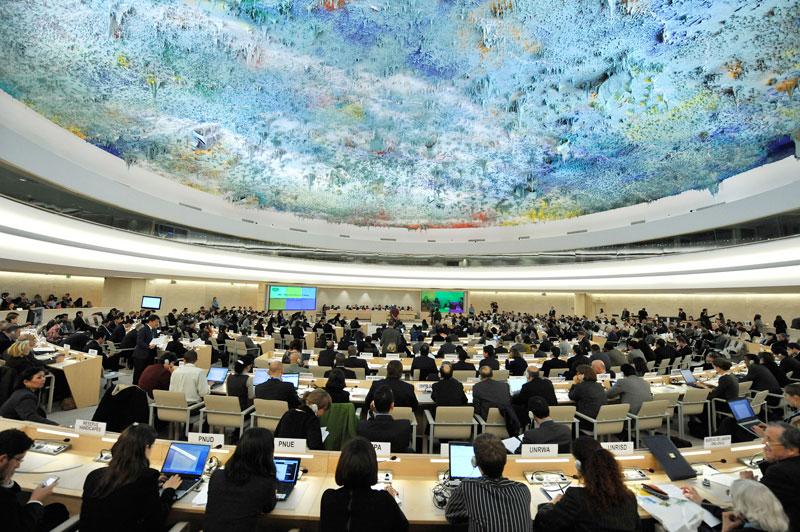
Archive/Al Jazeera
It is 20 years to the day since the UN Human Rights Council began its work as the world’s principal forum for promoting and defending fundamental rights everywhere, particularly for the world’s most vulnerable people.
Awa Dabo, the newly appointed Deputy High Commissioner for Human Rights, said human rights mechanisms were built for moments such as this, when rights have come under pressure, when people need protection and when principles must be turned into action. The Council was created to replace the UN Commission on Human Rights, and the 47 member states that made up the new body were urged by then Secretary General Kofi Annan, on 19 June 2006, to avoid political point scoring or petty manoeuvring.
Now in its 62nd session in Geneva, the Council is busier than ever, pressing for accountability across a growing list of emergencies and unresolved crises. Whether it has matched expectations, and whether it has adapted to a world in which human rights are under assault and violated flagrantly, as UN Secretary General António Guterres put it at a special event on Friday marking two decades of the Council, remains an open question.
It Was Not Easy
Luis Alfonso de Alba Góngora, the Council’s first president, recalled that building the institution was no easy task. Member states held very different views on what needed to change and what should be retained from the old Commission on Human Rights, and the international context at the time, marked by conflicts including in Gaza and Lebanon, made the process harder still. Some countries opposed the Council’s creation outright and declined to support the building of the new institution.
Every Voice Counts
As with other UN bodies, one of the Council’s founding aims was to include as wide a range of participants as possible, from government delegations to non-governmental speakers, and from independent investigators to civil society activists. Volker Türk, the High Commissioner for Human Rights, said this breadth of participation helps ensure that Indigenous peoples and others whose voices struggle to be heard are represented, citing interactive panels involving children, young people, survivors and victims as a model of participation the UN should expand further. Council watchers will often hear the rotating president gently reminding delegates to remain respectful of one another, a reminder of the lethal reprisals many human rights defenders face today and of the role the forum plays in raising their concerns.
Special Investigators
Another defining feature of the Council is its roughly 50 Special Rapporteurs, independent experts mandated to monitor situations of concern and report back to encourage action. Farida Shaheed, Special Rapporteur on the right to education, described them as the frontline for voices that go unheard, noting that rapporteurs often speak when others fall silent and raise issues that are not always welcome.
Considered Approach
The Council holds higher status than its predecessor as a subsidiary body of the UN General Assembly. It meets in three regular sessions a year, each considering two dozen or more resolutions on matters ranging from human rights in specific countries of concern, such as South Sudan, to freedom of religion or belief and the right to a clean, healthy, and sustainable environment. Most resolutions are adopted without a vote at the end of each session, some after revision, others withdrawn before the final list is set, often following informal negotiations conducted away from the chamber. Where consensus cannot be reached, as on Ukraine, a vote is called. The Council continues to face accusations of bias against Israel, which remains on its agenda 20 years on, though defenders point to its system of human rights peer review, under which every UN member state is examined roughly every four and a half years.
Funding Crunch
Although human rights form one of the UN’s three pillars, alongside peace and security and development, the organisation’s wider funding crisis poses an existential challenge to the Council’s work. Delegates now have less time to speak, and interpretation services have been scaled back. Independent experts have echoed concerns raised by the High Commissioner for Human Rights about the dire financial situation, saying funding shortfalls have forced them to ration their workload.
Heady Days
Senior communications official Rolando Gomez recalled the excitement of the Council’s first session in 2006, describing a sense among the small media team supporting its launch that they were witnessing the start of a renewed international commitment to human rights. Despite the challenges and controversies, the Council has faced since, he said it has become an indispensable forum for dialogue, accountability and action, valuable above all for the platform it gives to voices rarely heard elsewhere, including victims, human rights defenders, independent experts, and civil society representatives.
Bob Last, a veteran political counsellor with the UK Mission who was present at the Council’s founding, recalled a mixture of excitement and hope on its opening day, excitement at the chance to build a new institution, and hope that it might improve on the failings of the Commission on Human Rights it replaced. He noted that disagreement persists over what exactly those failings were, but that Kofi Annan had been clear at the time about why he believed the Commission needed to be replaced and what he hoped the new Council would achieve.
Source: UN News, 19 June 2026, reporting by Daniel Johnson in Geneva

Japan Should Not Ignore India’s Authoritarian Turn
Japan should not repeat the mistakes of its China policy. After the Tiananmen massacre of 1989, Japan led the way in re engaging a shunned Chinese government. The West, too, bet on engagement...
From AI To ‘Killer Robots’: UN Chief Issues Urgent Governance Call
Guterres proposed an AI Child Safety Pledge under which developers would have to prove their systems are safe for children, subject to independent oversight; commit to zero tolerance for the...


Our Network
Our Channels

© 2026 Al Jazeera Media Network. All rights reserved.