

Sweden’s Deportation Decisions Ignore Women’s Rights Risks

A demonstration against the deportations of young adults held at Sergels torg in Stockholm on May 10, 2026. © Susanne Bergsten
Young Women Deported to Face Gender Based Harm, Families Split
Sweden is deporting young women to countries where they could face severe gender-based rights violations, Human Rights Watch said. Media reports found that in 2025 at least 92 young adults were set to be deported alone, many of them women who grew up in Sweden and have immediate family there.
Sweden has been deporting a growing number of young adults who spent years on temporary residence permits tied to a family member but lost their right to remain when delays and policy changes left them without permanent residency by the time they turned 18. Deporting young women is especially alarming when they are sent back to countries where gender-based violations and entrenched patriarchal norms severely restrict their rights and autonomy.
“The Swedish government is sending young women to situations where they may have to give up their rights and autonomy just to survive,” said Susanne Bergsten, a research assistant at Human Rights Watch. “These deportations disregard well documented risks of severe gender discrimination, including gender persecution and the daily risks faced by young women living alone in societies with grave social, legal and financial barriers to women’s independence.”
Families Torn Apart Human Rights Watch interviewed two people whose residency has been denied, and two legal experts. Recent cases illustrate the consequences. Sisters Darya Javid Gonbadi, 24, and Donya Javid Gonbadi, 20, were deported to Iran in October 2025 after seven years in Sweden, while their father, a permanent resident, and younger siblings, Swedish citizens, remained. Ayla Rostamil, 21, also faces deportation to Iran without her family after six years in Sweden; her case is temporarily on hold owing to the ongoing conflict.
In Iran, women face severe discrimination and violence, including laws that deny them equal rights in marriage, divorce, inheritance, and child custody. A UN Fact Finding Mission established in 2022 found that authorities commit the crime against humanity of gender persecution, denying women and girls fundamental rights, including to bodily autonomy, expression, education, and employment through compulsory hijab laws. Those who defy or protest face grave consequences, including arbitrary arrest and detention, torture and other ill treatment, and unlawful killings.
Nardine Rael Awad, 21, was deported to Egypt on May 16th, 2026. She came to Sweden at 17 with her mother, who is married to a Swede and was not deported. She said she feared for her safety as a Christian woman who does not wear a hijab, living alone in Egypt, adding that she has five locks on her door and is afraid to leave her flat. “Egypt is a much more male dominated society, and my life is very restricted,” she said.
Human Rights Watch found in a 2023 report that social norms in Egypt discourage women from living alone, while male guardianship policies restrict women’s travel and mobility. Sexual harassment and violence remain widespread, and Egypt lacks comprehensive domestic violence laws. Its personal status law also disadvantages women in divorce, inheritance, and child custody. Egyptian authorities have in recent years arrested women who posted online videos, bringing vague charges of violating public morals and undermining family values.
Sisters Diya Hassan, 21, and Kani Hassan, 20, came to Sweden with their family eight years ago. Both graduated from high school and started working. Four years after arriving they applied for permanent residency alongside their parents and younger brother, but their cases went unprocessed for more than two and a half years. They were both over 18 by the time decisions arrived. “When our parents received their permanent residence permits, we received rejection and deportation decisions on the same day,” Diya said. “We didn’t know whether to be happy for them, or sad for us.”
The sisters face deportation to Iraq, where they have no family or support network. When they raised this with the court, the judge said their father in Sweden could support them financially. “It won’t be the same as in Sweden where women can be independent; here both Diya and I work,” Kani said. Women’s rights in Iraq are increasingly under threat, with weak legal protections. There is no federal domestic violence law, and article 41(1) of the penal code permits a husband to punish his wife, while the law reduces sentences for crimes committed for so called honourable motives.
“You think of Sweden as a country that stands up for women’s rights. I never would have believed that they would send young women back alone to places like Iraq and Iran,” Diya said.
A Policy Adrift from Its Principles Sweden once prided itself on its feminist foreign policy. Although the government abandoned it after 2022, the foreign minister still describes gender equality as a core value. Yet current migration decisions appear to disregard the gender specific harm of deportation, despite guidance from the UN Committee on the Elimination of Discrimination against Women requiring states to consider gender specific risks throughout the migration process, including return decisions.
On March 6th, the Swedish government said it would pause issuing new “teenage deportation” orders but would still carry out deportations already decided. On June 1st it announced a pathway allowing young adults to apply for residence permits tied to their parents up to age 21 rather than 18, with those already facing deportation able to reapply. While this offers some temporary relief, it only defers the substantive issue until young adults turn 21 and fails to address the core problem that young women will still be deported to countries where they face a real risk of gender-based rights violations, Human Rights Watch said.
These decisions also raise questions about how the strict prohibition in international law on returning individuals to serious risk of inhuman and degrading treatment or torture is being applied. The prohibition is reflected in several of Sweden’s treaty obligations, including the EU Charter of Fundamental Rights, the European Convention on Human Rights and the International Covenant on Civil and Political Rights. The UN Human Rights Committee has interpreted article 7 of the Covenant to include a ban on deportations that risk severe gender-based violence or persecution. Separating these young adults from their parents, siblings and social networks also raises serious questions under article 8 of the European Convention concerning the right to family and private life.
Swedish authorities should immediately halt these deportations and ensure that all return decisions comply with its international human rights obligations, Human Rights Watch said, including the absolute prohibition on returning individuals to a real risk of persecution, gender-based violence or inhuman and degrading treatment, and the protection of families from separation.
“Sweden has clear obligations to ensure that no one is returned to a real risk of serious harm,” Bergsten said. “By deporting young women to countries where gender-based persecution and severe restrictions on their rights are well documented, Sweden risks exposing them to exactly the kinds of abuses it is bound to prevent.”
Sources: Human Rights Watch interviews; UN Fact Finding Mission on Iran (2022); Human Rights Watch report on Egypt (2023); UN Committee on the Elimination of Discrimination against Women. July 8th 2026.
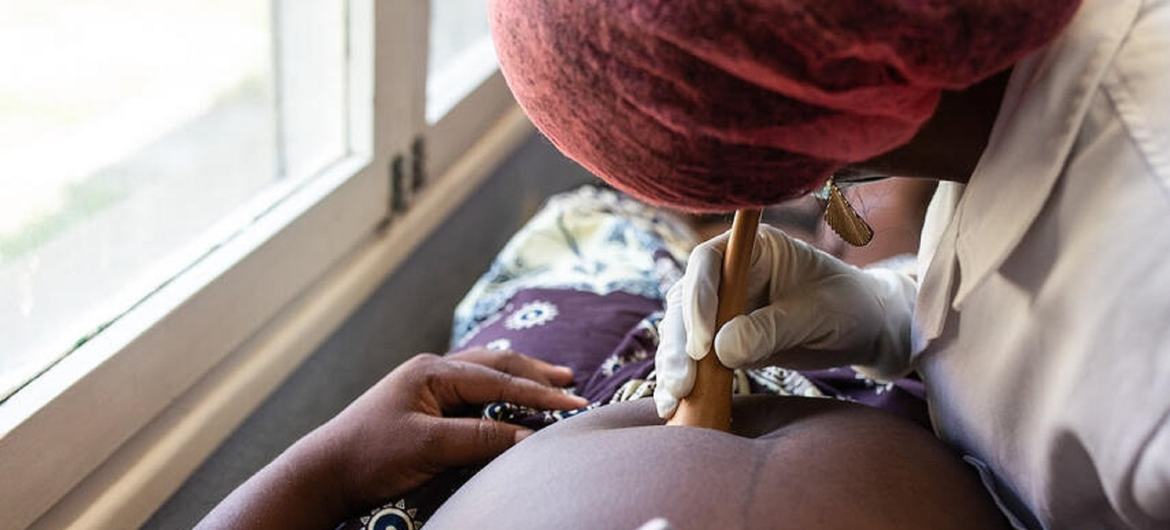
Restoring Dignity: A Senegalese Surgeon and A Burundian Foundation Honoured for Reproductive Health Work
Speaking to UN News, Professor Gueye argued that prevention, not just treatment, must be the priority, calling for stronger health systems and universal access to emergency obstetric care,...

Germany’s Government Is Curbing Its Freedom of Information Act
“The German government seems to perceive transparency and freedom of information as threats and an administrative burden instead of essential safeguards in a democracy,” said Almaz...







Our Network
Our Channels

© 2026 Al Jazeera Media Network. All rights reserved.