

Slow Progress: Twenty Years of Disability Rights
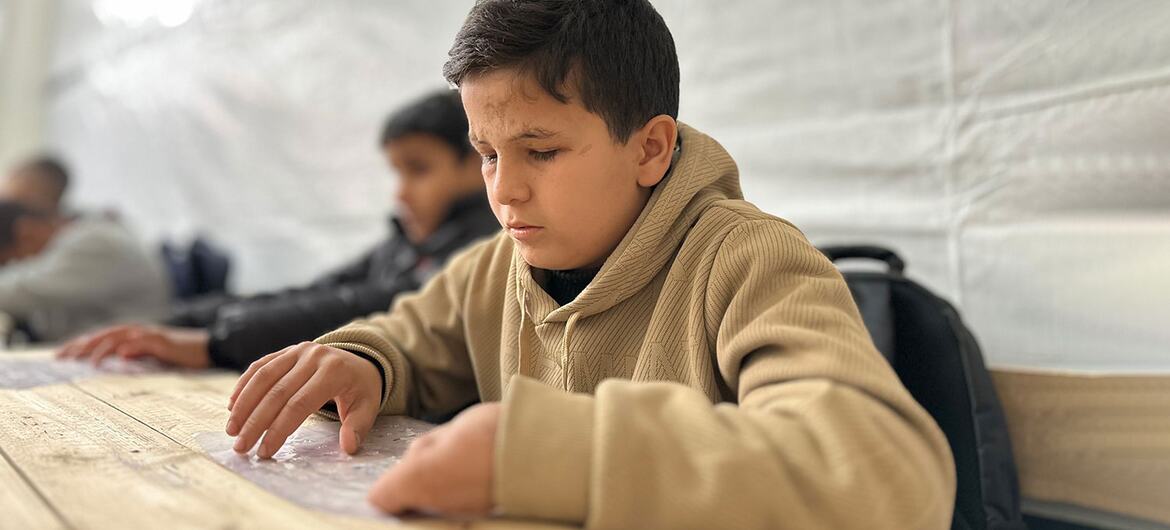
© UNRWA A child with visual impairment reads Braille at an education Centre in the Gaza Strip
Two decades after the world’s most widely ratified human rights treaty was adopted, the gap between promise and reality remains painfully wide
WHEN THE United Nations General Assembly adopted the Convention on the Rights of Persons with Disabilities on 13 December 2006, the moment carried an unmistakable sense of breakthrough. It was the first comprehensive human rights treaty of the 21st century, and attracted the highest number of signatories in history to a UN Convention on its opening day. It was also the first global convention specifically addressing the human rights of people with disabilities, and throughout its drafting, members of the global disability rights movement insisted on being included in deciding what the convention should say. The instrument represented nothing less than a civilisational shift: a formal declaration that disability is not a medical misfortune to be managed by charity and clinical intervention but a dimension of human diversity to be met with dignity, equality and the full force of law.
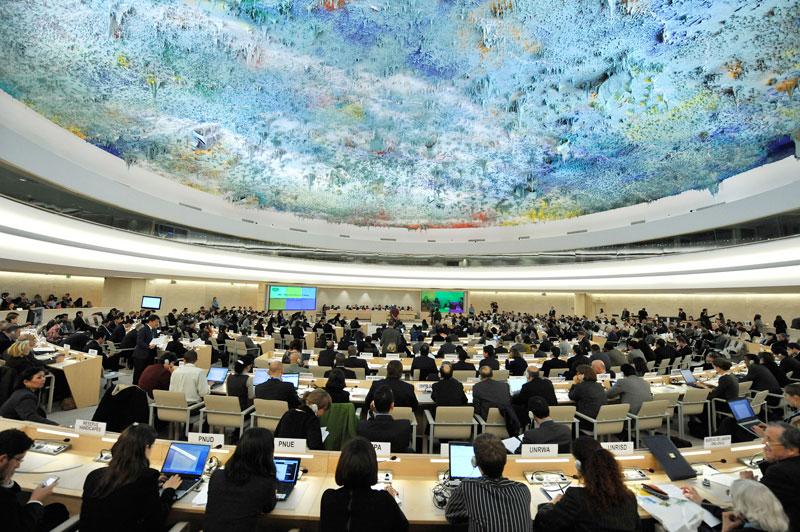
Twenty years on, the world gathered again. On 9 to 11 June 2026, the 19th Conference of States Parties to the Convention, known as COSP19, convened at United Nations Headquarters in New York at a significant moment, as the global community marked the twentieth anniversary of the convention’s adoption. The occasion was described by organisers as marking the twentieth anniversary of the landmark treaty that transformed the global understanding of disability, from a charity and medical model to a human rights-based approach grounded in dignity, equality, autonomy and full participation. The rhetoric was appropriately solemn. The data, however, told a more uncomfortable story.
A Treaty without Equal
The Convention’s reach is extraordinary by the standards of international law. Now ratified by 192 countries, it is a legally binding agreement between member state signatories to uphold, promote and protect the rights of persons with disabilities. The treaty was ratified quickly and broadly across the globe, and has been the impetus for domestic disability law and policy reform and for an elevation of disability rights in international policy frameworks and practices. By any formal measure, the convention is among the most successful legal instruments the United Nations has ever produced. It was negotiated during eight sessions of an Ad Hoc Committee of the General Assembly from 2002 to 2006, making it the fastest negotiated human rights treaty.
Yet legal reach and material change are not the same thing. The convention’s extraordinary ratification record has not translated into corresponding progress on the ground for the 1.3 billion people it is meant to protect. An estimated 1.3 billion people experience significant disability, representing 16% of the world’s population, or 1 in 6 of us. Some persons with disabilities die up to 20 years earlier than those without disabilities. Persons with disabilities have twice the risk of developing conditions such as depression, asthma, diabetes, stroke, obesity or poor oral health, and health inequities arise from unfair conditions including stigma, discrimination, poverty, exclusion from education and employment, and barriers in the health system itself.
The Hard Numbers
At COSP19, UN Secretary-General António Guterres confronted this contradiction directly. He acknowledged that over 90 per cent of countries now have laws guaranteeing the rights of persons with disabilities, but insisted much more must be done in light of the latest UN Disability and Development Report findings, which show that almost all of the Sustainable Development Goals indicators for persons with disabilities are off track. His summary was blunt and unsparing: “While progress is real, it is unacceptably slow.”
The economic picture is particularly stark. Persons with disabilities face persistent barriers in the labour market, with their participation rate 30 per cent lower than that of persons without disabilities. Youth with disabilities are particularly disadvantaged, being twice as likely to be not in education, employment or training compared to their non-disabled peers. Persons with disabilities are more likely to experience adverse socioeconomic outcomes such as less education, poorer health outcomes, lower levels of employment, and higher poverty rates, and poverty may in turn increase the risk of disability through malnutrition, inadequate access to healthcare, unsafe working conditions, and a polluted environment. The relationship between disability and poverty is thus not simply correlational; it is mutually reinforcing and structural.
Only 28 per cent of people with significant disabilities have access to social protection benefits globally, while on average households with a person with a disability spend 14 per cent more of their income on healthcare. Only seven out of 169 SDG targets specifically address disability inclusion, and only 10 of their 231 indicators explicitly require disability data disaggregation, meaning that even the measurement systems themselves remain inadequate to the scale of the problem.
A World Designed for Others
The Secretary-General’s remarks at the General Assembly Hall struck a philosophical note as much as a political one. He observed that too often, living with a disability means living in a world designed by and for others, and that the world benefits when everyone has the chance to use their skills in the service of humanity and to pursue their dreams. This framing is not merely rhetorical. The built environment, digital infrastructure, emergency response systems, transportation networks and healthcare architecture of most countries have been designed with the non-disabled majority as the default. Accessibility, when it exists, is frequently an afterthought, a ramp appended to a building after the fact rather than a dimension integrated into the original design.
Nowhere is this failure more consequential than in the face of global crises. Persons with disabilities are often among those most adversely affected in an emergency, sustaining disproportionately higher rates of morbidity and mortality, while being among those least able to access emergency support. More than 1 billion people with disabilities, 80 per cent of whom live in low-income and middle-income countries, are disproportionately and differentially adversely affected by the climate change crisis, with substantially higher rates of mortality and greater harms in climate emergencies than their non-disabled counterparts. Yet the policy response has been almost wilfully blind to this reality. A systematic analysis of climate policies adopted by 195 parties to the Paris Agreement found that only 41 parties mention people with disabilities in their nationally determined contributions, and only 75 do so in their adaptation policies, with these references rarely accompanied by concrete measures.
This is an astonishing omission. Climate change is not a future threat for persons with disabilities; it is a present emergency that is compounding existing exclusions. The formal recognition, announced in February 2026, of a Disability Caucus within the United Nations Framework Convention on Climate Change represents a step forward, but the gap between institutional acknowledgement and operational inclusion remains enormous.
The UN’s Own House
Guterres was candid that the United Nations itself must do more. He pointed to the UN’s Disability Inclusion Strategy as an attempt to lead by example, aiming to ensure change led by the insights of people with disabilities themselves. The Strategy, launched in 2019, was designed to provide a roadmap for disability inclusion across all pillars of the organisation’s work. Its intentions were admirable. Its implementation has been uneven.
An independent evaluation of the UN Disability Inclusion Strategy conducted in 2024 and 2025 found that while it has been an important catalyst for change, it has not yet achieved system-wide transformation. Progress has been uneven across organisations and countries, and tangible results for persons with disabilities remain limited. The evaluation recommended revising the strategy to define a clearer vision, theory of change, and greater emphasis on participatory collaboration with persons with disabilities themselves. UN Human Rights, for instance, reported progress on only one out of 15 applicable indicators under the strategy’s accountability framework. These are figures that sit poorly alongside two decades of high-minded convention language.
The structural problem is partly one of fragmentation. System-wide progress will not be achieved if entities and country teams work independently of each other to implement the strategy. Disability inclusion, like gender equality and racial justice before it, has struggled to move from dedicated programme silos into the mainstream of institutional culture, budgeting and senior leadership accountability.
Implementation and its Enemies
The gap between legal commitment and material change is, of course, a familiar pathology in international human rights. Treaties are easier to ratify than to implement. Governments that sign conventions do so in part because they face few short-term consequences for non-compliance; the monitoring mechanisms of the CRPD, though more robust than many comparable instruments, remain dependent on state reporting and goodwill. While many countries have adopted or amended standalone disability laws, alignment with the CRPD remains uneven, with selective focus on certain rights such as accessibility and employment, and less attention to others including legal capacity, alongside persistent gaps in accountability infrastructure.
The data problem is intertwined with the implementation problem. If disability is poorly counted, it will be poorly addressed. Persons with disabilities are frequently excluded from the very data collection processes that are supposed to measure their situation, leading to systematic undercounting and a distorted picture of need. Without accurate data, governments can neither plan nor be held to account. The call for greater investment in disaggregated disability data is not a technocratic footnote; it is a precondition for any meaningful accountability.
There is also the question of resources. The CRPD imposes obligations on states to progressively realise the rights it enshrines, but progressive realisation requires progressive investment. For low- and middle-income countries, many of which face acute fiscal constraints while hosting the majority of the world’s disabled population, meeting these obligations demands sustained international support that has not always been forthcoming. The main links between poverty and disability include dangerous living conditions, the absence or inaccessibility of medical care or rehabilitation, extra costs related to disability such as personal assistance and assistive devices, and limited access to education and employment. Addressing these links requires public investment at a scale that cannot be achieved through goodwill alone.
The Road Ahead
COSP19 arrived linked to broader global efforts to advance inclusive social development, including the outcomes of the Second World Social Summit held in Doha in 2025. The Doha summit’s emphasis on inequality and social protection provides a wider framework within which disability rights can be embedded, rather than treated as a niche concern. This integration matters. Disability is not a specialised subject for specialists; it intersects with every dimension of development: education, health, employment, housing, climate resilience, conflict response and democratic participation.
The conference itself, running under the theme of celebrating and consolidating achievements while shaping the next phase of implementation, featured roundtable discussions on creating a world free from exploitation and violence against persons with disabilities, and on resilient societies and strengthened care and support systems. Civil society organisations, including the World Blind Union and youth representatives from across the global south, brought first-hand voices to the General Assembly Hall. Their presence was a reminder of the convention’s founding principle: that those whom the law is designed to protect must be at the centre of its implementation.
Guterres’s challenge to redesign the world is not a metaphor. It is a concrete agenda. Accessible infrastructure, inclusive education, equitable employment practices, disability-responsive disaster planning, and genuine participation of persons with disabilities in governance at every level are not aspirations for some future decade. They are obligations that became legally binding in May 2008, when the convention entered into force. Every year of delay is a year in which those obligations are violated.
The convention’s twentieth anniversary offers a legitimate occasion to take stock of genuine progress. Laws have been enacted. Institutions have been established. Awareness, however imperfectly measured, has grown. The disability rights movement has won battles that would have seemed impossible in 1990. But anniversaries are also occasions for honesty. The world’s 1.3 billion persons with disabilities are not waiting for the next convention, the next strategy document, or the next commemorative conference. They are living, right now, in systems that remain in too many places indifferent or hostile to their full humanity. That is the measure by which COSP19, and the next twenty years of implementation, will ultimately be judged.
Sources
UN News, “Marking historic progress on rights for persons with disabilities, UN conference tackles critical gaps,” 9 June 2026. https://news.un.org/en/story/2026/06/1167683
COSP19 Opening Session, UN General Assembly Hall, New York, 9 June 2026. https://webtv.un.org/en/asset/k16/k16zjpx4rb
UN Division for Inclusive Social Development, “COSP19: UN gathering to mark CRPD20,” March 2026. https://social.desa.un.org/issues/disability/news/cosp19-un-gathering-to-mark-crpd20
UN Division for Inclusive Social Development, “Convention on the Rights of Persons with Disabilities.” https://social.desa.un.org/issues/disability/crpd/convention-on-the-rights-of-persons-with-disabilities-crpd
UN Disability and Development Report 2026, cited at COSP19 opening session.
World Health Organisation, “Disability and Health,” Fact Sheet. https://www.who.int/news-room/fact-sheets/detail/disability-and-health
International Labour Organisation, “Advancing disability inclusion in the global labour market,” April 2025. https://www.ilo.org/resource/news/advancing-disability-inclusion-global-labour-market
World Bank, “Disability Inclusion.” https://www.worldbank.org/ext/en/topic/social-development/disability-inclusion
OHCHR, “The impact of climate change on the rights of persons with disabilities.” https://www.ohchr.org/en/climate-change/impact-climate-change-rights-persons-disabilities
Jodoin et al., “A systematic analysis of disability inclusion in domestic climate policies,” npj Climate Action, 3 March 2025. https://www.nature.com/articles/s44168-025-00228-3
Ministry for Foreign Affairs of Finland, “Evaluation Report: Evaluation of the United Nations Disability Inclusion Strategy,” 2025. https://um.fi/publications/-/asset_publisher/TVOLgBmLyZvu/content/evaluation-report-system-wide-evaluation-of-the-united-nations-disability-inclusion-strategy
OHCHR, “UN Human Rights Report to the Secretary-General on implementation of the UN Disability Inclusion Strategy.” https://www.ohchr.org/en/documents/reports/un-human-rights-report-secretary-general-implementation-un-disability-inclusion-2
UN Secretary-General, “Report on the implementation of the UN Disability Inclusion Strategy,” 2022. https://www.un.org/tr/node/226559
UNDP, “Re-thinking disability inclusion for the SDGs,” June 2023. https://www.undp.org/blog/re-thinking-disability-inclusion-sdgs
Global Disability Summit 2025, Multistakeholder Report. https://www.globaldisabilitysummit.org/wp-content/uploads/2025/03/GIP03351-UNICEF-GDIR-Summary-v5-WEB-Accessible.pdf
Humanity and Inclusion, “Disability: The global picture.” https://www.hi-us.org/disability-the-global-picture

Japan Should Not Ignore India’s Authoritarian Turn
Japan should not repeat the mistakes of its China policy. After the Tiananmen massacre of 1989, Japan led the way in re engaging a shunned Chinese government. The West, too, bet on engagement...

From AI To ‘Killer Robots’: UN Chief Issues Urgent Governance Call
Guterres proposed an AI Child Safety Pledge under which developers would have to prove their systems are safe for children, subject to independent oversight; commit to zero tolerance for the...








Our Network
Our Channels

© 2026 Al Jazeera Media Network. All rights reserved.