

Archive/Al Jazeera
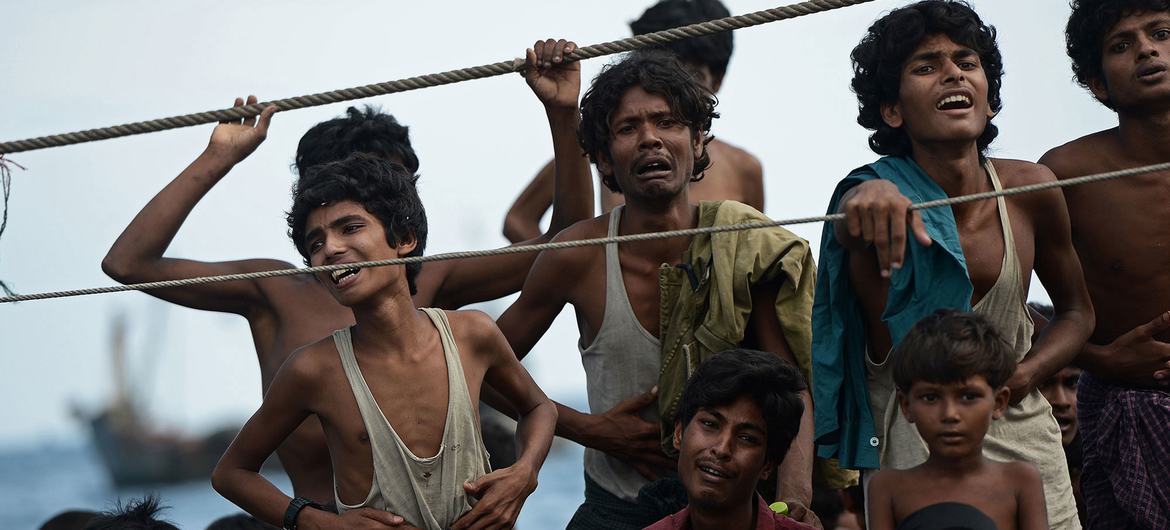
Five years of conflict-related violence have left millions of people in Myanmar in desperate need. A new report from the UN human rights office, OHCHR, published on Monday, warns that a sharp decline in humanitarian assistance is compounding that suffering at precisely the moment when civilians most require protection.
The report covers the period from August 2025, when elections were announced by the military, through the end of the voting period in January 2026. It documents serious human rights violations, a systematic denial of humanitarian assistance, disregard for the rule of law and the distorting effects of military-controlled elections on civilian life.
Arms flows and accountability
Myanmar has been in conflict since the military seized power in February 2021. The OHCHR report notes that foreign actors continue to transfer arms, ammunition, munitions, jet fuel and other dual-use items to the military, arrangements that risk facilitating violations of both international human rights law and international humanitarian law. The report treats this external support as inseparable from the conditions enabling ongoing atrocities.
Civilian deaths and airstrikes
Credible sources verified a minimum of 702 civilian deaths during the reporting period, concentrated largely in the central regions and Rakhine state. Of those deaths, 476 were attributed to airstrikes, including 111 that occurred before voting began in December 2025. The pattern points to a deliberate and sustained campaign against civilian populations rather than incidental harm in contested military engagements.
The cost of funding cuts
Reductions and suspensions in foreign aid are now threatening the locally led civilian protection efforts that had, in many areas, represented the only buffer between communities and the military’s attacks. Civil society groups have been forced into deep programme cuts, closures and layoffs. Ethnic media organisations and women’s groups have been disproportionately affected. Assistance to displaced people, education initiatives and psychosocial support have been curtailed or halted altogether.
Emergency healthcare has deteriorated as military blockades interact with funding shortfalls to disrupt medicine supply chains and force the closure or downgrading of health facilities. Safe houses for survivors of sexual and gender-based violence have closed or are operating at reduced capacity. Boarding facilities and women-focused programmes have been scaled back or kept alive only by reallocating resources intended for other emergencies.
“Predictable funding is essential to strengthen civilian protection initiatives,” the report stated.
A forgotten people
Volker Türk, the UN High Commissioner for Human Rights, did not soften his assessment. “As if the people of Myanmar have not suffered enough at the hands of the military, they have now seemingly been forgotten by those outside the country,” he said. “Funding for localised protection efforts was in many areas the only solace from the suffering caused by constant targeting and indiscriminate attacks by the military. This pullback just compounds that injury.”
The report acknowledged that local protection mechanisms remain fragile and constrained but observed that they have demonstrated, where they have functioned, that meaningful protection is possible when rooted in community trust, legitimacy and collective action.
Türk renewed his call for an immediate cessation of hostilities and for unimpeded humanitarian access to civilians in urgent need of food, clean water, medicines and basic services.
Sources: OHCHR; UN Human Rights Report on Myanmar (August 2025 to January 2026); UN Digital Library, record 4116161; statement by UN High Commissioner for Human Rights Volker Türk; June 22nd, 2026.
World Day Against Child Labour: The Day the World Plays While Its Children Work
By sector, agriculture is where the problem is most concentrated and, not coincidentally, where it is hardest to address. Sixty-one per cent of all child labour takes place in farming, fishing,...
Slow Progress: Twenty Years of Disability Rights
Only 28 per cent of people with significant disabilities have access to social protection benefits globally, while on average households with a person with a disability spend 14 per cent more of...
- Most Viewed
- Most Popular


Our Network
Our Channels

© 2026 Al Jazeera Media Network. All rights reserved.