
Archive/Al Jazeera
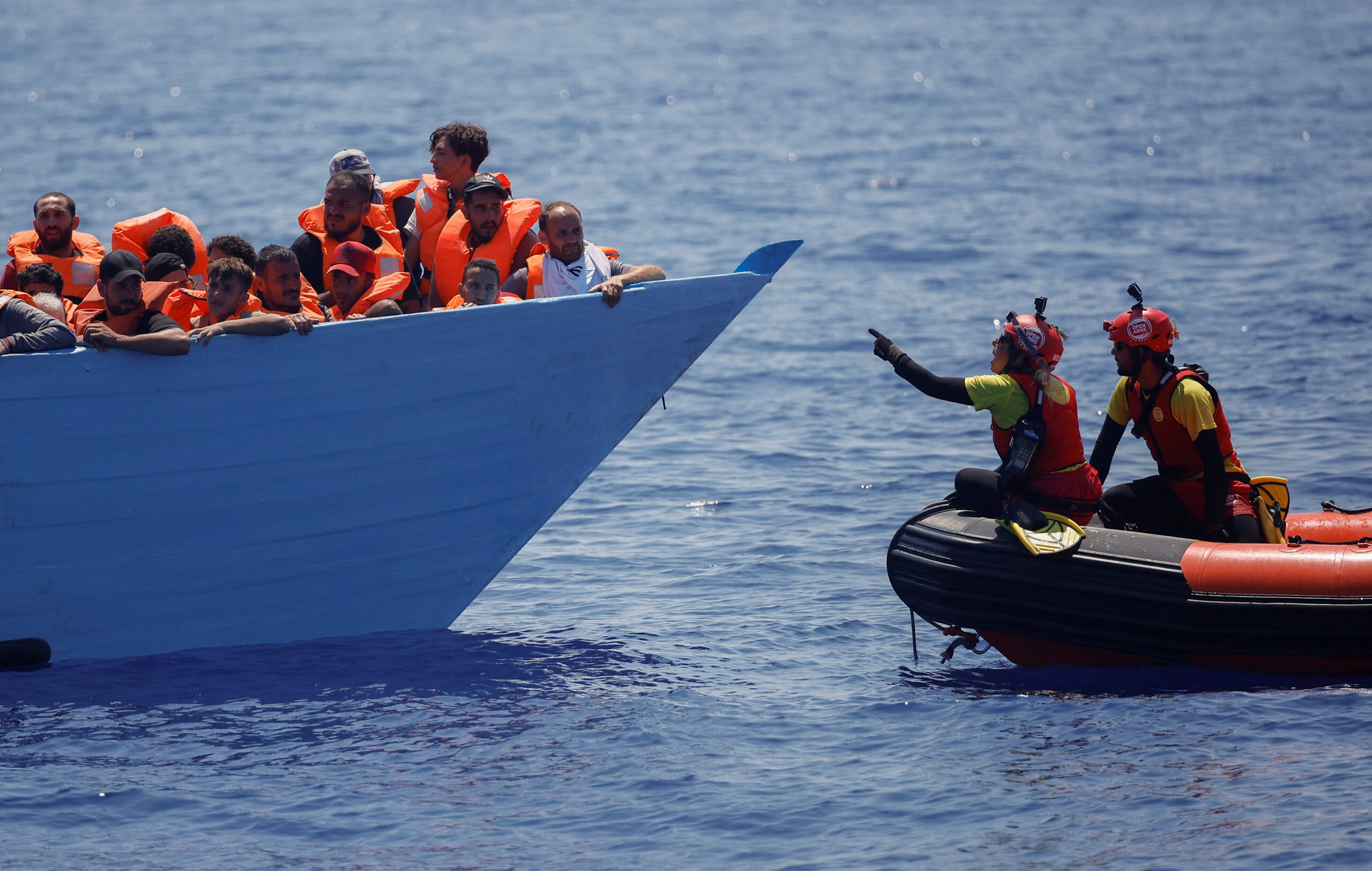
The vessel was carrying people who had paid everything they had for the crossing. When it capsized off Malta, Italian rescue teams recovered ten bodies from the water. The names of the dead, as is so often the case in the Central Mediterranean, may never be fully established. What is known is that their deaths pushed the estimated toll for crossings in this stretch of sea close to 1,000 for the year to date, and that the year is not yet half over.
The Central Mediterranean remains, by every available measure, the deadliest migration route in the world. The passage from the coast of Libya or Tunisia to the shores of Italy or Malta traverses some 300 kilometres of open water, much of it across a sea that offers little mercy to overcrowded, unseaworthy vessels launched by smuggling networks whose business model depends on volume rather than survival. For more than a decade, the bodies have been washing up, the counts have been compiled, the declarations of concern have been issued, and the crossings have continued.
The geography of desperation
The Central Mediterranean route attracts migrants and asylum seekers from across sub-Saharan Africa, the Horn of Africa, North Africa, and, increasingly, from South Asia and the Middle East. They come fleeing conflict, persecution, poverty, and the accelerating consequences of climate change on already fragile agricultural and pastoral economies. Libya, the principal departure point, offers no safety of its own. Since the collapse of the Gaddafi government in 2011, it has functioned as a transit state defined by militia rule, arbitrary detention, and a commodities market in which human beings are the primary commodity.
The journey to Libya is itself frequently fatal. Those who survive it are often held in detention centres run by militias or, in some cases, by agencies nominally operating under the authority of the Libyan coastguard, which has received training and funding from European Union member states as part of a policy designed to intercept crossings before they reach European waters. The conditions in these centres have been documented repeatedly by human rights organisations, including the United Nations High Commissioner for Refugees, as amounting to torture. Beatings, starvation, sexual violence, and forced labour are consistently reported. People are held for indefinite periods, released only when their families can pay ransoms, or sold on to other criminal networks.
Those who make it to a boat take their chances on a crossing that can last between twelve and forty hours in conditions that depend entirely on weather and the structural integrity of whatever vessel the smugglers have chosen to use. Inflatable rubber dinghies, fishing boats designed for a fraction of the loads they carry, and occasionally wooden hulks in advanced states of decay have all been used. Engine failures, deflation, overcrowding, and sudden storms are the leading causes of capsizings. When vessels go down far from shore, survival depends on whether a rescue ship is close enough to respond before hypothermia or drowning claims those in the water.
The politics of rescue
For years, civilian rescue organisations operated vessels in the Central Mediterranean to fill the gap left by the withdrawal of the Italian navy’s Mare Nostrum programme in 2014. Their operations became deeply politically contentious. Italian governments, under pressure from domestic publics anxious about the scale of arrivals, introduced port closures, administrative fines, and legal proceedings against rescue ship captains, arguing that the presence of rescue vessels acted as a pull factor encouraging departures. The evidence for this claim has always been contested. What is not contested is that in years when rescue capacity diminished, the death rate per crossing rose.
The European Union’s border agency, Frontex, has expanded its operational footprint in the region while simultaneously drawing criticism from human rights monitors for alleged involvement in pushbacks, operations in which migrants intercepted at sea are returned to Libya without being given the opportunity to claim asylum, a practice that legal scholars widely regard as a violation of the principle of non-refoulement under international refugee law. The EU and the member states involved have consistently denied that unlawful pushbacks occur.
Malta, a small island nation of fewer than 600,000 people positioned at the geographic centre of the crossing routes, has been at the heart of successive legal and political disputes over responsibility for rescue coordination and the disembarkation of survivors. Its search and rescue zone is one of the largest in the Mediterranean relative to the size of its population and economy, a disparity that successive Maltese governments have argued is fundamentally unjust and that reflects a broader failure of EU solidarity on migration and asylum.
Numbers that do not tell the whole story
The figure of 1,000 deaths in the year to date carries with it a caveat that is both important and devastating: it is almost certainly an undercount. The International Organisation for Migration, which maintains the most comprehensive public database of migration-related fatalities, acknowledges that its figures reflect only deaths that are reported or for which bodies are recovered. The majority of those who die in the Central Mediterranean are never found. They sink with their vessels, are carried away by currents, or simply disappear into a sea that keeps no records. Estimates of the true death toll consistently exceed official counts by substantial margins.
Since 2014, when the IOM began systematic tracking, more than 30,000 people are believed to have died attempting the Central Mediterranean crossing. The figure sits in official reports and is sometimes cited in parliamentary debates, but its scale has long since ceased to generate the moral urgency that, early in the crisis, it briefly provoked. There is a calculus at work in European politics that has never been explicitly stated but is visible in policy: that the management of arrivals, and the political costs they generate domestically, is a higher priority than the prevention of deaths at sea.
What changes and what does not
Governments and institutions periodically announce new frameworks for addressing the Central Mediterranean crisis. The EU’s Pact on Migration and Asylum, agreed in 2024 after years of negotiation, introduced mandatory solidarity mechanisms requiring member states to either receive relocated asylum seekers or contribute financially to border management. Whether it will reduce deaths remains to be seen. Critics argued from the outset that it prioritised external border enforcement over the protection of lives.
Meanwhile, the structural conditions that drive migration from the principal origin countries show no sign of improving. Conflict in Sudan, Somalia, and the Sahel continues to generate displacement on a large scale. Climate-related agricultural failure in the Lake Chad basin and the Horn of Africa is accelerating. Economic conditions in West Africa, already strained before the pandemic, have not recovered to a degree sufficient to reduce the incentive to attempt the crossing. The ten bodies recovered off Malta this week were not the consequence of a policy failure in any single government or institution. They were the consequence of a set of interconnected failures spanning continents and decades, failures of development, of conflict resolution, of climate action, and of a political will that has consistently proved unequal to the scale of what the sea is asking it to confront.
Sources: Al Jazeera, BBC, 7-8 June 2026.
A Perilous Reckoning for the World’s Fight Against AIDS
The toll falls disproportionately on the young. Every week 3,000 adolescent girls and young women in sub–Saharan Africa acquire HIV, a figure that has barely shifted and that the report...
World Day Against Child Labour: The Day the World Plays While Its Children Work
By sector, agriculture is where the problem is most concentrated and, not coincidentally, where it is hardest to address. Sixty-one per cent of all child labour takes place in farming, fishing,...
- Most Viewed
- Most Popular

Our Network
Our Channels

© 2026 Al Jazeera Media Network. All rights reserved.