

Europe’s New Asylum Rules: What They Mean for Rights

A Polish border guard stands near a barbed wire fence at the Polish Belarusian border in Polowce, Poland, July 21, 2025. © 2025 AP Photo/Czarek Sokolowski
On 12 June 2026, the European Union’s Migration and Asylum Pact comes into full effect, ushering in the most significant overhaul of European asylum law in a generation. The pact, a set of ten pieces of binding legislation adopted in 2024, changes how the EU manages its external borders, processes asylum applications, and distributes responsibility among member states. Its architects present it as a necessary rationalisation of a dysfunctional system. Critics, including Human Rights Watch, argue it will make it far harder for people with legitimate protection needs to obtain a fair hearing.
What Will Change at EU Borders
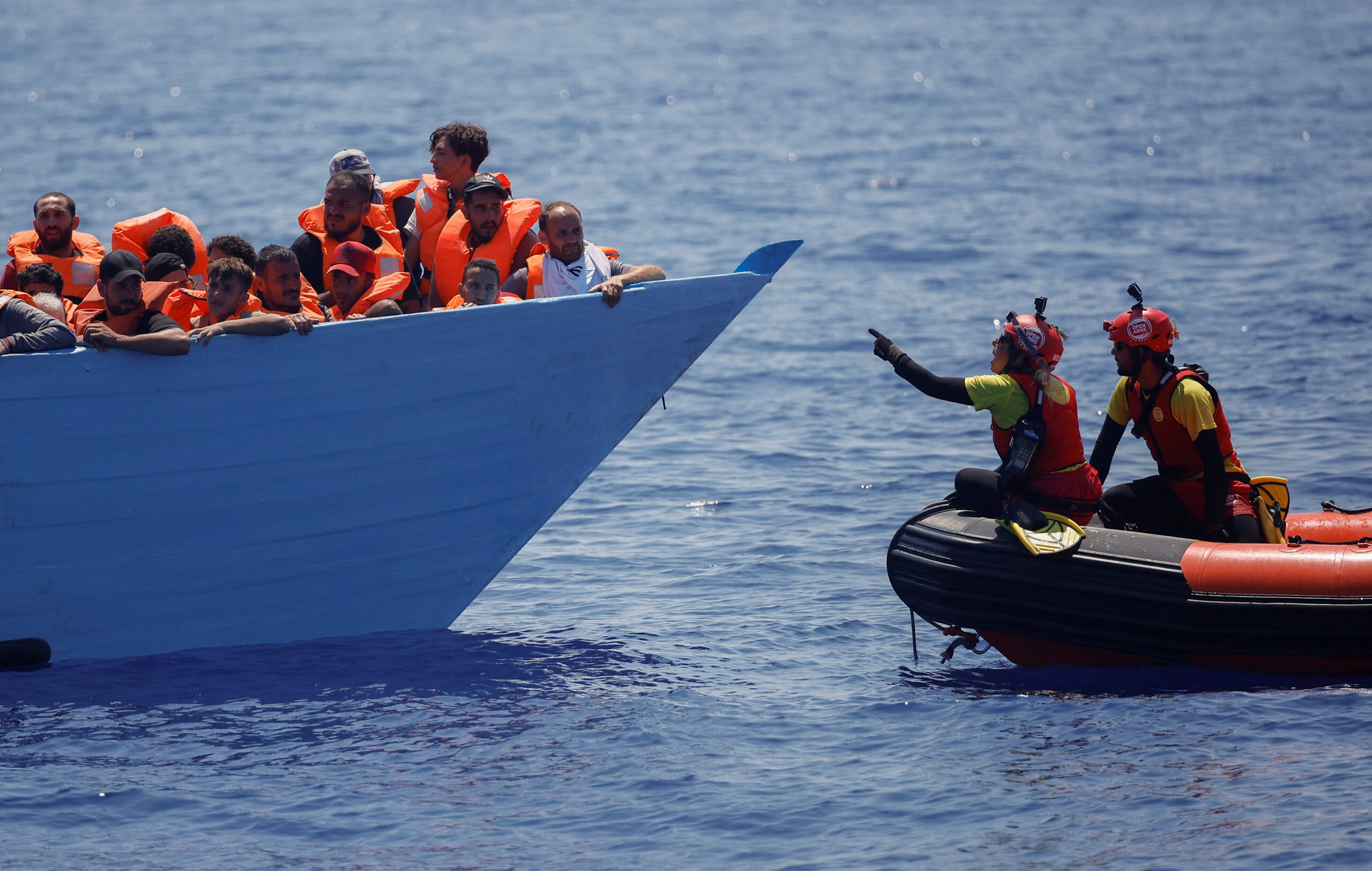
The most consequential change is the creation of a new screening and border procedure under which people arriving without an entry visa, including those rescued at sea, will undergo a check of up to seven days that determines whether they enter a normal asylum process or a truncated border procedure linked directly to deportation. Many applicants are expected to be channelled into the border procedure, which allows detention for up to twelve weeks during the examination of the claim and a further twelve weeks pending removal.
Unaccompanied children under twelve travelling with family are exempt from the border procedure. Children aged thirteen and over travelling with family may be detained under it, a distinction that raises serious concerns under the UN Convention on the Rights of the Child.
Safe Countries and Outsourcing
Asylum applications from nationals of countries with an EU-wide refugee recognition rate of 20 per cent or below will automatically be examined under the accelerated border procedure. Critics argue this threshold is arbitrary and creates a presumption against protection that undermines the principle of individual assessment and risks returning people to places where their rights are at serious risk.
The pact’s safe third country provisions allow EU states to send asylum seekers to countries outside the EU with which they have reached an agreement, even if the individual has no family, cultural or community ties there. Unlike under previous rules, an appeal does not automatically suspend deportation, meaning rejected applicants could be removed before a court rule on their case.
Solidarity That May Not Materialise
The new solidarity mechanism was intended to address the longstanding problem of disproportionate burden-sharing, which concentrates responsibility on frontline states such as Greece, Italy, and Spain. In practice, the mechanism allows wealthier member states to avoid accepting relocated asylum seekers and instead pay for border fences, surveillance, and operational support, including in countries outside the EU. Hungary, Poland, and the Czech Republic have already stated they will not participate in relocations.
A Crisis Clause That Concerns Rights Groups
A new Crisis Regulation allows member states facing what they characterise as mass arrivals or third-country instrumentalisation of migration to suspend key procedural safeguards for up to twelve months, extendable without legislative limit. Poland’s temporary suspension of the right to asylum, invoked in March 2025, was still in effect more than a year later and had been applied more broadly than originally stated.
The pact does contain some positive elements: it expands the definition of family, guarantees child asylum seekers access to education within two months, and requires member states to establish independent monitoring mechanisms at the border. Rights organisations argue those mechanisms have too narrow a scope to prevent the pushbacks and summary returns that have long characterised EU border management.
Sources: Human Rights Watch Q&A document, 9 June 2026; Human Rights Watch press release, 9 June 2026; European Commission, Migration and Asylum Pact documentation, 2024

Refugees Contribute to Their Host Communities. The World Must Do More to Support Them
This year’s World Refugee Day also marks the 75th anniversary of the 1951 Refugee Convention, adopted in the aftermath of the Second World War. The treaty enshrined the right of anyone...
Refugees: The Resettlement Gap Grows Wider
The shortfall in resettlement places is driven by policy changes in destination countries, including pauses in admissions, more restrictive criteria, and growing backlogs in processing. Low- and...
From Refugee to Reconciler in The Central African Republic
As a young woman in what she describes as a patriarchal context, she has faced resistance from elders and traditional leaders who question her authority. Rather than seeing her youth as a...





Our Network
Our Channels

© 2026 Al Jazeera Media Network. All rights reserved.