


Archive/AP
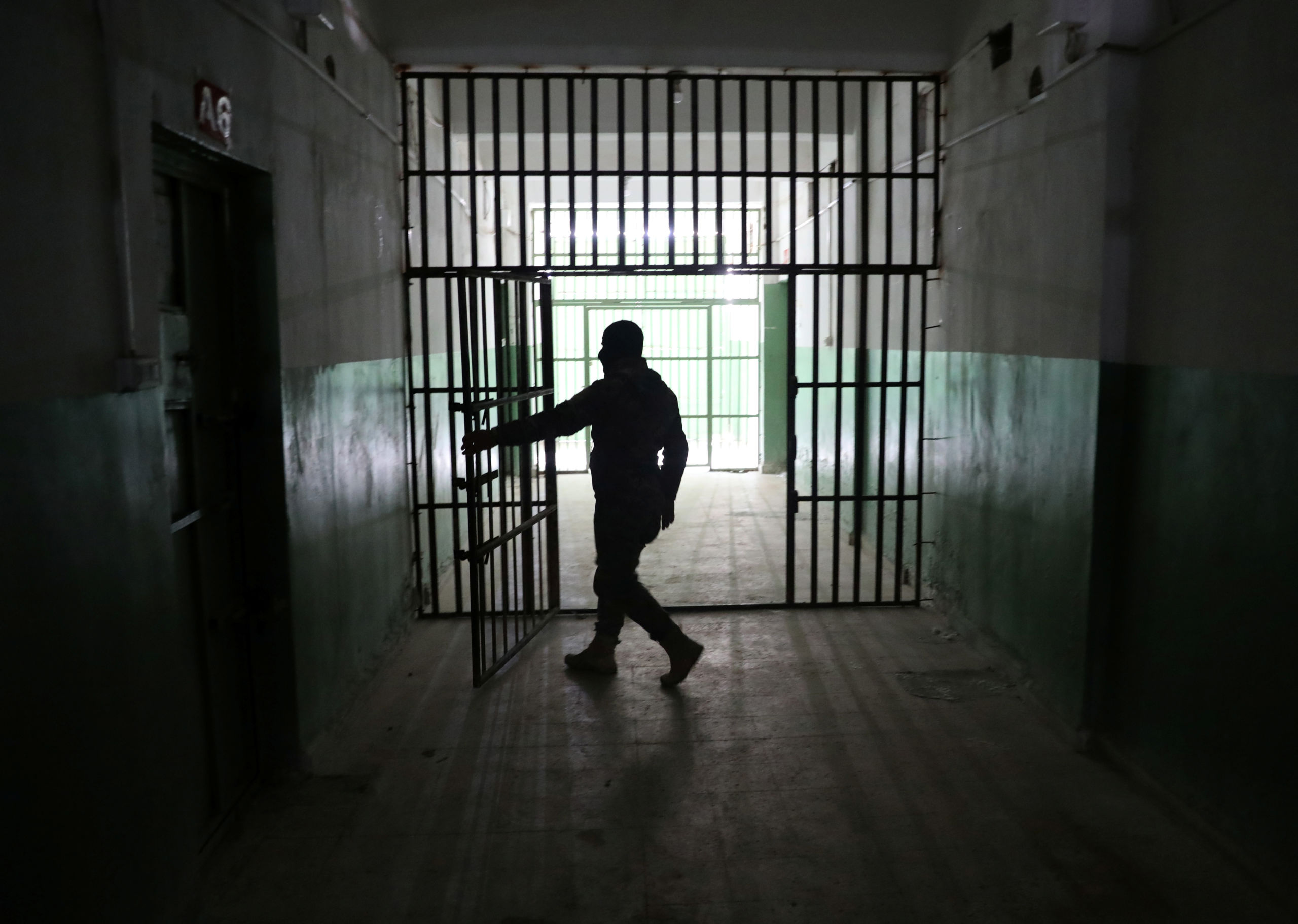
There is a place in the Florida Everglades where men sit in metal cages, drink water laced with mosquito larvae and are handed documents in a language they do not speak, with the implicit message that signing them is the price of a meal. It opened in July 2025. It cost more than $360m before the end of its first year. It holds up to 3,000 people. And it has been allowed to operate, largely unmonitored, as a deliberate exercise in coercion dressed up as immigration enforcement.
The Everglades Detention Facility, which its detainees and critics have taken to calling “Alligator Alcatraz”, is not simply a badly run prison. It is something more purposeful than that. Every documented feature of it, the contaminated water, the withheld food, the punishment boxes, the around-the-clock lighting, the cameras above the toilets, the shackles worn outside cells, the denial of lawyers, the sudden transfers to other facilities with no notice to families, points toward a single institutional objective: to break people. To make the experience of detention so intolerable that individuals will sign whatever is put in front of them, in whatever language, and accept deportation without ever having spoken to a lawyer. That is not enforcement. It is coercion. And it is happening, right now, in the middle of one of America’s most celebrated natural ecosystems.
On Thursday June 5th, more than half a dozen detainees telephoned the Workers Circle, an advocacy group that liaises between detainees and their families. The call was recorded and heard by the Guardian. The men identified themselves by name and cage number. They described being denied lunch. They described water that had been contaminated for three days with mosquito larvae and an unbearable taste, and that was then removed entirely when they refused to sign English-language documents they could not understand. When the water was taken away, chants of “agua, agua” broke out across the facility. Medication was withheld or delayed from detainees with diabetes and high blood pressure. Those who declined to sign faced reprisals. Those who signed had no idea what they had agreed to.
Noelle Damico of the Workers Circle called it an outrageous violation of basic human rights under both international and national law. She is right, but the outrage has been building for nearly a year. Amnesty International’s research, published in an urgent action in June 2026, documents conditions that amount in some respects to torture. Toilets overflow, with waste seeping into sleeping areas. Insects go unaddressed. Lights stay on day and night. Those subjected to punishment are placed in a box, a minimal cage-like enclosure where they are held for hours at a time, hands and feet attached to ground restraints, exposed to the elements with barely any water. Medical care is inconsistent, inadequate, or simply refused. The Florida Department of Emergency Management, which runs the facility using private guards, has denied mistreatment. That denial is becoming harder to sustain with each recorded phone call.
What makes “Alligator Alcatraz” distinctive, and distinctively dangerous, is not only what happens inside it but what does not happen around it. It is the first state-owned and operated immigration detention facility in the United States. That means there is no federal oversight. It is not integrated into Immigration and Customs Enforcement’s systems or databases. There are no registration or tracking mechanisms that would allow families to know with certainty where their relatives are being held. When that information is actively denied, and when detainees are prevented from contacting lawyers, the situation meets the definition of enforced disappearance under international law. This is not a bureaucratic anomaly. It is a structural feature. The facility was designed to operate in the dark.
The financial architecture of the project is equally revealing. The funds for construction and operation were drawn from Florida’s Division of Emergency Management under emergency procurement powers normally reserved for hurricanes and natural disasters. Amnesty International has found that resources were cut from essential social and emergency programmes to pay for it. By December 2025, the facility had absorbed more than $360m in state contracts and was projected to cost approximately $450m annually at full capacity. Florida had anticipated reimbursement from the Department of Homeland Security. That money has not arrived and is not expected to. The state has built, at enormous public expense, a machine for producing human suffering that it cannot afford to run and that the federal government will not pay for.
The broader American detention system provides context that should disturb anyone who believes the Everglades facility is an anomaly. As of May 2026, more than 60,000 individuals were held by ICE across more than 100 facilities throughout the United States. Thirty-one people died in ICE custody in 2025, the highest recorded number in decades. In the first months of 2026 alone, 19 more have died. The Trump administration’s goal of removing at least one million individuals from the country has produced overcrowding and deteriorating conditions across the entire system. “Alligator Alcatraz” did not invent this crisis. But it has deepened it and established a precedent that other states may follow that a state government can construct its own detention infrastructure, outside federal oversight, funded by emergency powers, and use it as an instrument of coercion with effective impunity.
In May 2026, Florida’s governor announced his intention to close the facility in June or July. Federal officials immediately contradicted him, insisting it would remain open. The standoff illuminates a genuinely important constitutional question about the division of authority over immigration enforcement between state and federal government. But for the men chanting for water in their cages on a Thursday afternoon, that question is academic. What matters to them is more immediate: whether anyone with the power to act will do so before the next meal is withheld, the next document thrust through the bars, the next transfer arranged in the middle of the night to a facility their families have never heard of.
Under international human rights law, immigration detention is permissible only in exceptional circumstances. It must be necessary. It must be proportionate. It must be non-discriminatory. It must be applied only when alternatives have been shown to be ineffective and assessed individually for each person detained. The enjoyment of personal liberty is not a privilege to be earned; it is the default condition from which any lawful deprivation must justify its departure. Nothing about the Everglades Detention Facility meets that standard. Its detainees are not dangerous criminals. They are people who crossed a border, or presented themselves at one seeking asylum, and were then subjected to a regime of deliberate degradation on the theory that sufficient misery would make them give up.
America has built worse things than “Alligator Alcatraz.” But it has rarely built something quite so transparently designed to humiliate, and then claimed, with a straight face, that no mistreatment is occurring. The swamp has always been Florida’s wild heart, home to endangered species and fragile ecologies that generations of conservationists have fought to protect. It did not need a detention camp. Neither did the people inside it.
Sources: Richard Luscombe, the Guardian, June 5th, 2026; Workers Circle; Florida Department of Emergency Management statement, May 29th, 2026; Amnesty International Urgent Action, AMR 51/1108/2026, June 5th, 2026; Amnesty International research on Everglades Detention Facility conditions; ICE custody data, May 2026

Japan Should Not Ignore India’s Authoritarian Turn
Japan should not repeat the mistakes of its China policy. After the Tiananmen massacre of 1989, Japan led the way in re engaging a shunned Chinese government. The West, too, bet on engagement...
From AI To ‘Killer Robots’: UN Chief Issues Urgent Governance Call
Guterres proposed an AI Child Safety Pledge under which developers would have to prove their systems are safe for children, subject to independent oversight; commit to zero tolerance for the...






Our Network
Our Channels

© 2026 Al Jazeera Media Network. All rights reserved.