

Peacekeeping on the Frontline in the Central African Republic
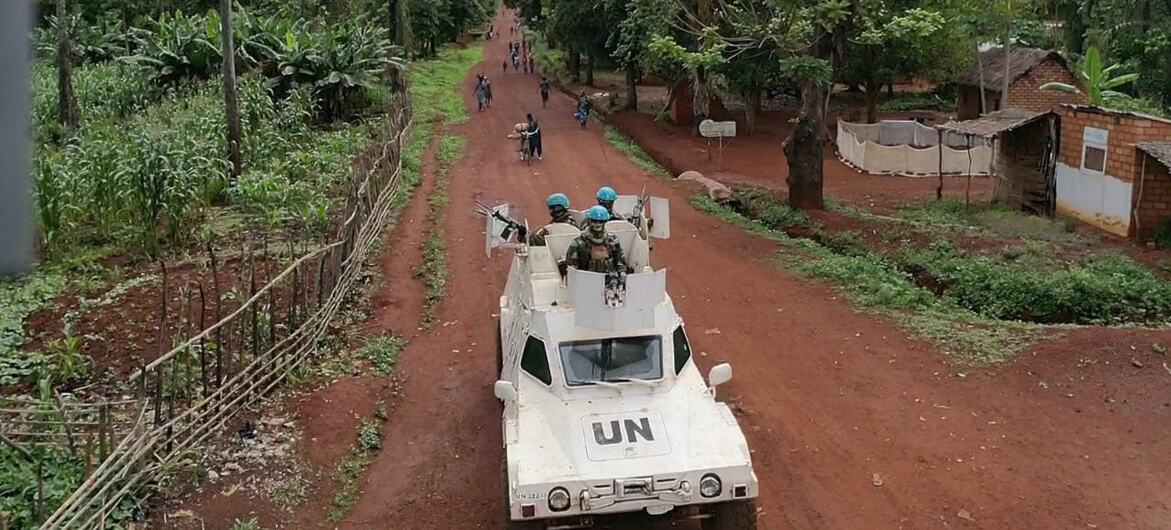
© MINUSCA UN Peacekeepers on patrol in the Central African Republic
Night had fallen over Zémio, a town in the east of the Central African Republic, when the rebels struck. With a presidential election due within hours in December 2025, fighters from the “Azande Ani Kpi Gbe” militia launched an offensive to seize the city and derail the polls. The Senegalese soldiers of MINUSCA, the United Nations peacekeeping mission in the country, were deployed immediately.
“The fighting lasted several hours in extremely difficult conditions,” recalls Lieutenant Colonel Gérald Aranda Assine, commander of the Senegalese contingent. “It was extremely demanding psychologically, physically, mentally and morally.” The soldiers held their positions, helped the Central African Armed Forces push back the attackers, protected the sites where refugees had gathered, and allowed the election to proceed as planned.
Beyond the battlefield
The operation in Zémio was one moment in a mission that encompasses far more than armed confrontation. In the west of the country, where the “Retour, Réclamation, Réhabilitation” armed group agreed to disarm in 2025, the same peacekeepers are now engaged in the slower, more delicate work of rebuilding fractured communities. Former combatants, soldiers from the national army, and civilians have been participating in shared activities, including a football match between groups who, a short time before, had regarded one another as enemies.
The contrast between these two aspects of the mission, the sharp violence of the firefight and the tentative normalcy of a football pitch, captures what peacekeeping in the Central African Republic has come to mean. Lieutenant Colonel Assine describes both as essential. The physical confrontation secures space; the community engagement begins to fill it.
The cost of service
The demands placed on those who serve are not only physical. Mental health, Lieutenant Colonel Assine insists, must be tended as carefully as combat readiness. Regular sporting and cultural activities, and the maintenance of strong bonds with family, help sustain soldiers through long deployments in remote postings. Showing one’s children, a calm face over a video call, he says, however difficult the realities on the ground, matters enormously.
The mission also produces moments that give it its deepest meaning. Lieutenant Colonel Assine recounts speaking with a former child soldier who had managed to escape from an area controlled by armed groups. “Because the Quick Reaction Force is there, I know that my life will not be threatened,” the boy told him. “Now I know that I will be safe.” Schools in Zémio have reopened. Medical campaigns have resumed. Residents who fled the violence are returning.
As the Senegalese contingent prepares to depart, its commander reflects on what the Central African people have shown him. “I will take with me the courage and resilience of these people who agreed to welcome rebels who, not long ago, were their executioners,” he says. They have, he adds, only one aspiration: the definitive return of peace. “There is no nobler mission than being a soldier in the service of peace, a soldier of the United Nations.”
Source: Cristina Silveiro, UN News, 7 June 2026. Mission: MINUSCA, United Nations Multidimensional Integrated Stabilization Mission in the Central African Republic

Japan Should Not Ignore India’s Authoritarian Turn
Japan should not repeat the mistakes of its China policy. After the Tiananmen massacre of 1989, Japan led the way in re engaging a shunned Chinese government. The West, too, bet on engagement...
From AI To ‘Killer Robots’: UN Chief Issues Urgent Governance Call
Guterres proposed an AI Child Safety Pledge under which developers would have to prove their systems are safe for children, subject to independent oversight; commit to zero tolerance for the...



Our Network
Our Channels

© 2026 Al Jazeera Media Network. All rights reserved.