

South Africa’s Migrants Face a Wave of Racist Violence
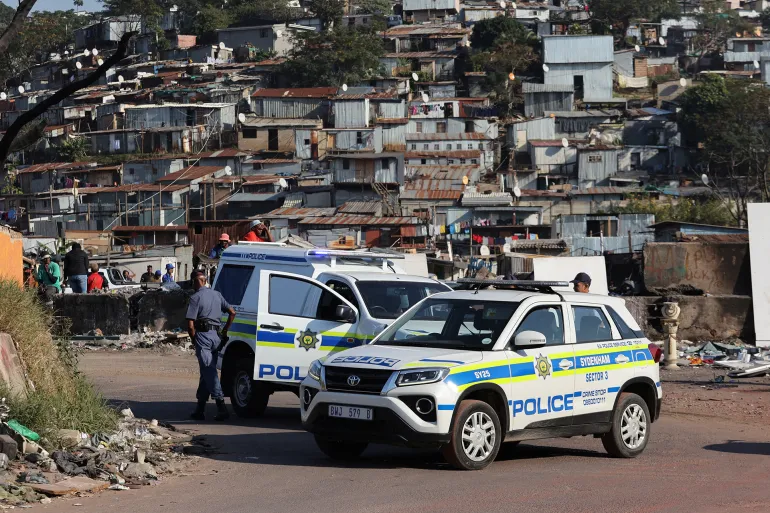
The UN CERD cited reports of inadequate action by law enforcement agencies to prevent and respond to racist hate crimes against migrants.
At least four migrants have been unlawfully killed and 50,000 displaced in South Africa amid an alarming rise in xenophobic violence, racist hate speech and vigilante attacks, according to the United Nations.
The UN Committee on the Elimination of Racial Discrimination (CERD) raised the alarm on 27 August over what it described as a surge in xenophobia and racist hate crimes targeting migrants across the country since the beginning of 2026. The scale of the displacement alone is striking. At least 50,000 migrants have been forced from their homes by civilians and organized vigilante groups, while at least four migrants have been unlawfully killed. Others have reportedly faced abductions, looting, destruction of their homes and businesses and unlawful evictions by landlords.
For those targeted, the consequences extend beyond physical violence. Migrants have also faced restrictions on access to healthcare and education — fundamental services that should not depend on a person’s nationality or immigration status.
The Committee said these acts violate rights protected under the International Convention on the Elimination of All Forms of Racial Discrimination.
Growing hate speech
The violence does not exist in isolation. CERD highlighted the widespread circulation of racist hate speech and harmful stereotypes about migrants, refugees and asylum seekers, particularly online and through social media. The Committee specifically referred to rhetoric associated with civic movements including the Insizwa Nobunsizwa Development Foundation and March and March movement, warning that such narratives foster “stigmatization and intolerance” while creating an atmosphere of fear and insecurity for migrants.
This is particularly concerning when hostile rhetoric moves beyond the digital space and contributes to an environment in which discrimination and vigilantism become increasingly normalized. Migrants can easily become scapegoats for problems they did not create. South Africa continues to face profound socio-economic inequalities rooted in the apartheid era, which CERD identified among the underlying factors that need to be addressed. The Committee also pointed to delays in issuing and renewing migrants’ identity documents and visas as another problem requiring attention.
Questions over the police response
Perhaps one of the most troubling aspects of the UN intervention concerns the institutions that are supposed to protect people from violence. CERD cited reports of inadequate action by law enforcement agencies to prevent and respond to racist hate crimes against migrants. At the same time, it expressed concern over continued racial profiling and the racially motivated excessive use of force by law enforcement officials themselves. This leaves migrants in a particularly vulnerable position. People who experience abuse need to be able to approach the police without fearing that their nationality, race or immigration status will expose them to further discrimination.
Yet many incidents may never reach the authorities.
According to the Committee, racial discrimination and hate crimes remain underreported because migrants may distrust law enforcement, fear harassment or retaliation, or simply be unaware of their rights and the mechanisms available for filing complaints. When victims are afraid to report violence, official statistics may fail to capture its true extent, while perpetrators may believe they can act without consequences.
Condemnation and protection
South African President Cyril Ramaphosa condemned vigilantism, xenophobia, hate crimes and violence against migrants on 7 June. He also warned against blaming migrants for the country’s socio-economic difficulties.
CERD welcomed that intervention, but made clear that condemnation alone is insufficient.
The Committee called on South African authorities to address the underlying causes of racial discrimination and anti-migrant hate speech and to take action against organized racist vigilante groups. This should include preventing the formation of such groups and, where appropriate, proscribing and dismantling them. It also urged the government to work with media organizations, internet service providers and social media platforms to counter online hate speech and harmful stereotypes.
At the law-enforcement level, the Committee called for an effective, objective and proportionate response to racist violence, an end to racial profiling and racially motivated excessive force, and safe, accessible mechanisms through which victims can report violations.
For the tens of thousands already displaced, immediate protection is equally important. CERD called for adequate shelter and access to basic services, alongside effective, thorough and impartial investigations into reported killings, abductions, looting, unlawful evictions, identity checks and home raids. Its central demand was straightforward: South Africa must “ensure accountability and end impunity”.
Human rights commitments
There is a particularly painful contradiction when racial discrimination and exclusion persist in a country whose recent history demonstrates the devastating consequences of institutionalized racism. The legacy of apartheid cannot simply be understood as history. CERD’s warning shows how enduring socio-economic inequalities can continue to create conditions in which frustration, prejudice and exclusion flourish. But economic hardship cannot justify targeting migrants.
A person does not lose their right to safety because they crossed a border. A refugee does not surrender the right to healthcare because of their nationality. An asylum seeker does not become an acceptable target for violence because a country is struggling economically.
Protecting migrants therefore cannot depend only on statements condemning xenophobia after violence has already occurred. It requires prevention, functioning institutions, accountability for perpetrators and a clear rejection of narratives that turn vulnerable communities into convenient explanations for much larger social and economic problems.
CERD adopted its decision under its Early Warning and Urgent Action Procedure, a mechanism intended to prevent serious problems from escalating into conflicts and to respond to situations requiring immediate attention. That should indicate the seriousness of the warning.
With at least four people already unlawfully killed and tens of thousands displaced, the question is no longer whether xenophobia poses a human rights threat in South Africa. It is whether authorities will act decisively enough to prevent today’s warning signs from becoming tomorrow’s larger crisis.

Fears Mount for Detained Palestinian Doctor Hussam Abu Safiya
A Lawyer’s Account Reports of Dr Abu Safiya’s deteriorating condition emerged following a visit by a lawyer for Physicians for Human Rights Israel on July 2nd, 2026....

Guilty by Algorithm
Amnesty’s recommendation is unambiguous: risk profiling in law enforcement, migration and social security must be banned outright, whether the systems are driven by artificial intelligence...






Our Network
Our Channels

© 2026 Al Jazeera Media Network. All rights reserved.