

The disappeared are no longer someone else’s story
By Susan Marx
Chief Programmes Officer, CIVICUS
This past weekend, a message came through on Community Action for Resident Equity’s (CARE) Signal group, the network of neighbors I help organize here in Atlanta. It was a plea for help. Did anyone have information about ICE activity in the area? An adult member of an immigrant family, someone a fellow community member had been caring for, had disappeared two days earlier. No arrest notice. No phone call. No word on where he had been taken, or why. Two days gone, and a family left to comb through detention databases and pray.
I have spent my career documenting exactly this. At CIVICUS, the world alliance for civil society organizations and activists, we track the closing of civic space across nearly 200 countries, and few tactics are as chilling, or as effective, as the enforced disappearance: the secret act of abducting or imprisoning a person by state agents or individuals acting with state support, and refusing to say where they are. It is the signature method of the states we most often condemn to spread terror within society. China, where Uyghurs and dissidents vanish into re-education camps and incommunicado detention. Iran, where activists are seized and held beyond the reach of family or lawyer. Palestine, where doctors and aid workers are taken by Israeli state forces from Gaza and held for months without charge. What unsettled me this weekend was not that this happens. It is that it was happening on my street. In urban Atlanta. In 2026.
The term has a precise meaning, and precision matters here. Under the international convention on the subject, an enforced disappearance has three parts: the state takes a person’s liberty, the state then refuses to acknowledge the detention or conceals where the person is, and the effect places that person beyond the protection of the law. All three must be present. An immigration arrest, however unjust, is not a disappearance if the government confirms it has you, records where you are, and lets a lawyer reach you. Nor is it the same thing as incommunicado detention, where the state admits it holds someone but cuts them off from the world. A frightened family refreshing a database is not, on its own, a disappearance either. What makes a disappearance is the state’s silence when it is asked. It does not matter that the arrest was witnessed, or looked routine, or lasted only days: the UN bodies that monitor this hold that an initially lawful arrest can become a disappearance, and that there is no minimum duration. Washington has never ratified that convention. It is bound all the same by the covenant on civil and political rights, which it ratified, and by a UN declaration on disappearances that applies to every state.
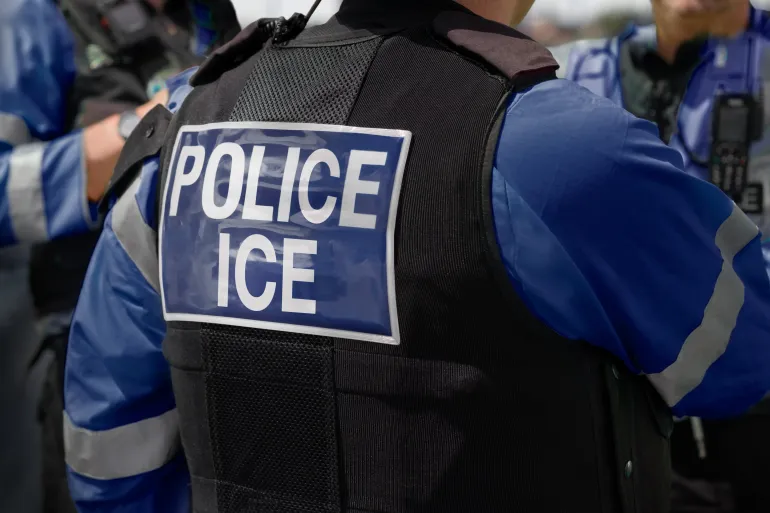
The scene belongs to another century and another geography. It reads like the accounts of Soviet gulags and Siberian prison camps, of the midnight knock and the relative who simply never comes home. It should not read like a Sunday in Georgia. And yet a family nearby spent the weekend not knowing whether the person they love was in a county jail, the Stewart Detention Center in Lumpkin two hours south, a private detention center three states away, or already on a plane to a country they’ve never heard of. None of this is a bureaucratic accident. It is the declared aim of the Trump administration’s mass-deportation drive, championed by White House adviser Stephen Miller and carried out by an ICE emboldened to arrest first and account for it later. This is what the normalization of violence looks like. It arrives not as a single catastrophe but as a slow reordering of what we are willing to accept.
That silence is now measurable. On 11 July this year, 65,765 people were held in ICE detention, and 70.6 percent of them had no criminal conviction. The population peaked above 73,400 in January – to put it into perspective, this is a few thousand people fewer than the entire crowd recorded at the opening match of the Football World Cup at Estadio Azteca in Mexico City in June. In February, ICE was running 456 detention facilities while publicly acknowledging 220. Georgia is no bystander to this. The state ranks fifth in the country for ICE arrests, more than 13,600 of them by early March, averaging 41 a day in February against 22 a day a year earlier, and Stewart in Lumpkin is one of only two facilities in America that hold more than 2,000 people at a time. Nor is finding someone straightforward. Last year nearly 41,700 people were moved across state lines within 24 hours of being detained. The online locator that families are told to use now takes two to three days to update, and sometimes weeks. Some people never appear in it at all. Some are deported before they do.
What is meant to prevent this is due process, and it is thinning. There is no public defender in immigration court: the law grants a right to counsel only at no expense to the government. Even before the current surge, the share of people in the court’s backlog who had a lawyer had fallen from 65 percent to 30 percent between 2019 and 2023, and detained people fare worst of all. Dedicated organizations such as the Georgia Latino Alliance for Human Rights, who provide free legal assistance to detainees, simply cannot keep up. Seven federal appeals courts and hundreds of district judges have found the administration’s policy of denying bond hearings unlawful, and immigration judges have carried on denying them anyway. By May, nearly 89,500 people had accepted voluntary departure under this administration, more than seven times the figure for the Biden administration’s final sixteen months, many of them pressed to sign while in detention, and they pay their own way out of the country. The cost falls hardest on those left behind. As Amnesty International documents worldwide, the disappeared are overwhelmingly men, often the household’s earner, and it is women who most often lead the search. The same pattern is taking shape on my own street. Some 145,000 US-citizen children have had a parent taken into ICE detention, and more than 22,000 are now living with neither parent at home. My community group is currently supporting a Russian mother of 4 US-born little girls ranging in ages from 6 months to 6 years, after her Moldovian husband was picked up at a random traffic stop after 17 years in the United States, with a pending asylum case, and handed over to ICE. She has not seen him in 5 months, and with four children and no childcare at home, she is scraping by to keep a roof over her head while fighting an unjust system to release her husband.
The disappearances are compounded by a quieter one: the disappearance of the record itself. For decades, the US State Department’s annual human rights reports were an imperfect but real instrument of accountability, read closely by advocates, journalists and governments. This year, under Secretary of State Marco Rubio, the department’s own Bureau of Democracy, Human Rights and Labor pared them back so severely that they no longer describe the struggles of real people in real places, dropping or softening whole sections on detention conditions, abuses against LGBTQ people and women’s reproductive rights. Whole categories of abuse are glossed over, softened, or removed altogether, the decline in human rights brushed aside with a stroke of convenient ignorance. When the world’s most powerful government decides to stop writing things down, it is not a filing decision. It is a form of erasure. What is not recorded is easier to deny, and what can be denied can be repeated.
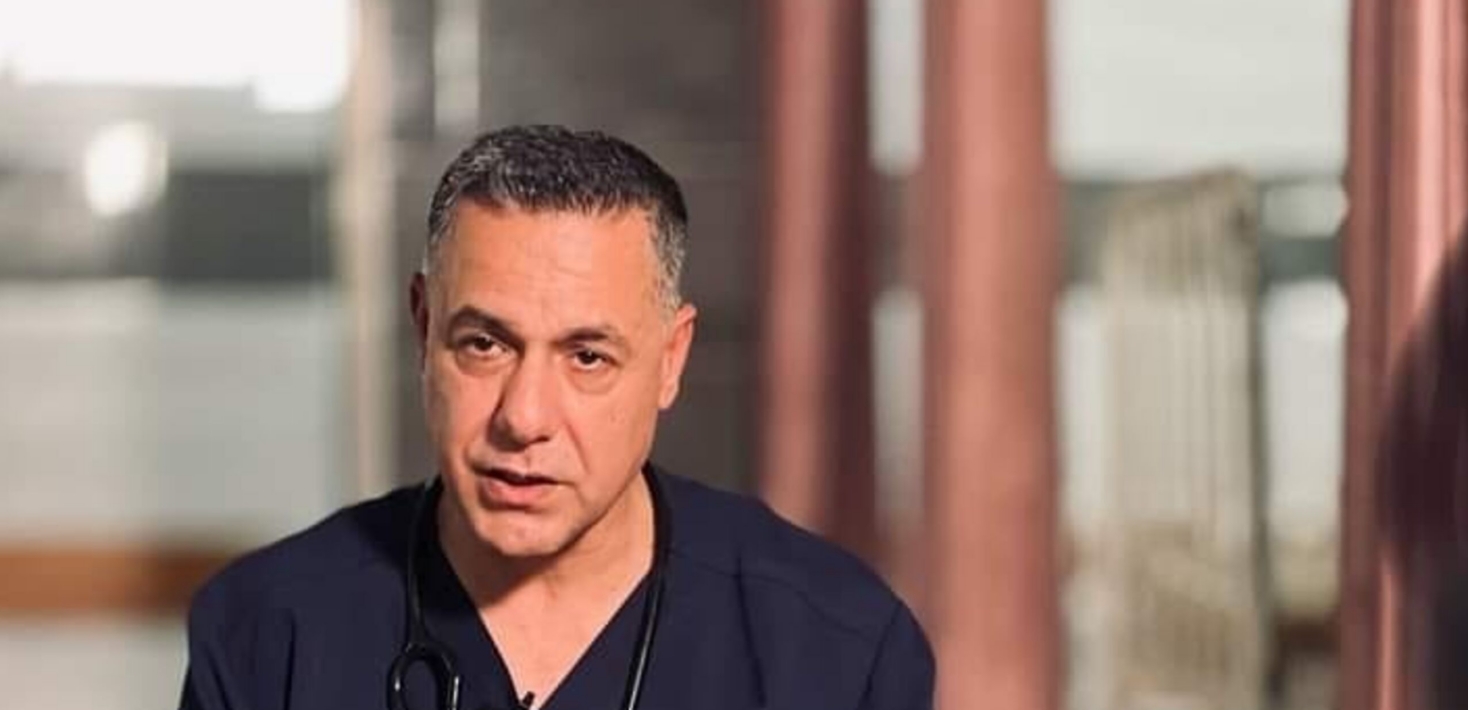
The method travels because it works, and because so few are ever made to pay for it. In Gaza, Dr. Hussam Abu Safiya, who ran the Kamal Adwan Hospital until Israeli forces detained him for refusing to abandon his patients, is one of fourteen Palestinian doctors whose release Physicians for Human Rights-Israel is now fighting for before Israel’s Supreme Court. He has been held without charge as his health fails. In Ukraine, thousands of children have been taken from their homes and moved into Russia, an enforced disappearance on a generational scale that led the International Criminal Court to issue arrest warrants for President Vladimir Putin and his children’s rights commissioner, Maria Lvova-Belova. In Kashmir, the recently released human rights defender Khurram Parvez, spent his life documenting the disappeared, and was subsequently jailed for nearly five years. In Iran, the Nobel laureate Narges Mohammadi is repeatedly seized, isolated and re-sentenced, her freedom expanding and contracting with the world’s attention.
These are not separate stories. They are one method, practiced under very different flags: make the person vanish, deny the family the truth, and wait for the rest of us to look away. The contexts are not equivalent, and the severity is not equivalent, and I am not claiming otherwise. Georgia is not Xinjiang. What links them is narrower, and harder to dismiss for being narrow: a person is deprived of liberty by the state, and then cut off from family, from a lawyer and from the outside world. That is the thread the Universal Declaration of Human Rights was written to cut, in the articles that forbid arbitrary detention and guarantee a hearing before an independent court. The distance between a prison in Tajikistan and a detention van in Atlanta is far smaller than we would like to believe. It is measured in how much we are willing to normalize.
For six years, through our Stand As My Witness campaign, we have made a simple wager: that the surest way to pull someone back from the shadows is for ordinary people to learn a name, say it aloud, and refuse to let that person be erased. It has helped bring thirty-two defenders’ home. I used to describe that work as solidarity with people far away. This weekend taught me it is also self-defense. The neighbor who disappears, the doctor held without charge, the child taken across a border, the report quietly gutted: each is a test of whether we still notice, and whether noticing still counts for anything.
So here is the ask, and it holds whether the disappeared are in Gaza, in Xinjiang, or two blocks from my home. Learn the name. Say it out loud. Write it down where it cannot be erased. Stand as a witness, while there is still someone left to witness for. The alternative is a world that has quietly agreed to stop counting, and that is a world in which any of us can vanish.
CIVICUS is a global alliance dedicated to strengthening citizen action and civil society, advocating for the rights of individuals to participate in democratic processes and promoting accountability in governance. Around 20,000 people are of the alliance, and gain access to research, resources, convenings and solidarity.
Fears Mount for Detained Palestinian Doctor Hussam Abu Safiya
A Lawyer’s Account Reports of Dr Abu Safiya’s deteriorating condition emerged following a visit by a lawyer for Physicians for Human Rights Israel on July 2nd, 2026....

Guilty by Algorithm
Amnesty’s recommendation is unambiguous: risk profiling in law enforcement, migration and social security must be banned outright, whether the systems are driven by artificial intelligence...




Our Network
Our Channels

© 2026 Al Jazeera Media Network. All rights reserved.