

One Woman’s School for Afghanistan’s Banned Girls
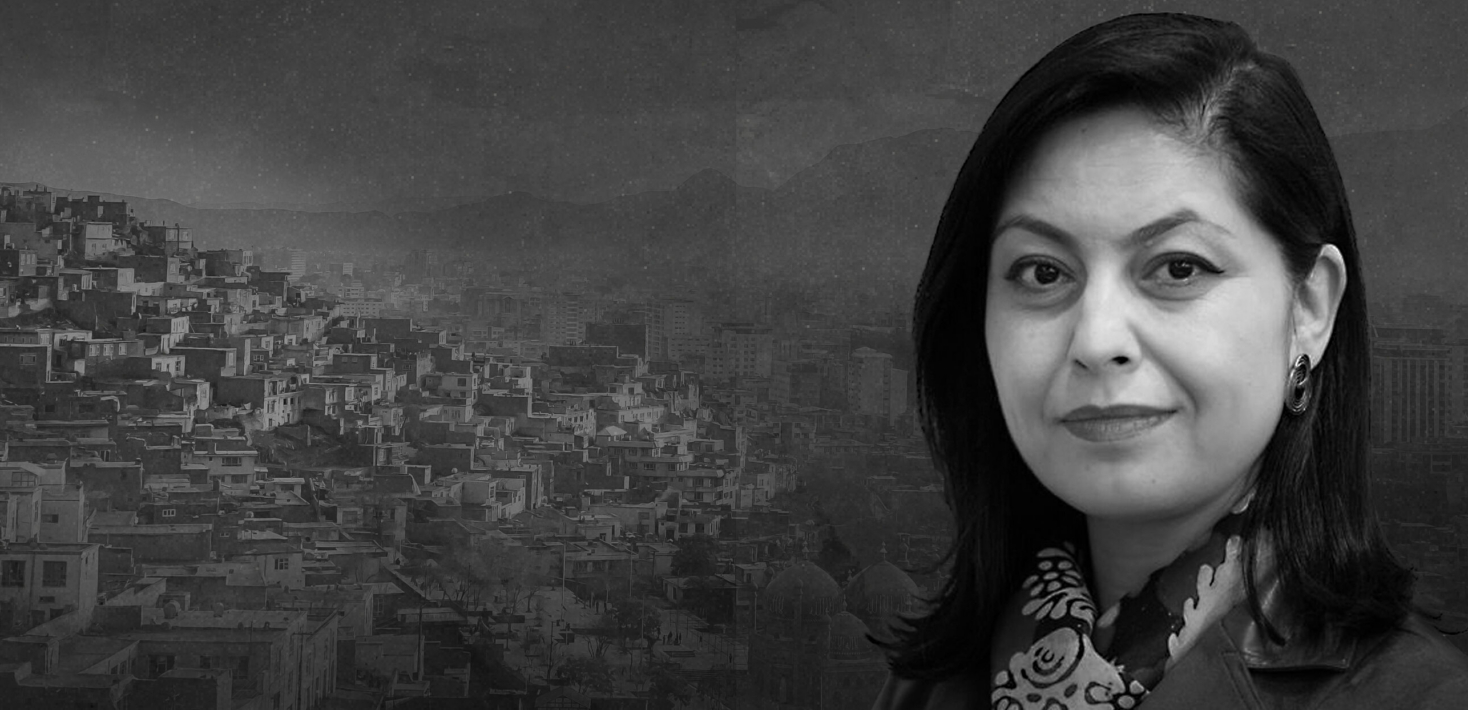
© Amnesty International
Five years after the Taliban closed the classroom door, a generation of Afghan women has vanished from public life. A few determined people are pushing back.
She was twelve years old when the Taliban first came for her books. In 1998, in a province of Afghanistan that had just fallen under Taliban control, Fatema Uzgan Nusrat was told that school was over. She donned a burqa. She was forbidden to go outside without a male chaperone. She burned books on the advice of relatives who feared a search of the house. She and her family even discarded their toothbrushes, so pervasive was the atmosphere of terror and rumour. At night, she and her siblings sat around an oil lamp and read the volumes she had managed to rescue from her grandfather’s library. In the dark, a small circle of light.
That memory, the lamp, the books, the oily fingerprints on the pages, the laughter and the fear held in the same room, has become the governing image of her adult life. When the Taliban returned to power in August 2021, and she found herself completing a master’s degree in Istanbul, the shock was total. “How could this be happening again? Why?” she has said. There were no answers. There were, however, girls in Afghanistan, suddenly and completely cut off from school, who needed whatever help could reach them. So she built them a school.
A singular cruelty
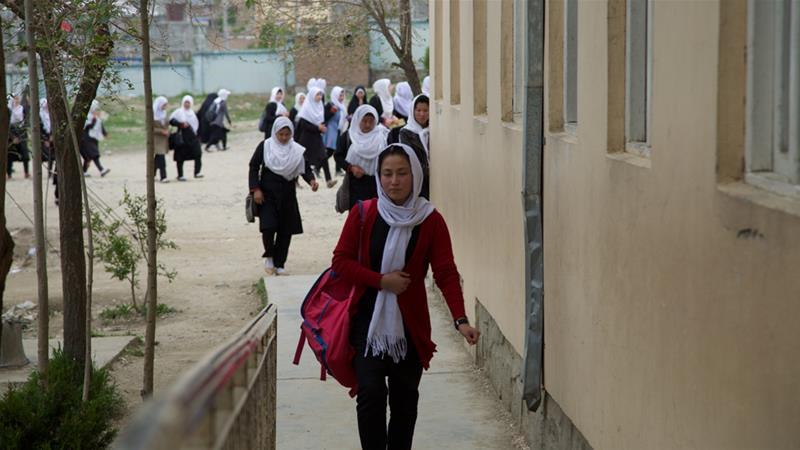
The scale of what Afghanistan’s girls have lost resists easy compression into numbers, though the numbers are terrible enough. Afghanistan stands alone in the world as the only country where secondary and higher education is strictly forbidden to girls and women. Nearly 2.2 million girls are barred from attending school beyond primary level. No girl has been enrolled in school past the sixth grade since the ban on secondary education took effect in September 2021. If the ban continues, there will be two million girls deprived of their right to education beyond primary school by 2030. In total, up to seven million children are not in class due to the ban and other constraints.
Since seizing power, the Taliban have implemented more than 70 decrees violating the rights of girls and women. The “Law on the Promotion of Virtue and Prevention of Vice,” introduced in 2024, prohibits any representation of human figures and prevents women from speaking on the radio. Since 2021, more than 80% of women working in media have lost their jobs. The Taliban’s spokesperson has repeatedly reaffirmed that the leadership views the current educational framework as “finalized.” There is no ambiguity. No softening. No pathway offered.
The human cost is both immediate and generational. An estimated 45% of Afghanistan’s population, some 21.9 million people including eight million children, are projected to need humanitarian assistance in 2026. A country that cannot educate its girls cannot train its doctors, teachers, engineers, or lawyers from half its population. The damage compounds with each year the ban holds. Human Rights Watch has warned that Afghan society “will never fully recover” from the loss of so many future female professionals, in a country already struggling with low youth literacy rates.
Building a school in the shadows
It was into this landscape that Fatema Uzgan Nusrat launched what would become the Behdukht Online Academy in 2023. It began the way such things often do, with a WhatsApp group. She reached out to a few families with daughters and offered to share online courses. Five girls. A platform cobbled together to connect them with learning materials. Word spread. Volunteer teachers joined. Student requests arrived from multiple provinces.
Today, more than 200 girls are enrolled. The school follows the standard Afghan curriculum that existed before 2021 and has added computer skills. Security is absolute. Every new student must be recommended by a trusted contact, fill out a form and be reviewed before enrolment is confirmed. Students do not know one another’s names. The school exists, functionally, as a network of individuals connected by a shared commitment to learning and a shared vulnerability to discovery.
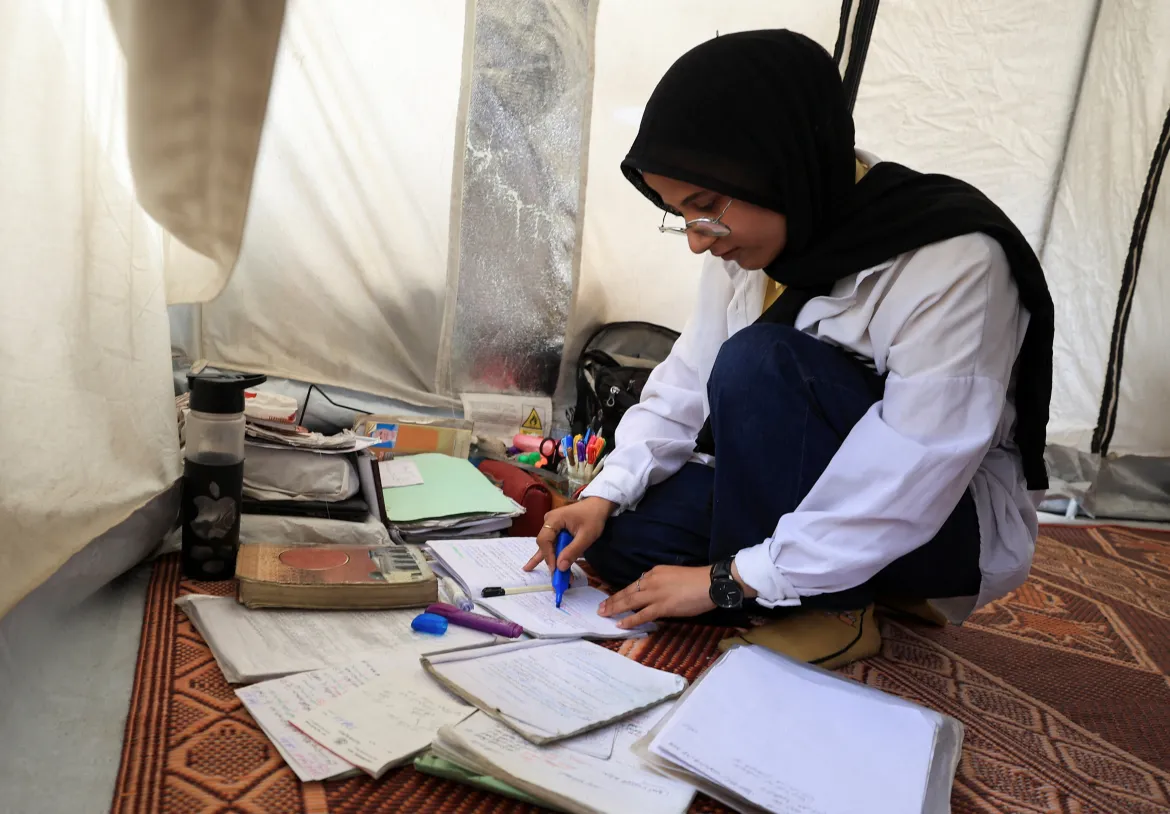
The practical difficulties the students face are not incidental. Most live in villages with limited financial resources. Purchasing a tablet, paying for a Wi-Fi connection: these are not small things for families who are already struggling. Yet families provide them, giving their daughters the time and space to study in secret. What the Behdukht students are doing is not merely an act of learning. It is an act of defiance, sustained daily, at personal risk.
Ms. Nusrat is clear-eyed about the school’s scale and its limits. Four students were accepted to online universities last semester. The courses are largely self-directed, with the academy facilitating access rather than providing traditional instruction. There are no salaries for the volunteer teachers. There is no formal funding. She is currently seeking grants to provide devices and internet access to students who do not have them. The school is free.
The parallel resistance
Behdukht is not alone. Across Afghanistan, unofficial schools hidden from Taliban scrutiny continue to operate, supported by women’s rights and education activists outside the country who send monthly funding for textbooks and teachers’ wages. Their hope is that clandestine schooling will keep girls level with their international peers so that, if restrictions are ever lifted, they will be able to pass examinations and resume formal education.
In more than 2,600 villages, UNESCO has trained over 1,000 community-based facilitators to provide literacy courses to 57,000 young people, the vast majority of whom are girls. Digital platforms have proliferated, operating through WhatsApp and other channels that can function on slow connections and basic handsets. The infrastructure of clandestine female education is, in its way, as much a testimony to human ingenuity as it is an indictment of the system that made it necessary.
The European Union’s Special Envoy for Afghanistan has noted that while aid continues to flow for basic needs, funding for long-term development remains frozen until the Taliban demonstrates a tangible shift in their stance toward female participation in education and civil society. As of 2026, there are no such indications. The international community’s leverage is limited by the absence of diplomatic relations with Kabul and by the Taliban’s demonstrated indifference to external pressure.
Memory and what it demands
There is something particularly resonant about the way Ms. Nusrat frames her motivation. She does not speak primarily in the language of rights, though rights are at stake. She speaks about the oil-stained pages of books she read at twelve years old, about a favourite adventure story with a green hardback cover that she read seven times, about waking at three in the morning in the United States because of the time difference between Washington and Kabul and finding that the early hour feels like home. The books, she says, are still there in her hometown. She does not know when she will see them again.
That combination of the personal and the political, the child she was and the educator she has become, is what makes the Behdukht Academy more than a logistical workaround. It is a statement about what education means: not merely the transfer of information but the formation of a person capable of thinking independently, imagining a different future, and acting on that imagination. The Taliban understand this, which is why the ban is not primarily about curriculum or resources but about the existence of educated women as such.
Ms. Nusrat’s hope, as she has stated it, is to see Afghan girls return to school and grow up to rebuild their country with dignity and equality. She describes Behdukht as a small step. But in the context of what has been taken from Afghanistan’s girls, a WhatsApp group that became a school, run by volunteers without salaries, serving more than 200 students across multiple provinces, is not a small thing. In a dark house, a small circle of light is exactly enough to read by.
Sources
Amnesty International / On the Side of Humanity podcast, interview with Fatema Uzgan Nusrat, June 1, 2026
UNESCO, “Afghanistan: Four Years On, 2.2 Million Girls Still Banned from School,” August 2025
UNESCO, “Banned from Education: A Review of the Right to Education in Afghanistan,” January 2026
UNICEF USA, “By Restricting Girls’ Education, Afghanistan Faces a Future With Fewer Teachers, Health Workers,” 2026
Time News, “Taliban Defies Global Pressure, Keeps Afghan Girls Out of Schools in 2026,” May 2026
CBS News, “Taliban Girls School Ban Afghanistan: 1,000 Days, Underground Schools”
Observer Research Foundation, “The Ripple Effects of Afghanistan’s Ban on Girls’ Education,” August 2025
Left Behind: The Global Education Crisis
Progress since 2015 has slowed across nearly every region, with sub-Saharan Africa especially hard hit. In conflict zones, official figures almost certainly undercount the true scale of...
Sudan Schooling Under Siege
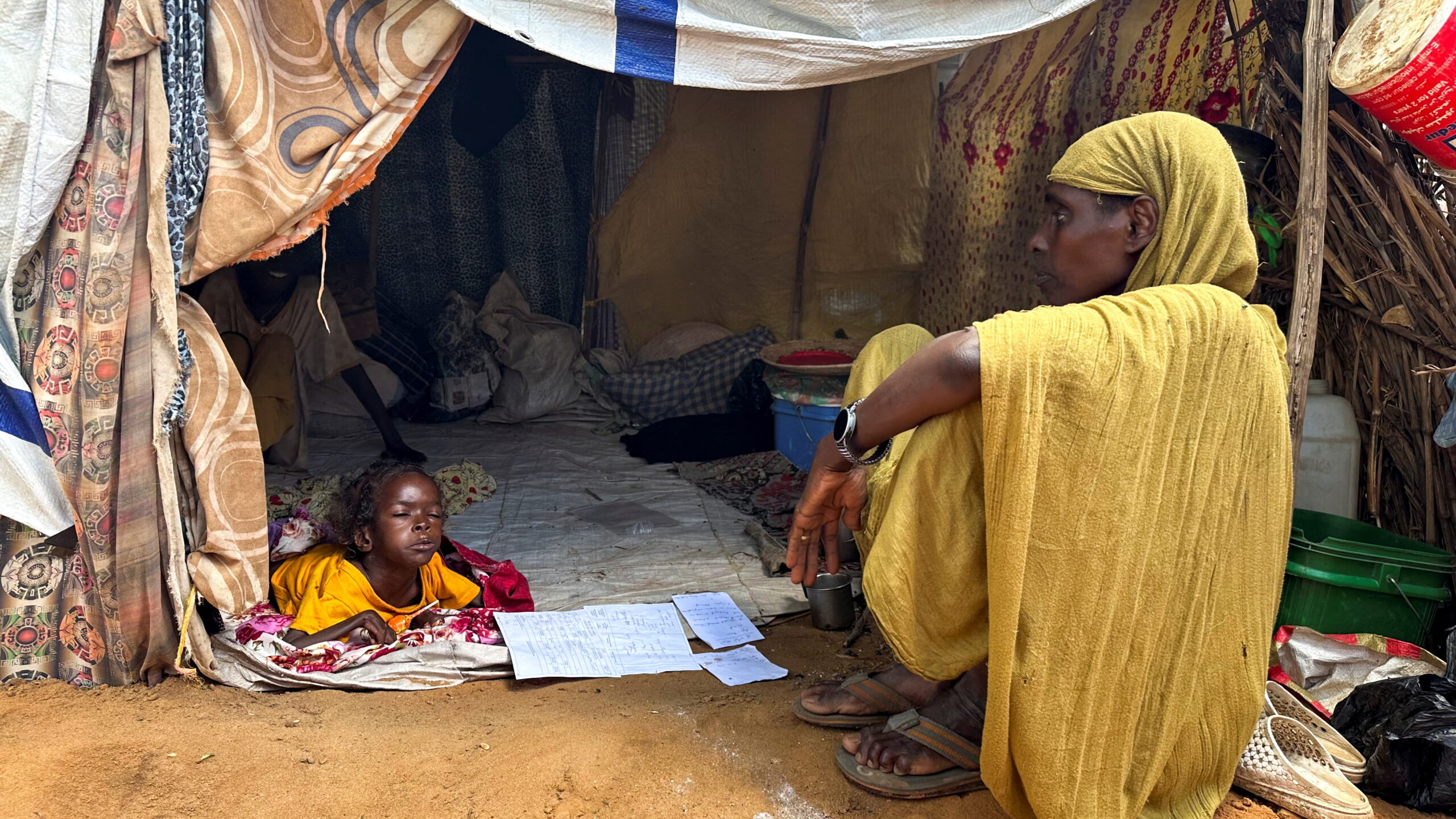
Remote learning has been largely infeasible for most Sudanese children owing to infrastructure collapse and displacement, deepening a generational learning deficit with long-term humanitarian...




Our Network
Our Channels

© 2026 Al Jazeera Media Network. All rights reserved.