


Mines, Morals and Deserters
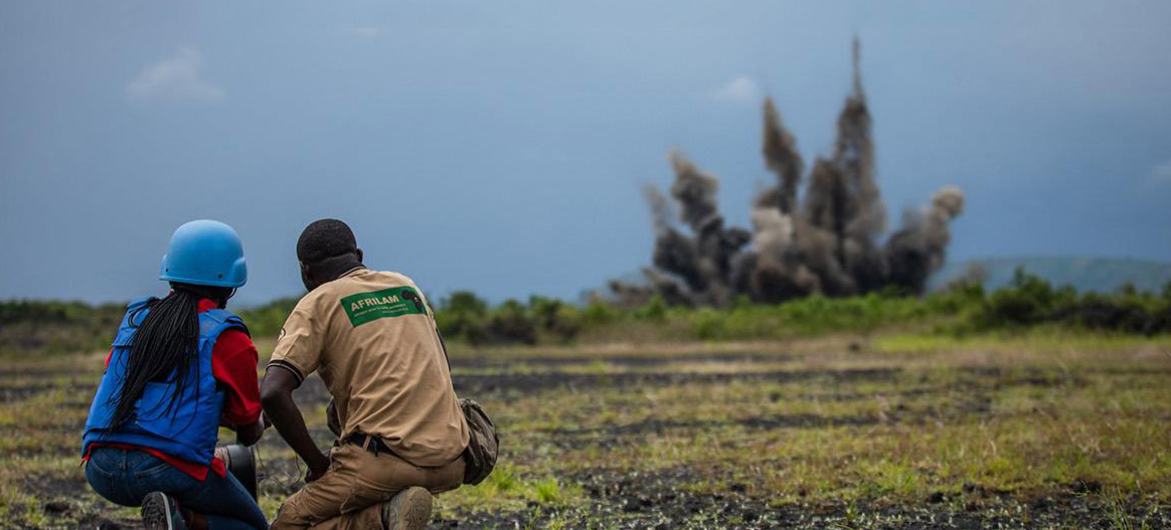
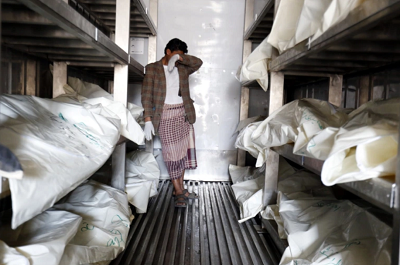
Deminers race to keep up with military technology/© UNMAS DRC Mine action in the Democratic Republic of Congo.
Croatia’s story should be an advertisement. More than 20 percent of the country was contaminated by landmines laid during the 1991 to 1995 conflict, barring communities from their land and costing the economy at least $230 million a year. In March 2026, after a $1.38 billion, 30-year clearance campaign, the country celebrated becoming mine-free. “This is not just a technical success,” said Interior Minister Davor Božinović. “It is the fulfillment of a moral obligation to the victims of mines and their families. A mine-free Croatia means safer families, better development of rural areas, more farmland, and stronger tourism.” It is precisely the kind of outcome the Mine Ban Treaty was designed to produce.
Instead, Croatia’s triumph is being celebrated in the same season as a series of notable defections. In the past year, Latvia, Lithuania, Estonia, Finland and Poland have all withdrawn from the treaty, arguing that antipersonnel landmines are necessary to defend themselves from Russian aggression. In July 2025, Ukraine also sought to unlawfully suspend its obligations under the treaty, even as its own territory bleeds from exactly the weapons it now wishes to use. New deployments of antipersonnel landmines have been recorded in Myanmar, Russia, Ukraine, along Iran’s borders with Afghanistan and Pakistan, along North Korea’s border with South Korea, and on the contested Thailand-Cambodia frontier.
A norm in retreat
The Mine Ban Treaty, adopted in 1997 and now ratified by more than 160 states, was one of the great humanitarian achievements of its era. Its logic was simple: the indiscriminate nature of landmines, which cannot distinguish between a soldier and a child, made them incompatible with the laws of war. More than 30 mine-affected states parties have since cleared their territories. Yet the decisions of NATO-aligned European states to abandon the treaty risk normalising a weapon whose costs fall overwhelmingly on civilians. The International Day for Mine Awareness, marked on 4 April, is an occasion to reflect on what is being lost, and to call on all states, whether parties to the treaty or not, to oppose the use of these weapons, help fund clearance, and ensure that victims receive the assistance they are owed.
Sources: Human Rights Watch, Verity Coyle (Deputy Director, Crisis, Conflict and Arms Division), Mine Ban Treaty Secretariat, Croatian Interior Ministry statement (March 2026), International Day for Mine Awareness and Assistance in Mine Action (4 April 2026).
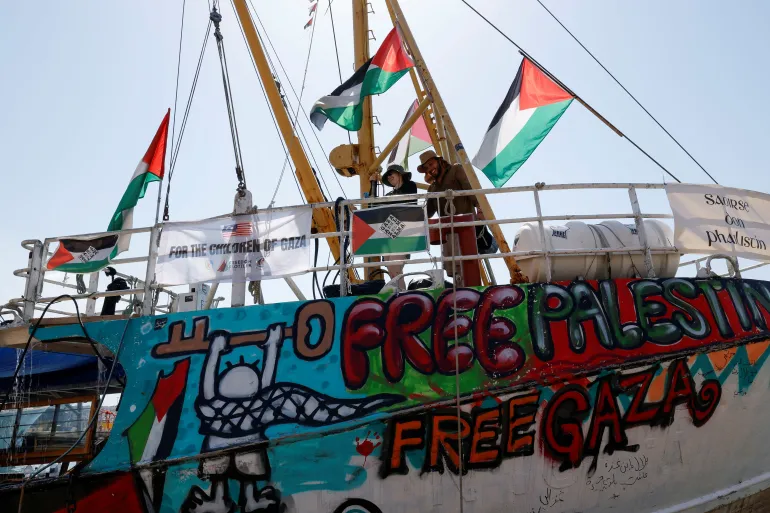
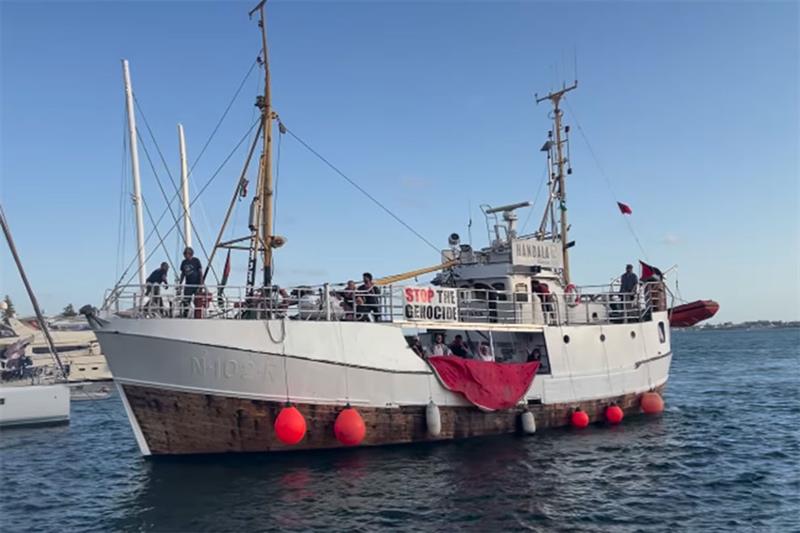
Aid Flotilla Detainees Face Deportation as Protests Mount
The detentions have fuelled a wave of international protests demanding an end to the war in Gaza and the release of the flotilla’s...

Pro-Palestinian Protests Sweep Cities Worldwide
In Brazil, campaigners built a memorial linking the anguish of children in Gaza and Israel alike, a small symbol of the way the conflict’s human toll is being...








Our Network
Our Channels

© 2026 Al Jazeera Media Network. All rights reserved.