

Art and Culture Can Both Fuel and Counter Hate
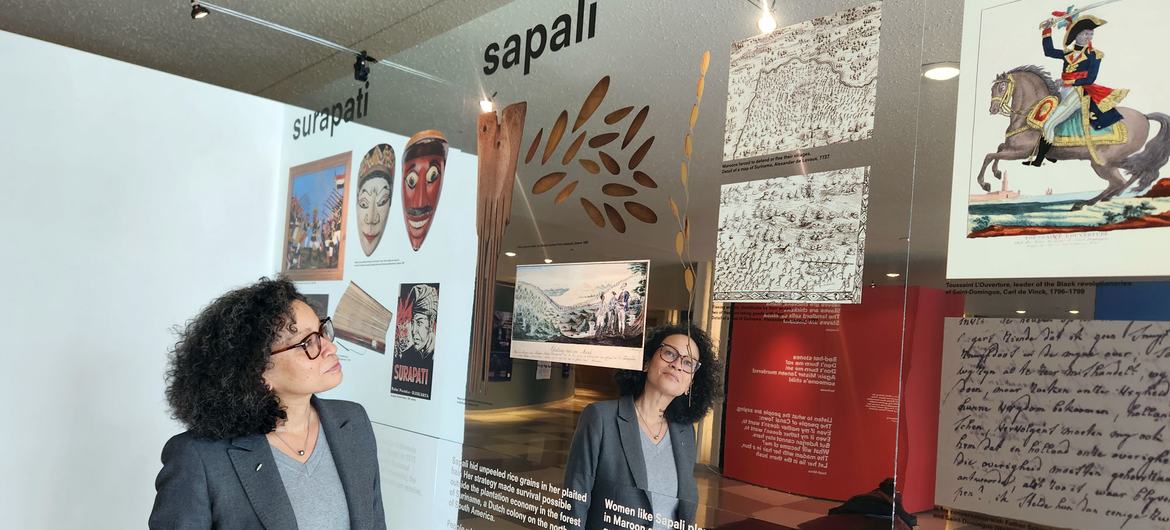
UN News/Eileen Travers Valika Smeulders, head of history at the Rijksmuseum in Amsterdam, was a curator of its exhibition on Dutch Colonial slavery that was shown at UN Headquarters in 2023.
On Juneteenth, the day marking the 1865 emancipation of enslaved people in the United States, the United Nations convened an online discussion that brought together artists, historians and human rights practitioners from across the world to examine one of the most consequential questions in the fight against atrocity: how does culture shape humanity’s capacity both to commit and to prevent mass violence?
The event, titled Art Remembers: Culture as Witness and Prevention, was held as part of UN programming for the International Day for Countering Hate Speech and formed part of a broader series, Beyond the Long Shadow: Engaging With Difficult Histories, which explores the legacies of the transatlantic slave trade, the Holocaust, the 1994 genocide against the Tutsi in Rwanda and the 1995 genocide in Srebrenica. The choice of Juneteenth was not incidental. It anchored an abstract discussion about culture and memory in a specific, still contested historical reckoning, one that continues to reverberate through American and global society more than a century and a half after the fact.
The panel drew on expertise spanning four of the twentieth and nineteenth centuries’ most devastating episodes of organised human cruelty. What emerged was neither a simple celebration of art’s redemptive power nor a counsel of despair about its potential for misuse. It was something more complicated and more instructive: a portrait of culture as a terrain of contest, a space where the forces of dehumanisation and the forces of remembrance wage an ongoing struggle for the moral imagination of societies.
Hate Speech as Early Warning
Opening the discussion, Chaloka Beyani, UN Special Adviser on the Prevention of Genocide, set the analytical frame. Hate speech, he argued, is not merely offensive or objectionable language. It is an early warning sign of atrocity crimes. Rhetoric that dehumanises, scapegoats, and incites does not erupt without precedent. It precedes and accompanies crimes against humanity, war crimes and genocide with a consistency that ought to compel far greater urgency in international responses. The challenge, then, is not only to respond to hate speech after it has taken root, but to understand the cultural environments in which it flourishes and those in which it is resisted.
That framing gave the subsequent discussion its stakes. The panellists were not speaking abstractly about aesthetics or the social function of art. They were speaking about the cultural conditions that make mass killing possible and about the creative practices that survivors and witnesses have developed to ensure that such killing is not forgotten, denied or repeated.
Reframing History Through Objects
Valika Smeulders, head of history at the Rijksmuseum in Amsterdam, opened with a provocation familiar to anyone who has thought seriously about the politics of museum collections: that many of the world’s great cultural institutions are themselves rooted in histories of domination. The Rijksmuseum, one of Europe’s most celebrated repositories of art and artefact, accumulated its collection during and through the age of Dutch colonial expansion, including the trade in enslaved Africans that enriched the Netherlands over centuries.
That history, Smeulders argued, need not be a source of institutional paralysis. It can instead become a resource for confrontation and reckoning. Drawing on the museum’s exhibition on Dutch colonial slavery, which was hosted at the United Nations in 2023, she described how objects can do what documents and statistics often cannot: restore individuality to those whom history has reduced to numbers and categories.
She recounted the story of women who concealed rice in their hair before being forced across the Atlantic, an act that she described as one of foresight, resilience, and agency. That image cuts against the dominant archive of the transatlantic slave trade, which tends to record the enslaved as cargo, as property, as bodies counted and exchanged. To see those women as individuals making deliberate choices in conditions of extreme duress is to see them differently, and to see them differently is the beginning of a more honest historical reckoning.
Smeulders also identified a structural problem in how Western cultural institutions have tended to treat the history of slavery. For too long, the transatlantic trade in enslaved Africans was cordoned off from European history, treated as something that happened elsewhere, to others, by Europeans who were in some sense not quite acting as Europeans when they did it. The history of what was written diverged from the history of what was remembered. What museums and cultural institutions can do, at their best, is insist that these are not two separate histories but one, and that European modernity and the violence that underwrote it cannot be meaningfully understood apart from one another.
Music as Resistance and Witness
Nur Ben Shalom, an Israeli clarinettist and co-creator of the project Melodies of Life, offered a different register of cultural memory: the preservation and performance of music composed or beloved by those murdered during the Holocaust. His entry point into this work was deeply personal. A letter from his great-aunt, a pianist killed during the Holocaust, urged her surviving family to avenge her death. That injunction, he said, became the animating impulse behind his commitment to performing the music of those who did not survive.
Speaking from southern Poland, where his students had performed some of these melodies at Auschwitz Birkenau, Ben Shalom argued that such performances constitute a form of witness and resistance simultaneously. To play the music that the murdered loved, in the places where they were killed, is to refuse the logic of annihilation, which sought not only to destroy lives but to erase the cultural worlds those lives inhabited.
His argument that art is never neutral carries particular weight in this context. Music, he observed, is a quiet but potent form of power. It reaches audiences in ways that testimony and documentation sometimes cannot, moving through the body rather than solely through the intellect. The melodies preserved and performed by his project do not make arguments. They make presences, insisting on the humanity of those whom genocide sought to reduce to absence.
This is not merely a matter of sentiment. The cultural erasure of a people and the physical erasure of a people have historically proceeded together. The Nazis destroyed synagogues, burned books and looted or demolished the cultural infrastructure of Jewish life across Europe alongside the machinery of mass murder. To reconstruct and perform that cultural world, even partially and imperfectly, is an act of counter-annihilation.
When Culture Becomes a Weapon of Destruction
The most unsettling contribution to the discussion came from Rwandan actor and playwright Diogène Ntarindwa, who addressed the role of culture not in resisting genocide but in enabling it. The radio station Radio Télévision Libre des Mille Collines, widely known as Radio Machete, was central to the 1994 genocide against the Tutsi in Rwanda. It did not simply broadcast incitement in the narrow legal sense. It used jokes, music, and entertainment to normalise the dehumanisation of Tutsi over an extended period, creating a cultural atmosphere in which mass killing became thinkable, then ordinary, then obligatory.
Ntarindwa, who joined the Rwandan Patriotic Front and entered Kigali during the genocide, describes himself as a witness rather than a survivor. In his play Hate Speech, he portrays one of the broadcast’s perpetrators, reconstructing on stage the mechanisms by which language and culture were weaponised. The act of reconstruction is itself a form of counter-weapon. By making the machinery of hate visible, by showing audiences how ordinary it looked and sounded, how it was woven into the texture of daily entertainment rather than presented in the register of obvious menace, the play refuses the comfortable retrospective narrative in which genocidal incitement is always recognisable and easily refused.
The lesson of Radio Machete is not confined to Rwanda. Across multiple historical contexts, the normalisation of dehumanising language and imagery through entertainment, comedy and popular culture has preceded violence. The mechanisms by which hatred is made to feel natural, even pleasurable, are cultural mechanisms, and they require cultural responses. Ntarindwa’s testimony also pointed to the importance of solidarity and international witness: he spoke of his own visit to Auschwitz, drawing a line of connection between different histories of genocide and the shared imperative to understand how they were prepared and enabled.
Porcelain, Coffee, and Collective Memory
Bosnian American artist Aida Šehović offered a different model of cultural resistance, one grounded not in performance or preservation but in participatory ritual. Her ongoing project, ŠTO TE NEMA, commemorates the victims of the 1995 Srebrenica genocide through thousands of traditional Bosnian coffee cups arranged in public spaces, often accompanied by the act of coffee making itself. The ritual is drawn from the fabric of everyday Bosnian life: coffee made and shared in small cups is a gesture of hospitality, connection, and daily intimacy.
For the thousands of survivors of Srebrenica, that daily act was permanently ruptured by the massacre. The men and boys who were killed will never again share coffee with their families. The installation makes that rupture visible without requiring words. Participants who come to the space, who handle the cups, who witness the scale of the arrangement, are drawn into an act of collective mourning that simultaneously counters the denial of the genocide and the political forces in the region and beyond that have worked to minimise, relativise or erase it.
What distinguishes Šehović’s approach is its civic dimension. By moving remembrance from private grief into shared public space, and by making participation available to anyone willing to engage, the project transforms memory from something that belongs to survivors and their families into something that belongs to the wider community. That transformation matters because genocide denial is not merely a private act of bad faith. It is a political project, pursued through official channels, educational curricula and public discourse, and it requires a political and cultural response.
The Stakes of the Argument
The discussion as a whole pointed toward a set of conclusions that carry implications well beyond the specific histories addressed. Culture is not a neutral medium. It can be shaped and deployed to prepare populations for violence, or to resist it. The same tools, narrative, music, imagery, ritual, can serve radically different ends depending on who wields them, toward what purposes and in what social and political contexts.
This is not a counsel of pessimism about culture’s possibilities. The artists and scholars who spoke at the UN event have devoted significant portions of their working lives to demonstrating that cultural expression can serve as testimony, as resistance, as a mechanism for restoring the humanity of those whom atrocity sought to destroy. But it is a counsel against naivety. The assumption that art is inherently on the side of the humane, that creativity and compassion naturally align, is not borne out by history.
Radio Machete was creative. It used the tools of entertainment with considerable skill in the service of genocidal incitement. The lesson is not that creativity is morally ambiguous in some philosophically interesting but ultimately inconsequential sense. The lesson is that the cultural terrain is genuinely contested and that the struggle for it demands sustained, serious attention from human rights practitioners, policymakers, and cultural institutions alike.
The UN discussion, convened on Juneteenth, made that argument with unusual force by placing four distinct historical episodes in dialogue with one another. The transatlantic slave trade, the Holocaust, the Rwandan genocide, and the Srebrenica massacre are separated by geography, chronology, and circumstance. But they share a common feature: in each case, culture played a role in shaping how victims were perceived by perpetrators and bystanders, and in each case, cultural practices have been central to the long struggle for memory, justice, and prevention.
That struggle is not over. Denial of the Srebrenica genocide remains politically potent in parts of the Balkans. Holocaust revisionism is resurgent in multiple European and North American contexts. The history of slavery continues to be contested and suppressed in curriculum battles across the United States and elsewhere. And new forms of dehumanising cultural production, accelerated and amplified by social media platforms with global reach and minimal accountability, are shaping political environments in ways that carry recognisable echoes of the historical patterns the panel addressed.
The artists and scholars who gathered, virtually, at the United Nations on Juneteenth were not offering a blueprint for solving these problems. They were doing something arguably more important: insisting that culture is where some of the most consequential battles are being fought, and that those who care about human rights cannot afford to leave that terrain uncontested.
Sources: UN News, 19 June 2026; UN Special Adviser on the Prevention of Genocide, Chaloka Beyani; Rijksmuseum, Amsterdam; Melodies of Life project; Diogène Ntarindwa, Hate Speech (theatrical production); Aida Šehović, ŠTO TE NEMA (ongoing installation)
Gaza on the Edge
“Without disarmament, sustained aid access and political compromise, the ceasefire risks collapse, and recovery plans may never materialise.”
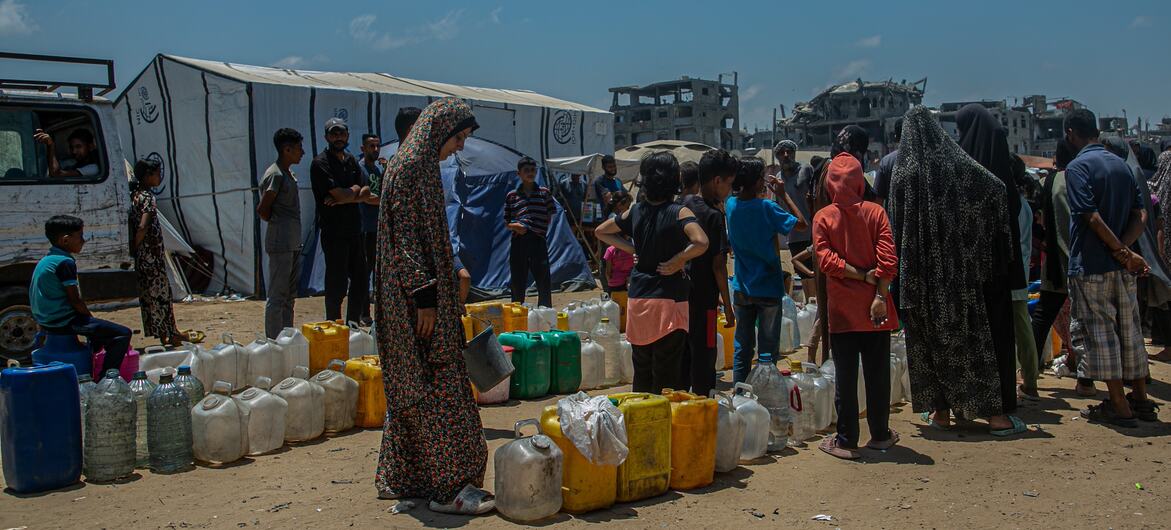
Water under fire: the killing of Gaza’s humanitarian drivers
The UN Children’s Fund described itself as “outraged,” and the language was not merely diplomatic. The Mansoura site is, at present, the sole operational filling point for the...

Our Network
Our Channels

© 2026 Al Jazeera Media Network. All rights reserved.