

A Classroom Emptied, A Country Impoverished
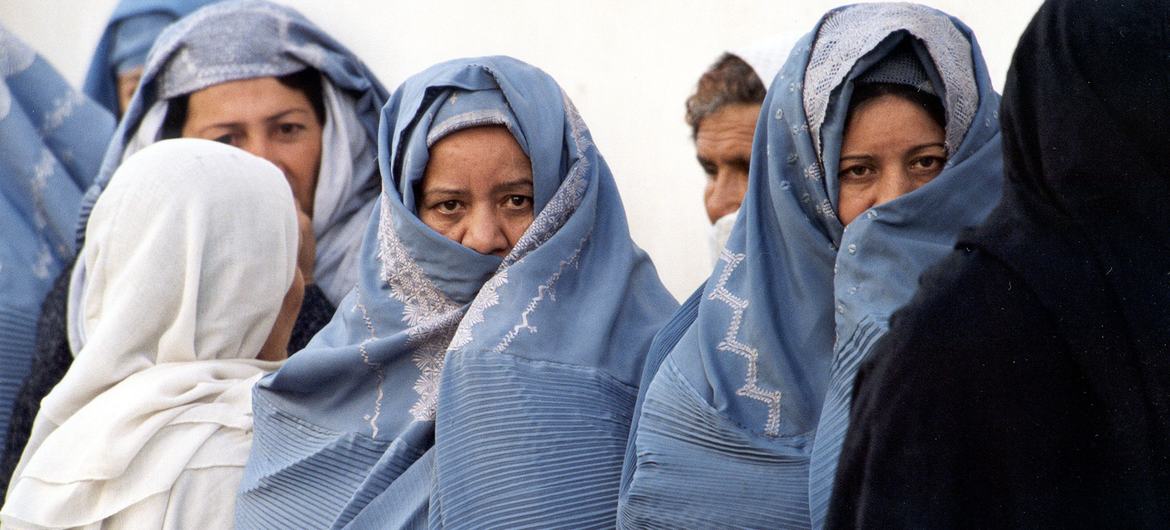
© UNICEF/Shehzad Noorani Women wait at a maternal health hospital, the only one of its type in Afghanistan.
Afghanistan’s war on women is starting to consume its own future
Afghanistan’s Taliban authorities are not merely punishing the women alive today. They are dismantling the very infrastructure of competence the country will need to survive. A new analysis by UNICEF warns that Afghanistan could lose more than 25,000 female teachers and health workers by 2030 if current restrictions on girls’ education and women’s employment remain in place. The numbers are already moving in the wrong direction. Female representation in the civil service slipped from 21% to 17.7% between 2023 and 2025. The number of female teachers in basic education fell by more than nine per cent, from nearly 73,000 in 2022 to around 66,000 in 2024. By 2030, UNICEF estimates the country could lose up to 20,000 women teachers and 5,400 healthcare workers.
The roots of this crisis date to September 2021, when Taliban authorities banned girls from secondary education. More than one million girls have since been denied their right to learn. If the ban remains until 2030, over two million girls will have been shut out of education beyond primary school in a country that already has one of the lowest female literacy rates in the world. The next generation of teachers, nurses, doctors, midwives, and social workers is being erased before it forms.
The consequences are not merely demographic. In Afghan society, cultural norms frequently prevent women from seeking medical care from male practitioners. Fewer female health workers translate directly into reduced access to maternal, newborn and child health services. Women and children bear the sharpest risks. The broader economic cost has also been calculated: restrictions on girls’ and women’s education and work cost Afghanistan $84m each year in lost output, a figure that will grow as the exclusion continues.
UNICEF Executive Director Catherine Russell did not mince words. “Afghanistan cannot afford to lose future teachers, nurses, doctors, midwives and social workers, who sustain essential services. This will be the reality if girls continue to be excluded from education.” She urged the de facto authorities to lift the ban on secondary education and called on the international community to remain committed to supporting girls’ rights.
In the meantime, UNICEF is working around the edges of the crisis. In 2025, more than 3.7m children in public schools received emergency support, and 442,000 children, 66% of them girls, benefited from community-based learning. The agency has built or rehabilitated 232 schools. These are meaningful efforts. They are also insufficient substitutes for a functioning national education system that includes half the population.
- Most Viewed
- Most Popular




Our Network
Our Channels

© 2026 Al Jazeera Media Network. All rights reserved.