

Thailand’s Harsh Treatment of Myanmar Refugees Risks Further Harm
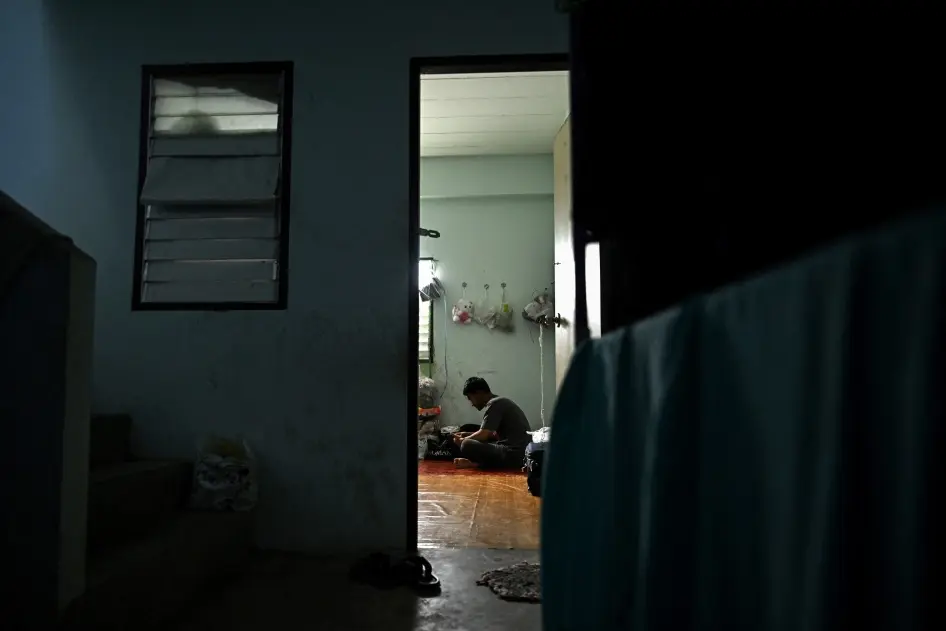
A Myanmar migrant worker at his apartment in Samut Sakhon province, Thailand/HRW
Thai authorities are reportedly threatening, extorting, and detaining Myanmar nationals who fled the country’s abusive military junta in search of safety, according to a new Human Rights Watch report. The 48-page study, titled “I’ll Never Feel Secure: Undocumented and Exploited Myanmar Nationals in Thailand,” documents how Myanmar refugees face frequent police stops, interrogations, and demands for bribes—particularly in Mae Sot, a border town where locals dub them “walking ATMs.”
With more than four million Myanmar nationals in Thailand, nearly half undocumented, many live in constant fear of deportation, severely restricting their movement. Thailand’s legal framework offers scant protection. The only viable legal status for most is as migrant workers, yet migrant workers have been excluded from recent government measures to provide refugee protections.
“The Thai government denies Myanmar nationals secure legal status, enabling authorities to exploit and extort them,” said Nadia Hardman, Human Rights Watch researcher. Since the military coup in Myanmar in February 2021, widespread abuses—ranging from war crimes to economic collapse—have driven millions to seek refuge abroad.
Interviews with 30 Myanmar nationals reveal a system of racketeering involving “police cards” sold unofficially to allow movement or avoid arrest. Those unable to pay face self-imposed house arrest. Even those who bribe authorities risk detention and deportation, sometimes with their children, without regard for dangers back in Myanmar.
Thailand is not a signatory to the 1951 Refugee Convention and lacks formal asylum procedures. Its 2023 National Screening Mechanism, designed to provide protection, notably excludes migrant workers from Myanmar, Cambodia, and Laos. Many Myanmar nationals rely on brokers to navigate costly, convoluted application processes for the “pink card”—a migrant worker permit often linked to fictitious employers.
Human Rights Watch urges Thailand to adopt legislation to recognise refugee status in line with international law and to allow asylum seekers to work. In the short term, it calls for a temporary protection regime for Myanmar nationals, echoing UNHCR’s position against forced returns.
“Thailand must end the exploitation and suffering of millions of undocumented Myanmar nationals and offer them effective protection,” Hardman said.
HRW

Living in Limbo, An Iranian Refugee’s Plea to an Inconsistent Australia
The urgency for sustainable and compassionate solutions that prioritize human rights cannot be overstated. Upholding the fundamental values of family unity, facilitating accessible avenues for...

Militarized Immigration Enforcement in the USA
The focus is on the intersection of immigration policy and military tactics, highlighting the consequences of this approach and potential alternatives for a more humane and effective...

A Damning Report on UK and France’s Handling of Child Asylum Seekers in the English Channel
The report is replete with heart-wrenching testimonies from children suffering serious chemical burns from dinghy fuel, enduring symptoms of trauma, and tragically, experiencing fatalities due...
- Most Viewed
- Most Popular







Our Network
Our Channels

© 2026 Al Jazeera Media Network. All rights reserved.