

Palestinians Who Die Trying to Work
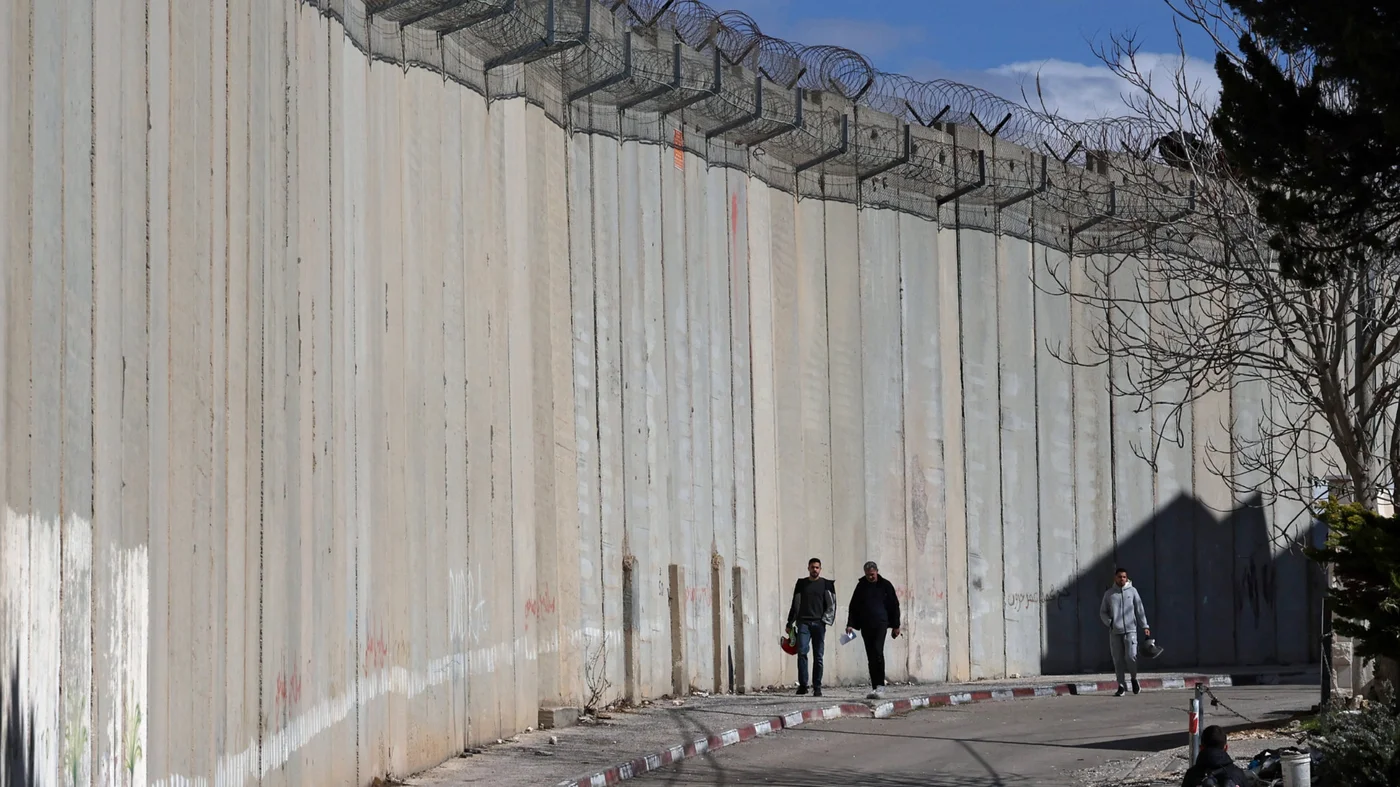
Palestinians walk alongside Israel's controversial separation barrier in the Dahiat al-Barid neighbourhood of occupied East Jerusalem on 24 February 2026 (AFP)
Since October 2023, more than 50 Palestinian workers have been killed attempting to cross the separation barrier into Israel. The deaths are not accidents. They are the predictable outcome of a calculated policy.
Imad Haroun Ishtayeh had a poultry shop in the village of Salem near Nablus in the northern West Bank. When the shop failed, he tried to find another way to support his family. His father was ill with cancer. He had three brothers. He had built a house and was planning to get engaged. He wanted to choose furniture with his future fiancée. On Sunday afternoon, at the age of 27, he climbed the concrete separation wall near the town of al-Ram, north of Jerusalem, and was shot in the thigh by Israeli soldiers. The bullet severed a main artery. Doctors operated. They could not save him.
Videos circulated of other workers carrying him down from the top of a ladder before an ambulance arrived. He was the fifth Palestinian worker killed at the separation barrier this year. He was the 52nd since October 2023.
The policy that created the crisis
Overnight in October 2023, the work permits of 120,000 Palestinians who crossed daily into Israel were revoked by order of Benjamin Netanyahu’s government. Only 7,000 were allowed back, in sectors considered essential such as the food industry and hospitality. The revocation was immediate and total, applied without individual review, without process and without appeal. It was, in the language of human rights law, collective punishment: the removal of an entire population’s economic rights as a response to an attack carried out by a different organisation in a different territory.
For decades, Palestinian day labourers in the West Bank have relied on work inside Israel and Israeli-annexed Jerusalem for their economic survival. The wages earned in Israeli construction, agriculture and services underwrote household economies across the West Bank. According to a World Bank report, employment among Palestinians working in Israel fell by 86% within a single quarter after the permits were revoked, and economic activity in the West Bank remains 17% below pre-war levels, adjusted for inflation. The damage was not gradual. It was a cliff edge.
What followed was predictable. Deprived of legal access to the work that sustained their families, workers found other ways. Not a single day has passed in recent months without reports of Palestinian workers being pursued, detained or injured while attempting to enter Israel by crossing the separation wall near al-Ram, north of Jerusalem. The wall, built starting in 2002 and cutting deep into the West Bank, was intended as a security barrier. It has become the stage for a recurring and deadly drama: men descending on makeshift ropes, dodging razor wire, risking imprisonment and, with increasing frequency, their lives.
The arithmetic of desperation
The stories behind the deaths follow a pattern. Salim Abu Aisha, from the town of Zababdeh near Jenin, was a 58-year-old father of seven who worked inside Israel with a special permit. When his permit was revoked, he opened a small shop but became mired in debt due to the general economic situation. Last October, he and a group of workers crossed the separation wall and was subsequently beaten to death.
Yousef, a father of two, had worked inside Israel for nearly five years before the permit suspension left him unemployed for six months. As economic pressure mounted, he began taking the risk of crossing through the wall, staying away for a month at a time before returning home briefly. He was killed on his final attempt.
Imad Ishtayeh’s trajectory was similar. His cousin told Middle East Eye that he had not attempted to cross for the previous two years. On Saturday, he tried and failed. On Sunday, he tried again, and was shot. He had built a house. He was planning an engagement. He had family depending on him. He needed money. The options available to him had been reduced, by Israeli policy, to risk or poverty.
The conditions have become extreme enough that workers have resorted to hiding in garbage trucks to be smuggled into Israel for work. In one documented incident, dozens of Palestinians were found descending from the container of a rubbish lorry, some fainting, before being arrested by Israeli police.
Shoot to kill
The Palestinian General Federation of Trade Unions has been explicit about the nature of what is happening. Abdul Hadi Abu Taha, a member of the federation’s general secretariat, told Middle East Eye that Israeli soldiers have been ordered to shoot at any worker attempting to climb the separation wall at al-Ram. The targeting, he says, is not incidental but systematic, reflecting policies implemented by far-right National Security Minister Itamar Ben Gvir that have empowered Israeli police to treat workers crossing the wall as security threats.
Under Israeli military policy, any illegal crossing of the separation wall constitutes an infiltration attempt carrying a heavy prison sentence, and in many cases those caught are shot on sight. The United Nations puts the number of Palestinians killed crossing the barrier since October 7, 2023 at at least 13 and injured at at least 170, though the Palestinian General Federation of Trade Unions puts the figure closer to 52. The divergence in figures reflects different methodologies; both represent a toll that has accumulated steadily, death by death, in what is treated by the international community as a peripheral story.
The UN’s relief coordination office has found that more than 290 Palestinian workers have been injured while attempting to cross the separation wall to reach their workplaces in occupied East Jerusalem and Israel.
The village and the wall
The geography of Imad Ishtayeh’s death illuminates the larger picture. He was from Salem near Nablus, in the northern West Bank, well over an hour’s drive from Jerusalem. He did not set out to climb a wall as a political statement. He set out because the wall stands between him and the only work available, and the only work available was on the other side of it. The village of Bir Nabala, once a professional community on the outskirts of Jerusalem, was cut off from the Jerusalem municipality by the barrier’s construction. Its residents, who depended on wages earned in Jerusalem and Israel, have found themselves caught in an economic no-man’s land between Israeli neglect and Palestinian incapacity to replace those incomes.
This is the structural reality that produces the wall crossings, and with them the deaths. The separation barrier’s route, which the International Court of Justice ruled illegal in a 2004 advisory opinion, does not follow the pre-1967 Green Line. It reaches deep into the West Bank, separating communities from their land, their workplaces and each other. It was built in the name of security. Its daily operation is an economic and physical severance that affects millions of lives.
Imad Ishtayeh’s cousin remembered him as “incredibly kind, always joking and laughing, and always eager to help people.” He had wanted to choose furniture for his home with his future fiancée. Instead, other workers carried him down from the top of a ladder with a bullet wound in his thigh, and a surgeon tried to repair what the bullet had destroyed. He was the 52nd. Unless the underlying policy changes, there will be a 53rd.
Sources
Middle East Eye, “Israel Kills Palestinian Worker as He Climbed West Bank Separation Wall,” May 31, 2026
Arab News / AFP, “Palestinian Construction Worker Shot Dead North of Jerusalem,” May 31, 2026
WAFA, “Palestinian Workers Face Deadly Risks Crossing Israeli Separation Wall for Work,” May 1, 2026
Prism Reports, “Beaten to Death After Crossing the Apartheid Wall: Israel Intensifies Targeting of Palestinian Workers,” May 2026
Truthout / Scheerpost, “West Bank Faces Economic Crisis as Israel Withholds Tax Revenue and Work Permits,” May 2026
Mondoweiss, “No Permit, No Work, No Future: Inside the Lives of West Bank Workers Crushed by Israel’s Labor Ban,” April 2026
Business and Human Rights Resource Centre, “Israeli Employers ‘Turn Blind Eye’ to Rights Abuse of Palestinian Construction Workers,” 2026
World Bank, Report on the Palestinian Economy, September 2025
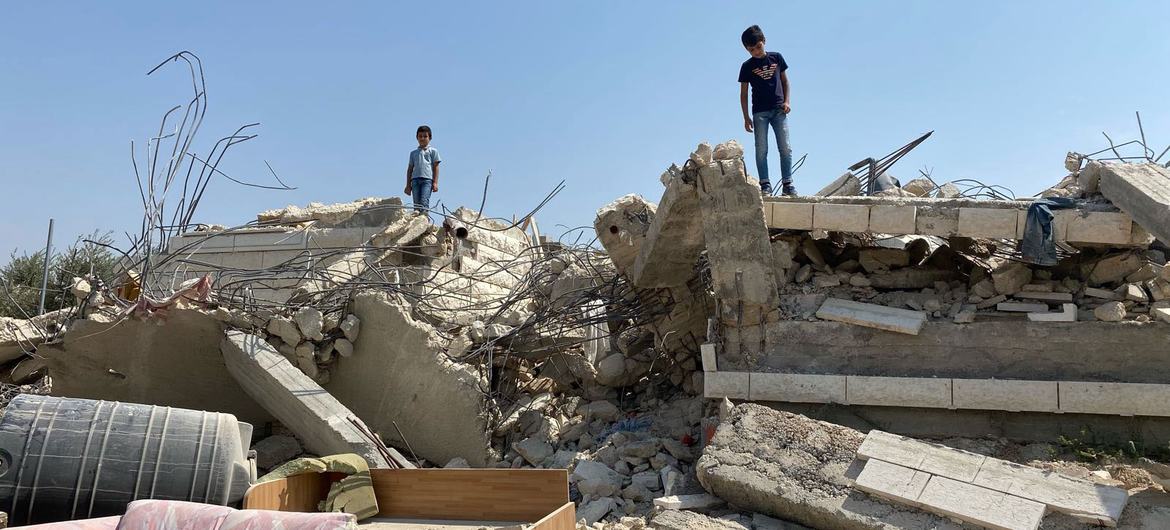
Israel’s Land Registration Move, A Setback for Palestinian Rights
The move undermines Palestinians’ property and self‑determination rights and erodes the two‑State prospect; the UN called for reversal and protection of civilians under occupation.

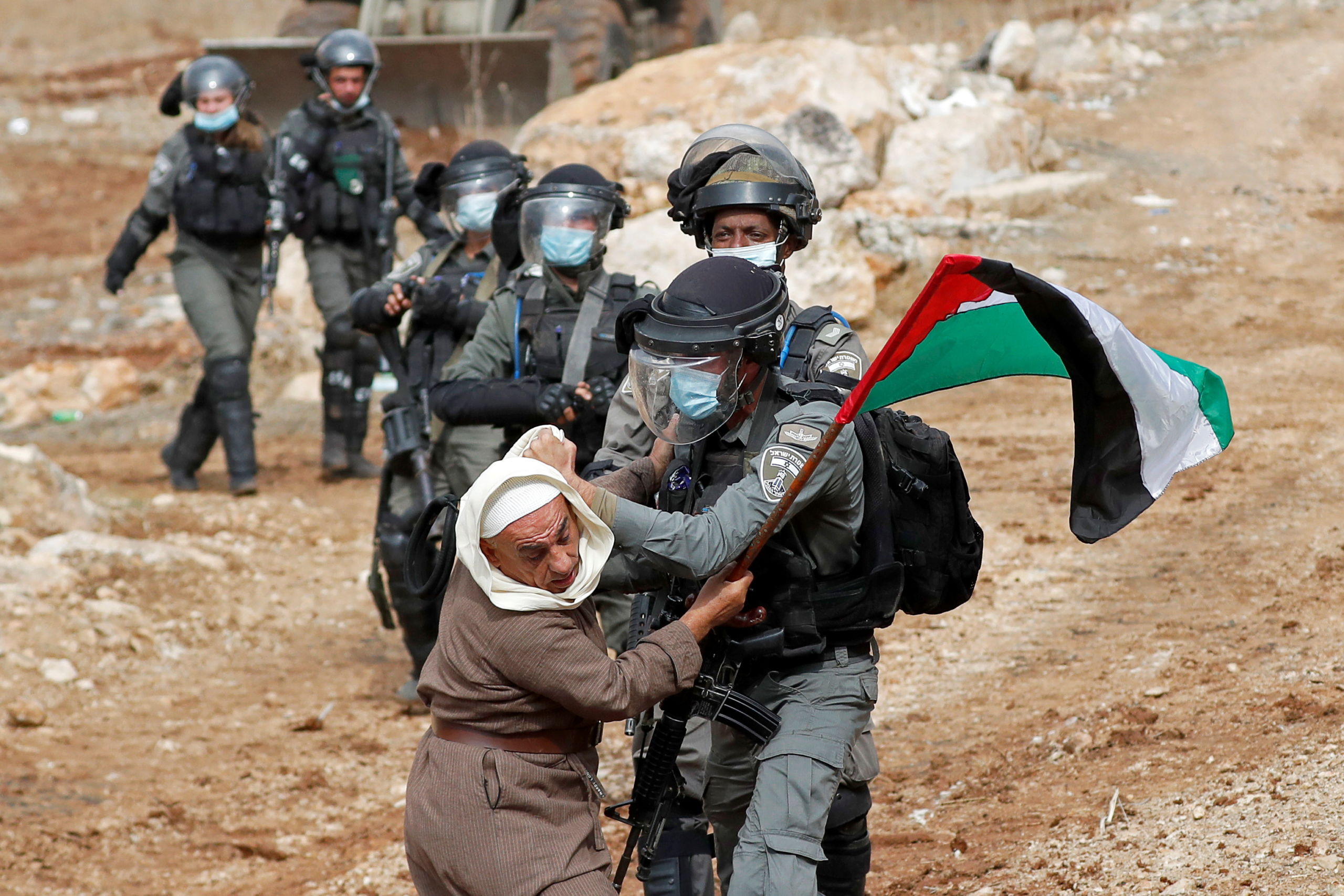
Over 50 Injured in Attacks by Settlers
This aggressive behavior not only raises serious concerns about the safety of Palestinians in their own lands but also highlights the ongoing tensions that continue to destabilize the region.
- Most Viewed
- Most Popular




Our Network
Our Channels

© 2026 Al Jazeera Media Network. All rights reserved.