

Israel Pushes Deeper into East Jerusalem
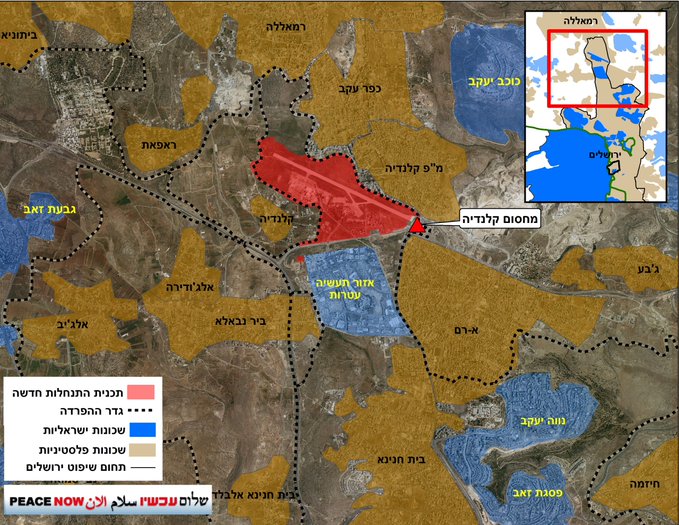
Translation: The massacre government is working to establish a new ultra-Orthodox mega-settlement across the Green Line north of Jerusalem. The new political attack called ‘Atarot’ is planned to be built in the heart of the Palestinian state that will be established alongside Israel. This involves 9,000 housing units that Israel will have to evacuate. Isn’t it a shame?
Al Jazeera.
Israel’s settlement enterprise is edging forward not with fanfare but with committee meetings and zoning maps. This week the Jerusalem District Planning and Building Committee is set to convene to discuss two significant settlement schemes in occupied East Jerusalem, projects that, taken together, would further entrench Israeli control over some of the city’s most politically sensitive areas.
The first is the long-dormant but sprawling Atarot plan, which envisages a large new Israeli settlement on the site of the former Qalandiya airport, near the northern edge of Jerusalem. If approved, Atarot would add thousands of housing units and sever what remains of Palestinian territorial contiguity between East Jerusalem and the central West Bank. Its location, wedged between Palestinian neighbourhoods and adjacent to Ramallah, has long made it a red line for critics, who see it as a strategic project designed less to meet housing demand than to lock in Israeli claims to the city’s northern approaches.
The second proposal is smaller in scale but no less incendiary. Known as “Nahalat Shimon,” it would establish a Jewish settlement compound in the heart of Um Haroun, part of the Sheikh Jarrah neighbourhood. This area has become emblematic of the struggle over East Jerusalem, where Palestinian families face eviction based on pre-1948 Jewish property claims, while equivalent Palestinian claims in West Jerusalem remain barred by Israeli law. The advancement of Nahalat Shimon would deepen this asymmetry, inserting a fortified enclave into a dense Palestinian residential area and heightening the risk of sustained friction.
These plans do not emerge in isolation. Their discussion follows closely on the publication of tenders for construction in E1, the strategically vital corridor between Jerusalem and the Ma’ale Adumim settlement bloc in the West Bank. Building there would effectively bisect the West Bank, undermining the territorial basis for a future Palestinian state. That such tenders have moved forward despite longstanding international opposition signals a broader shift: the Israeli government appears increasingly willing to absorb diplomatic costs in pursuit of irreversible “facts on the ground”.
Supporters of the projects argue that they reflect routine urban planning in Israel’s declared capital. Critics counter that planning is precisely the point: a technocratic process used to advance a profoundly political agenda. By pushing settlements through district committees rather than cabinet votes, the government reduces scrutiny while steadily expanding its footprint in occupied territory.
For Palestinians in East Jerusalem, the implications are immediate and personal ranging from the threat of displacement to the gradual erosion of their city’s social and geographic fabric. For the wider conflict, the message is starker still. With bulldozers poised behind blueprints, Israel is signalling that annexation need not be declared to be pursued. It can proceed quietly, one planning session at a time.

Over 50 Injured in Attacks by Settlers
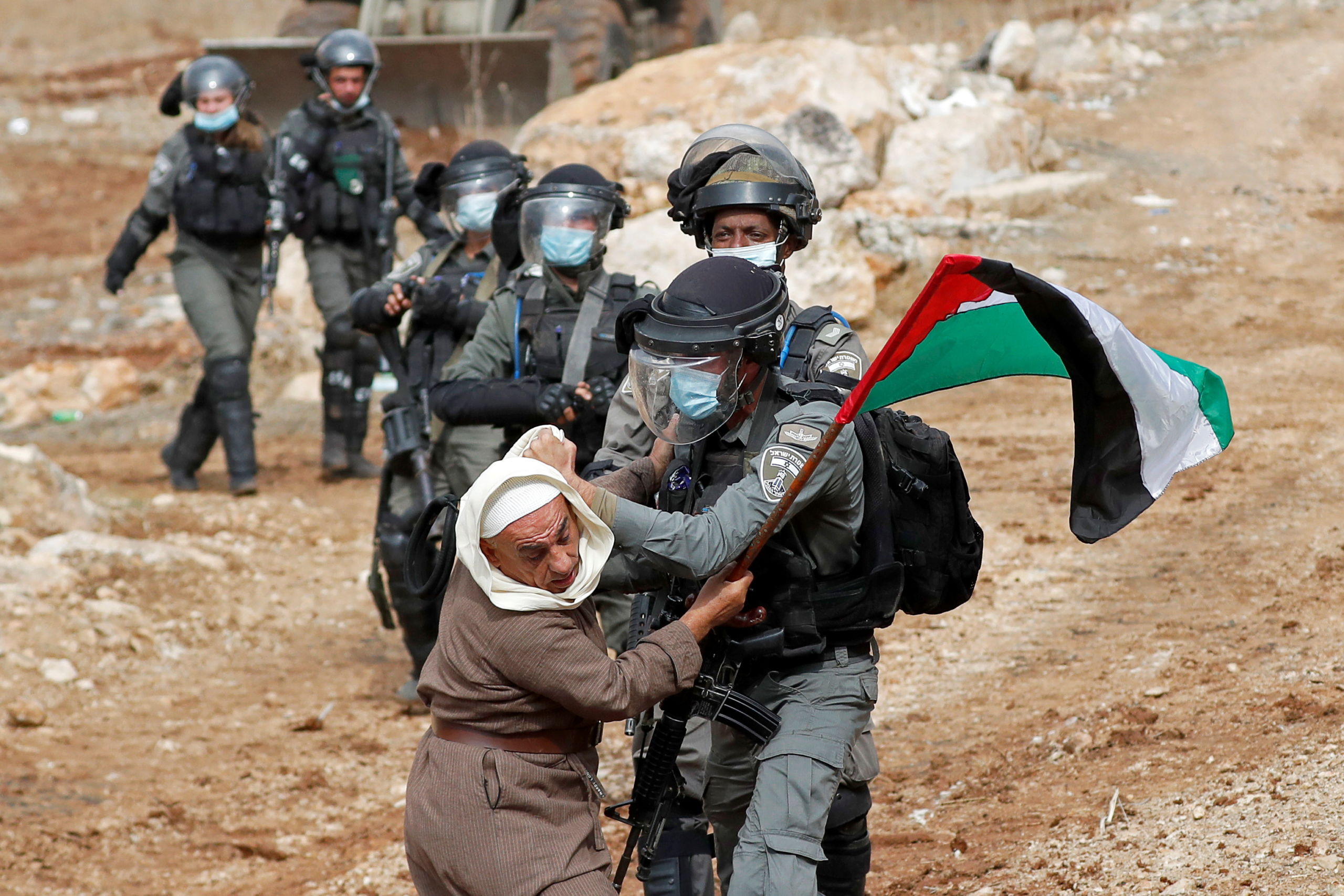
This aggressive behavior not only raises serious concerns about the safety of Palestinians in their own lands but also highlights the ongoing tensions that continue to destabilize the region.
Deepening Control and Settlements in Judea and Samaria
Key changes involve repealing Jordanian laws restricting land sales to Jews, enabling purchases under terms resembling those in cities like Tel Aviv or Jerusalem.

- Most Viewed
- Most Popular





Our Network
Our Channels

© 2026 Al Jazeera Media Network. All rights reserved.