

Seven Million Children the World Is Ignoring
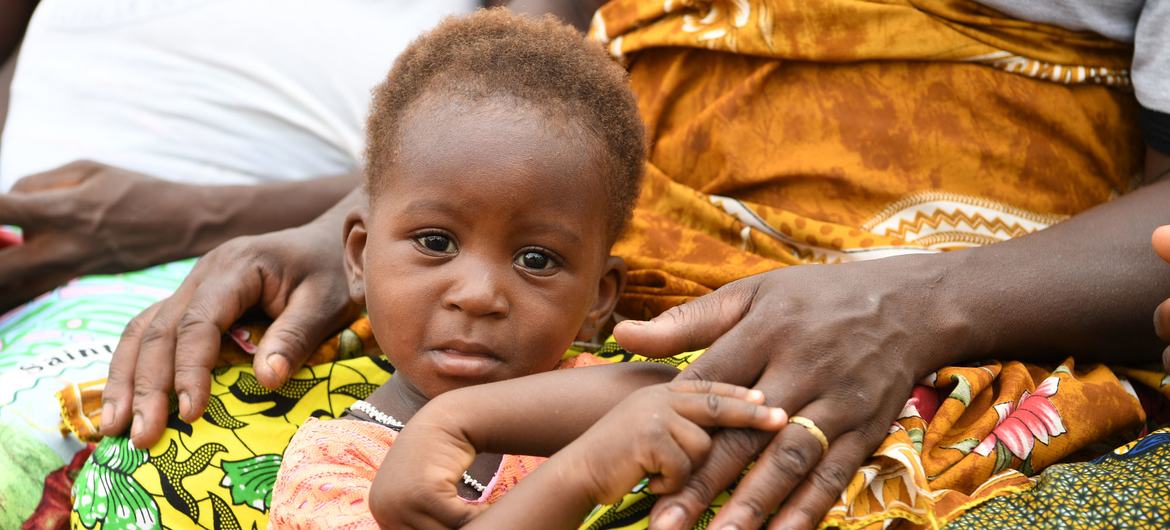
© UNICEF/Frank Dejongh A child waits for a malnutrition screening session in northern Burkina Faso. (file)
The Central Sahel’s humanitarian crisis is vast, worsening, and underfunded.
“Their resilience does not mean that they are fine,” said Ted Chaiban, UNICEF’s Deputy Executive Director, after a 14-day visit to Burkina Faso, Mali and Niger. “Nor must it be used as an excuse for inaction.” It is a pointed warning, directed at an international community that has grown accustomed to treating African crises as a backdrop rather than an emergency. Across the Central Sahel, nearly 7.5 million children are in urgent need of humanitarian assistance. The number barely registers in global headlines.
The statistics are stark. The UN has documented more than 1,500 grave violations against children in the region, including killings, abductions and the recruitment of minors by armed groups. More than 8,400 schools were rendered inaccessible in 2025 alone. Over 3.6 million people have been uprooted by violence and forced displacement. Recent coordinated attacks by rebel groups in Mali — which the UN Secretary-General has condemned — are the latest reminder that the cycle of violence is far from broken.
And yet it would be wrong to read the Sahel only through the lens of disaster. In Niger, government-led reforms have modernised civil registration in more than half of all municipalities, pushing birth registration rates to 79% last year, up from 62% in 2023. Burkina Faso now allocates roughly 25% of its national budget to education and nearly 12% to health. Mali’s national immunisation coverage reached 82% in 2024. Markets are reopening in some rural areas; communities continue to support each other.
Mr. Chaiban was encouraged by meetings with political leaders in all three countries, who acknowledged that investing in people and strengthening social cohesion are essential for stability. He was also heartened by UNICEF’s teams on the ground, whose work he argued is most effective when it reinforces local systems rather than bypassing them. But the gap between what is being done and what is needed remains vast.
The children of the Sahel did not choose the geography of their birth. They did not choose the droughts, the armed groups, the debt burdens or the decades of governance failures that have left their region among the most fragile on earth. The question the international community must answer is whether the accident of their location means they deserve less attention. Mr. Chaiban’s visit suggests the answer should be no. The response so far suggests otherwise.
- Most Viewed
- Most Popular



Our Network
Our Channels

© 2026 Al Jazeera Media Network. All rights reserved.