

Rights of Women Under Human Rights
![Yanar Mohammed, co-founder and director of the Organisation for Women's Freedom in Iraq, speaks to reporters in Baghdad, Iraq, in 2005/Al Jazeera [File: Wathiq Khuzaie/Getty]](https://liberties.aljazeera.com/resources/uploads/2026/03/1772709575.webp)
Yanar Mohammed, co-founder and director of the Organisation for Women's Freedom in Iraq, speaks to reporters in Baghdad, Iraq, in 2005/Al Jazeera [File: Wathiq Khuzaie/Getty]
The assassination of Yanar Mohammed on 03/02/2026 in northern Baghdad has punctured a fragile civic calm in Iraq, producing shockwaves beyond the city’s limits. Mohammed, 66, co-founder and longtime director of the Organisation of Women’s Freedom in Iraq, was leaving her home when unidentified gunmen on a motorcycle opened fire. She later died in hospital, and the killing prompted immediate condemnations from the UN and human rights groups, alongside a government ordered investigation announced by Prime Minister Mohammed Shia’ al Sudani.
For decades Mohammed stood as both a symbol and an organiser, defending women’s rights in a country where social conservatism, sectarian politics and insecurity have long conspired to limit civic space. The UN spokesperson, Stéphane Dujarric, described the killing as “heinous,” and the UN human rights office highlighted a history of cooperation with Mohammed and OWFI, urging Iraqi authorities to carry out a transparent and timely inquiry. Amnesty International characterised the assassination as part of a chilling pattern of targeted killings of activists that has persisted since the Tishreen protests in 2019 and demanded that the investigation meet international standards of independence and impartiality.
The timing carries political resonance. In the wake of contentious legislative reforms to Iraq’s Personal Status Law that came into force in February 2025, women’s rights activists faced intensified smear campaigns and episodic violence. Mohammed’s organisation had been a target for critics who argued that its work clashed with conservative interpretations of law and custom. That backdrop matters because attacks on high profile defenders have a cascading effect on the broader civic ecosystem. When prominent women’s rights leaders are targeted with impunity, lesser-known activists, service providers and survivors who seek help may retreat into silence or self-censorship. The risk is straightforward: a targeted killing not only extinguishes a single life, but it also chills an entire movement.
Amnesty’s Razaw Salihy urged Iraqi authorities to ensure “prompt, effective, thorough, independent and impartial” investigations that bring perpetrators to justice through fair trials that preclude the death penalty. That formulation highlights two tensions at the heart of accountability in Iraq. First, the state must demonstrate capacity and will to investigate politically charged crimes against the very citizens it is charged to protect. Second, trials need to meet human rights benchmarks even where public sentiment clamours for swift punishment. The demand that prosecutions avoid the death penalty reflects both global human rights norms and the legal debates playing out in Iraq.
Operationally, the investigation will face familiar obstacles. Witness intimidation, evidentiary gaps, and the opacity of shadowy armed groups complicate forensics. Political actors may also seek to instrumentalise the episode for partisan aims. International actors can assist by offering technical forensic support, witness protection frameworks, and monitoring mechanisms, but the impetus for a credible probe must be domestic and visible. For civil society the task is urgent: sustained pressure, documentation and coordination with international partners can help reduce the space for impunity.
Mohammed’s murder is a reminder that the struggle for rights in Iraq is not simply legal or institutional, it is existential. Protecting women’s rights defenders requires legal reform, but it also requires political leadership willing to denounce intimidation, resource protective services and treat attacks on civil society as attacks on the social fabric. For a country balancing reconstruction, sectarian sensitivities and regional pressures, the choices it makes now will resonate for years.
Sources, UN spokesperson Stéphane Dujarric remarks, OHCHR tweets, Amnesty International statement, Iraqi government statement ordering investigation, 03/02–03/04/2026
Europe’s Economic Security, and Why Human Rights Must Be Front‑Loaded
Strengthening due diligence laws, enforcing forced labour bans, protecting diaspora communities from transnational repression, and embedding labour standards in trade policies would align...

U.S. Immigration Policies Harm Pregnant Migrants
ICE’s official policy states that pregnant, postpartum, or nursing women are generally not to be detained for administrative immigration violations unless legally required or under exceptional...
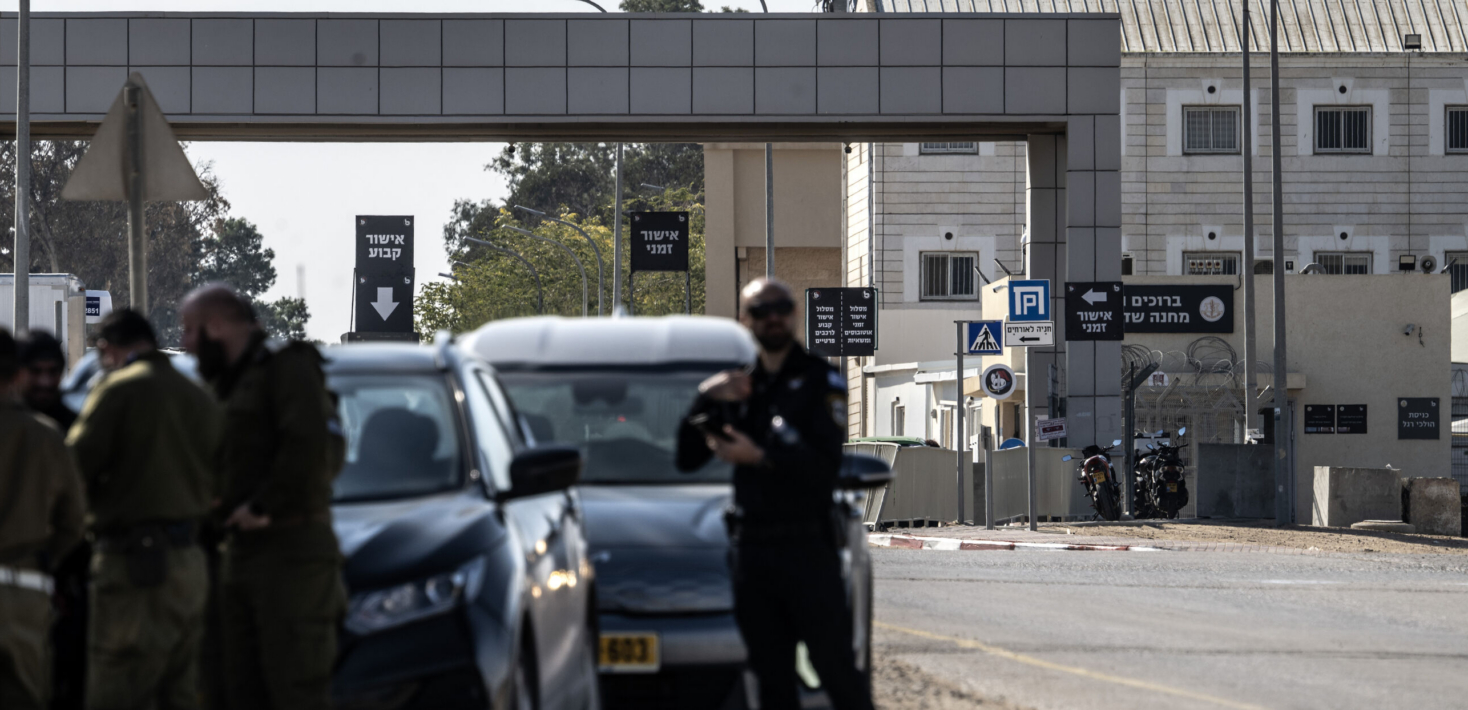
Impunity in Uniform/Israel’s Decision to Drop Charges Against Soldiers at Sde Teiman Is a Disgrace
The decision came at a moment of rising regional tensions and intense international scrutiny of Israel’s conduct in Gaza. That it was welcomed publicly by the prime minister, rather than...

Our Network
Our Channels

© 2026 Al Jazeera Media Network. All rights reserved.