

Gaza’s long clean-up begins with small gestures and stubborn hope
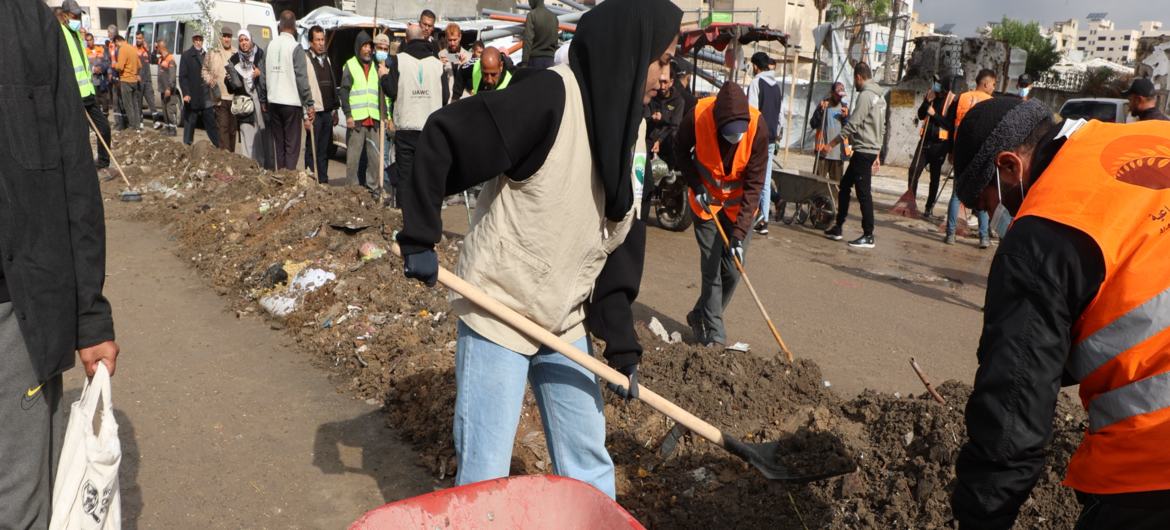
Image by the UN
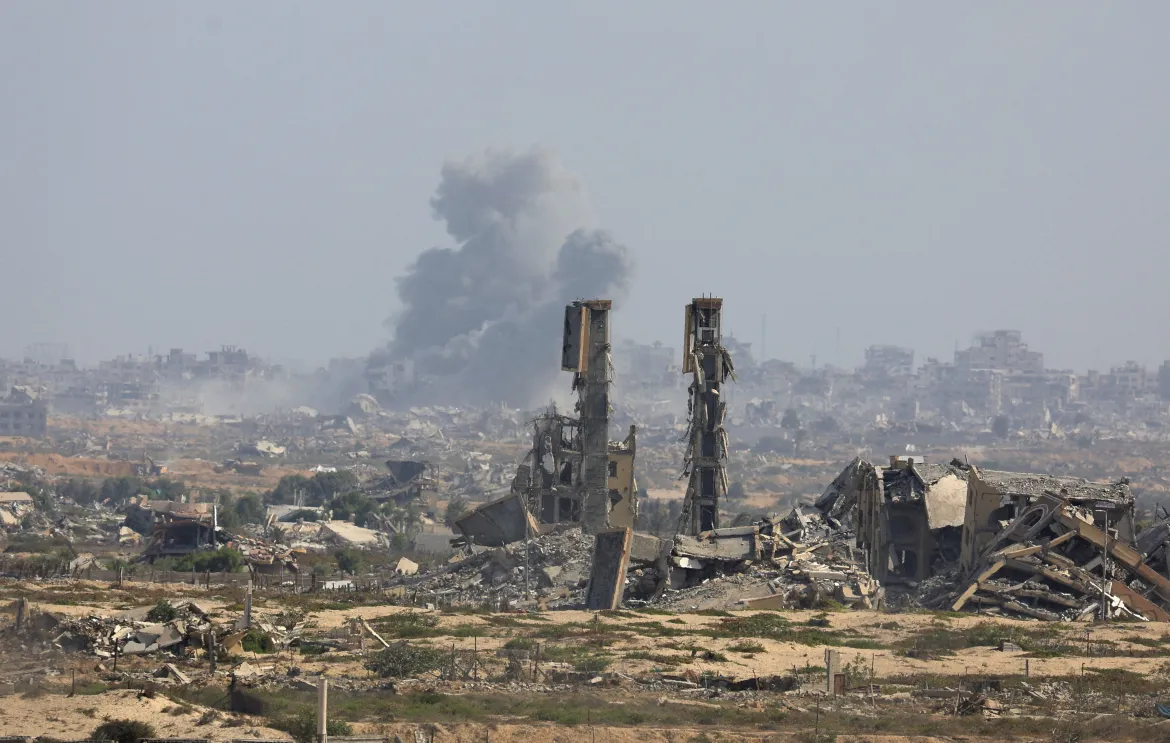
For months Gaza City has been defined by silence, the sort that follows explosions and lingers long after the dust settles.
When locals and aid workers assembled under the slogan “We Will Rebuild Gaza”, the noise was of a different kind: shouts to coordinate vehicles, the clatter of metal tools, the awkward laughter of neighbours greeting one another after too long apart.
It was not triumphal, but it was alive.
The initiative, pulled together by a cluster of local NGOs with UN agencies tagging along where needed, was less a formal launch than a collective exhale.
Residents emerging from the south of the Strip; some returning to streets they could barely recognise, stepped into the clean-up alongside volunteers.
One woman, wheeled through the crowds by her nephew, held a sign with the campaign’s motto.
She did not make speeches; she didn’t need to.
Amjad Al-Shawa of the Palestinian NGO Network said the day was meant to signal that Gazans are not waiting for outsiders to determine the tempo of their recovery.
He tends to avoid grand phrases, but even he conceded that the ruin is on a scale few have seen: tens of millions of tonnes of crushed masonry and twisted rebar. T
he engineers circling the effort speak grimly about debris management as a problem that will stretch across seasons, not weeks.
Saturday’s clean-up was, as one of them put it, “the warm-up lap”.
UNDP officials trailed the volunteers, offering technical support where they could.
Alessandro Marakic, one of the more pragmatic voices in the field, pointed out that dignity often re-emerges through mundane routines: street sweeping, waste collection, the rhythm of order slowly returning.
His team is already wrestling with winter contingency planning, how to keep sewage systems from backing up, how to prevent contaminated water from flooding low-lying quarters.
Machinery rumbled through the city centre as workers and volunteers cleared debris that had, for months, blocked basic movement.
The sight of municipal trucks, many barely functioning, hauling rubble felt oddly significant.
After such prolonged destruction, the hum of public activity, however modest, can appear momentous.
It suggested something important: not that the city’s troubles are over, but that people have stopped waiting for permission to begin healing their own streets.
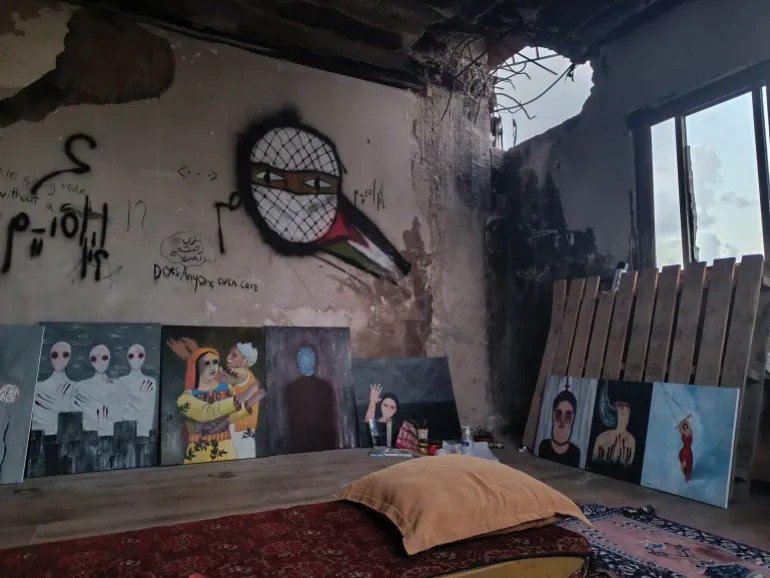
Gaza, Art as Resistance Amid Ruin
In such conditions, art has taken on a political function. Murals painted on cracked walls, poems circulated online and performances staged in shelters serve not only as testimony but as...
- Most Viewed
- Most Popular


Our Network
Our Channels

© 2026 Al Jazeera Media Network. All rights reserved.